

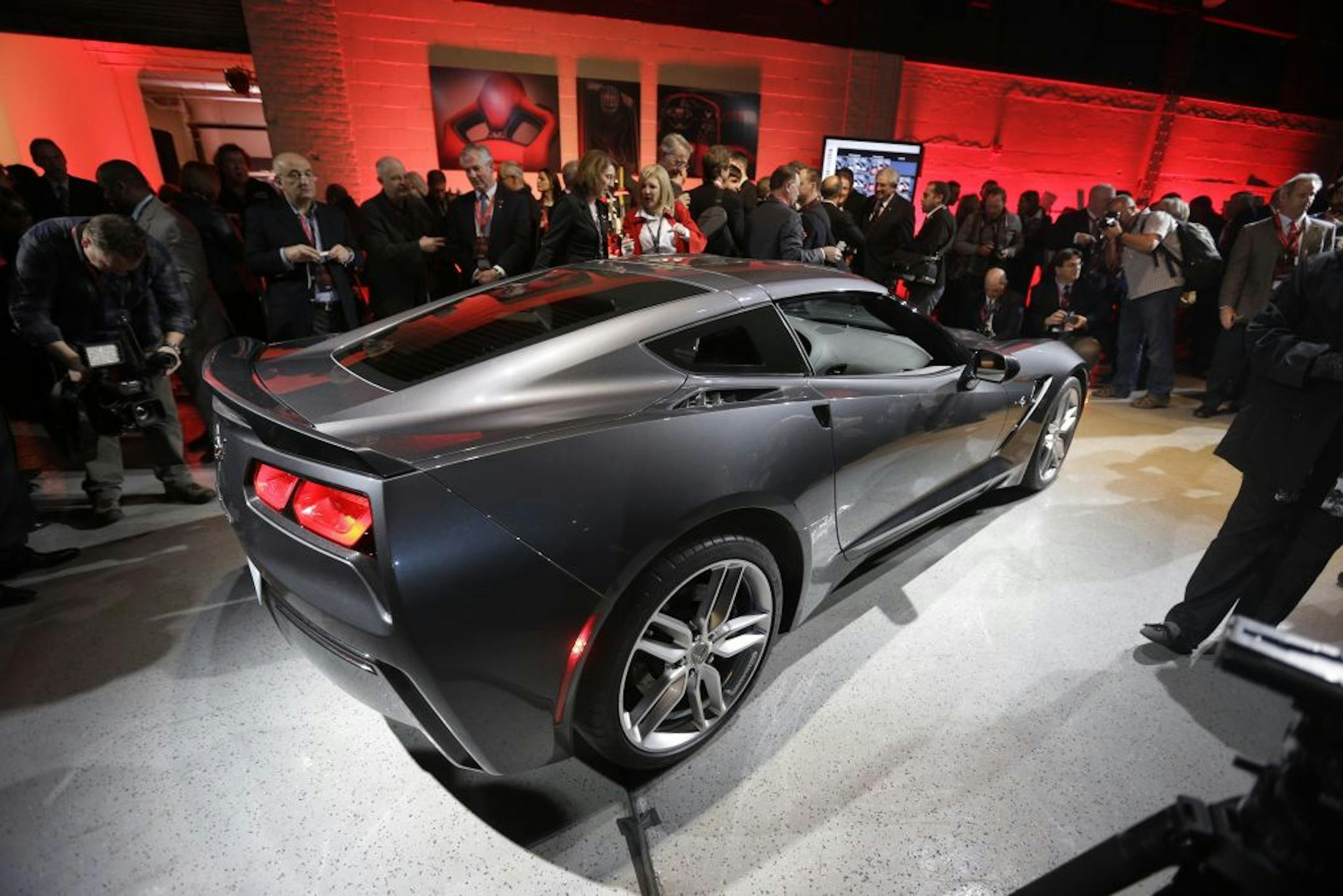
Delayed for years by General Motors' mounting financial problems, then its bankruptcy and government bailout, the promised revamp of the carmaker's classic Corvette Stingray at times looked like it might never happen.
On Jan. 13, however, on the eve of the Detroit auto show, a gang of reporters and a crowd of sports-car enthusiasts -- the latter of whom had paid $1,200 a ticket -- gathered in an abandoned warehouse in a rundown part of the Motor City to watch as, at last, to the sound of wailing guitars, the new "Little Red Corvette" drove onto the stage. It won wild applause, even from the hard-bitten hacks.
Things got even better for GM the next morning, when its Cadillac ATS sedan took the show's top prize, the North American Car of the Year. This boosted GM's hopes that Cadillac, its premium brand, can begin to catch up with pricey European models.
After years as a basket case, pilloried as "Government Motors," GM is again making money, stepping up its output and creating jobs.
Mark Reuss, GM's North American boss, believes that the double boost at last week's show will help it gain momentum by fostering the sense that it is winning again.
"Winning can be very contagious," he said.
The Corvette's rave reception likewise lifts GM's dreams of elevating its image from "a successful plumber's car," as an executive recently put it, to being a must-have high-performance model for the global elite, alongside Porsche and Ferrari.
"Halo cars" like the Corvette do not sell in big enough numbers to have much effect on overall profits, but they do create a sense of excitement around a brand, drawing buyers to showrooms, where they may end up buying less exotic models. Far more important for sales and profits, among GM's launches at Detroit was the new version of its best-selling model, the Silverado pickup truck. Americans love pickups and will pay handsomely for them: Profits on them can be around $15,000 a unit, compared with maybe $4,000 or less for regular cars.


