

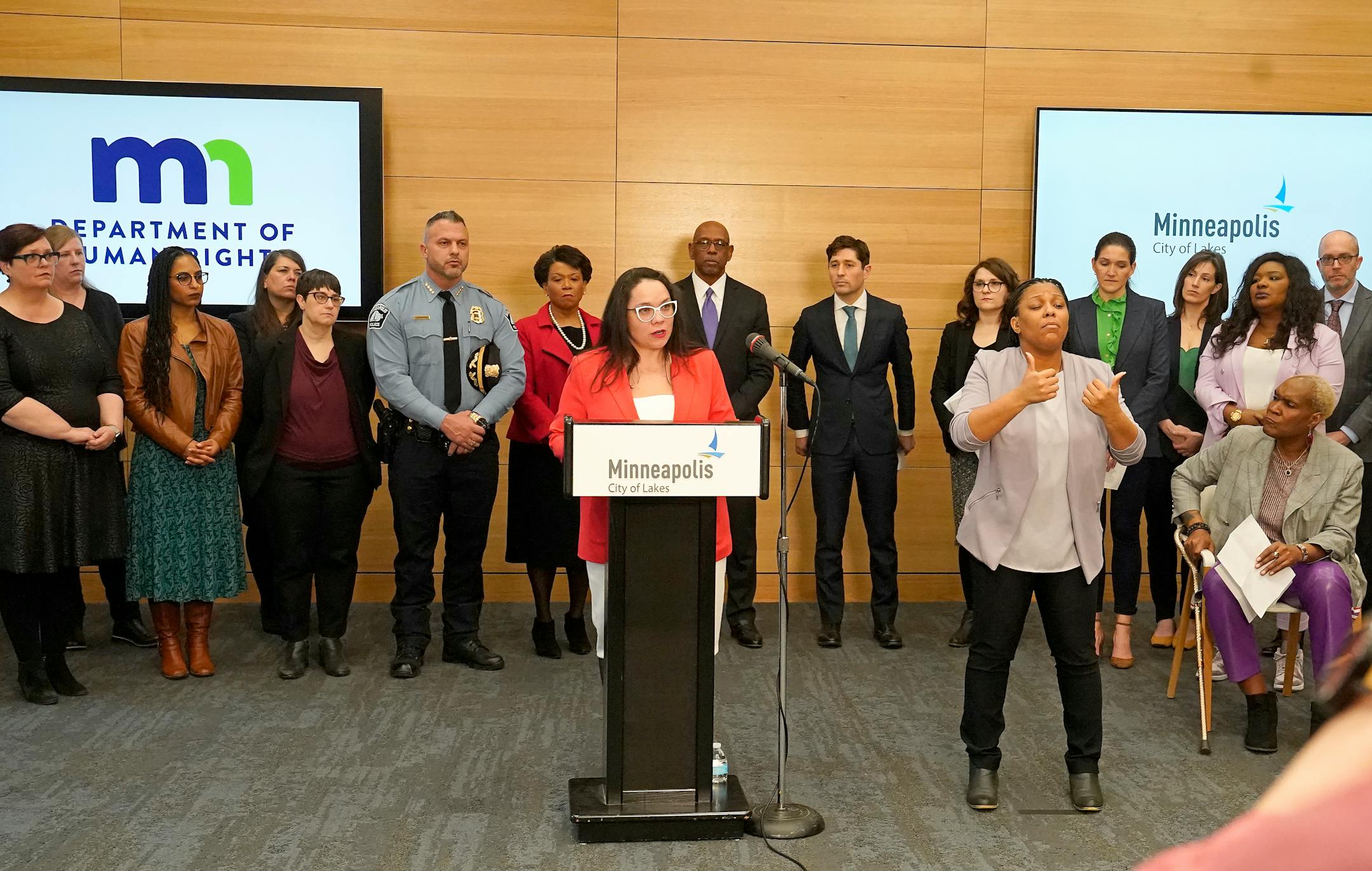
Assistant City Attorney Sara Lathrop, a veteran civil litigator who negotiated a settlement agreement between Minneapolis and the Minnesota Department of Human Rights over the city's pattern of discriminatory policing, is leaving for another job.
Her exit to become assistant city attorney in St. Paul comes at a critical juncture for Minneapolis, which is working on a tight timetable to implement court-mandated police reforms meant to restore trust in the embattled department.
As managing attorney of the Implementation Unit, Lathrop oversaw a team of lawyers and civilian advisers tasked with ensuring compliance of pending legal agreements with the state and U.S. Justice Department.
Separate state and federal probes launched in the aftermath of George Floyd's murder found that the Minneapolis Police Department engaged in a pattern and practice of discriminatory policing that deprived citizens of their constitutional rights.
Over the past three years, Lathrop has helped lay the groundwork to draft sweeping policy changes expected to shape the future of policing in Minneapolis and improve accountability measures within the city enterprise, supporters say.
In 2021, Lathrop issued a memo directing MPD and city department heads to preserve all documents and electronic data dating back to at least Jan. 1, 2010 that might be relevant to the federal investigation, including any files related to uses of force, training, supervision and discipline.
She went on to play a key role in negotiating a settlement agreement with the Department of Human Rights (MDHR), which revamps how the police department investigates crimes, uses force against citizens and holds problem officers accountable. The City Council voted unanimously to adopt the agreement last spring.
But throughout the yearlong process, Lathrop repeatedly raised concerns about the state's findings — specifically regarding their contention that MPD used covert accounts to spy on Black people and Black-led organizations unrelated to criminal activity and didn't surveil white supremacist groups. In a May 2022 letter, Lathrop called those allegations into question and sought underlying data to back up MDHR's claims.


