

Wal-Mart, the nation's largest retailer and grocer, said Thursday that it would launch an aggressive initiative to make its food products more healthful and affordable and would build new stores in underserved areas.
As part of First Lady Michelle Obama's signature campaign to fight childhood obesity, Wal-Mart said it would reduce sodium by 25 percent, lower added sugars by 10 percent and remove all industrially produced trans fats in the packaged foods it sells to its roughly 140 million customers each week. It also said it would work with its distributors and farmers to lower prices on fresh fruits and vegetables, estimating that it would save customers $1 billion a year.
Wal-Mart isn't the first to improve the healthiness of its products. But it sells more groceries than any other company in the country, and it works with a vast network of more than 60,000 suppliers. One move by Wal-Mart can ripple throughout the industry. And the company has grown increasingly bold in tackling social and political issues.
"We are obviously conscious about where we walk and who we walk with," said Sam Kass, assistant White House chef and coordinator of food initiatives. "But it was clear that this is potentially transformative."
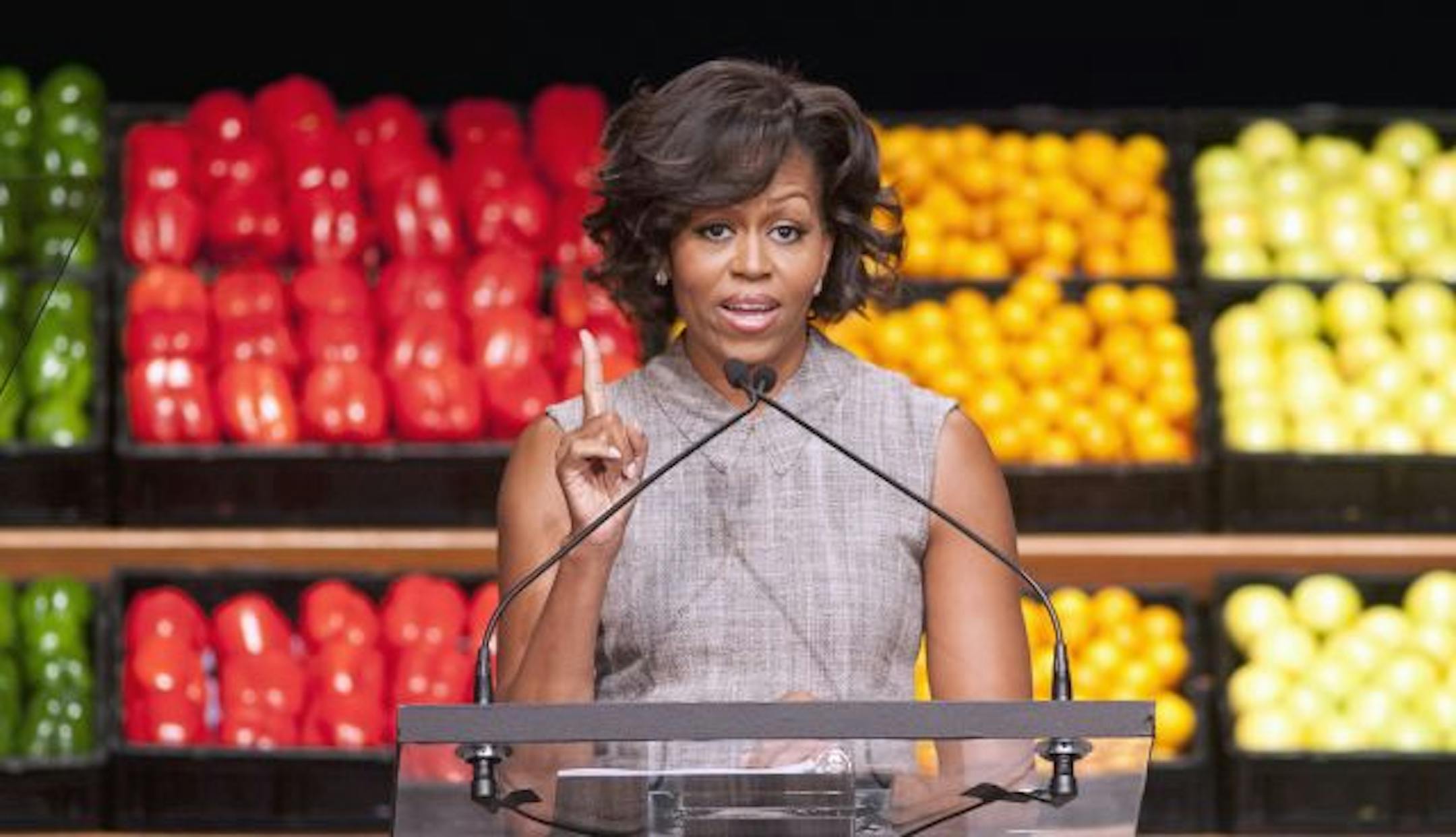
The First Lady, who joined Wal-Mart executives in making the announcement in Washington, called it a victory for parents and children that will give families more information and more opportunities to eat more healthy foods. "When I see a company like Wal-Mart launch an initiative like this, I feel more hopeful than ever before," she said. "We can improve how we make and sell food in this country."
She said that because of company's size, the move "has the potential to transform the marketplace. ... They are changing how the entire food industry does business."
The announcement amounted to a very public display of affection for a company that had long been a thorn in the side of Democrats. Five years ago, Wal-Mart was in the midst of a bruising battle with labor groups that accused it of paying low wages and providing stingy health benefits. Michelle Obama resigned from the board of a Wal-Mart supplier during her husband's campaign. And Obama himself told supporters at an AFL-CIO forum in 2007 that he would not shop at Wal-Mart.
In recent years, Wal-Mart has reached out to Democrats. During the debate over health care, it broke ranks with business groups by supporting the mandate for employers in Obama's health care legislation. It has emerged as a leader in sustainability and carbon reduction, improving fuel efficiency for its supply trucks and vowing to eventually produce zero waste.



