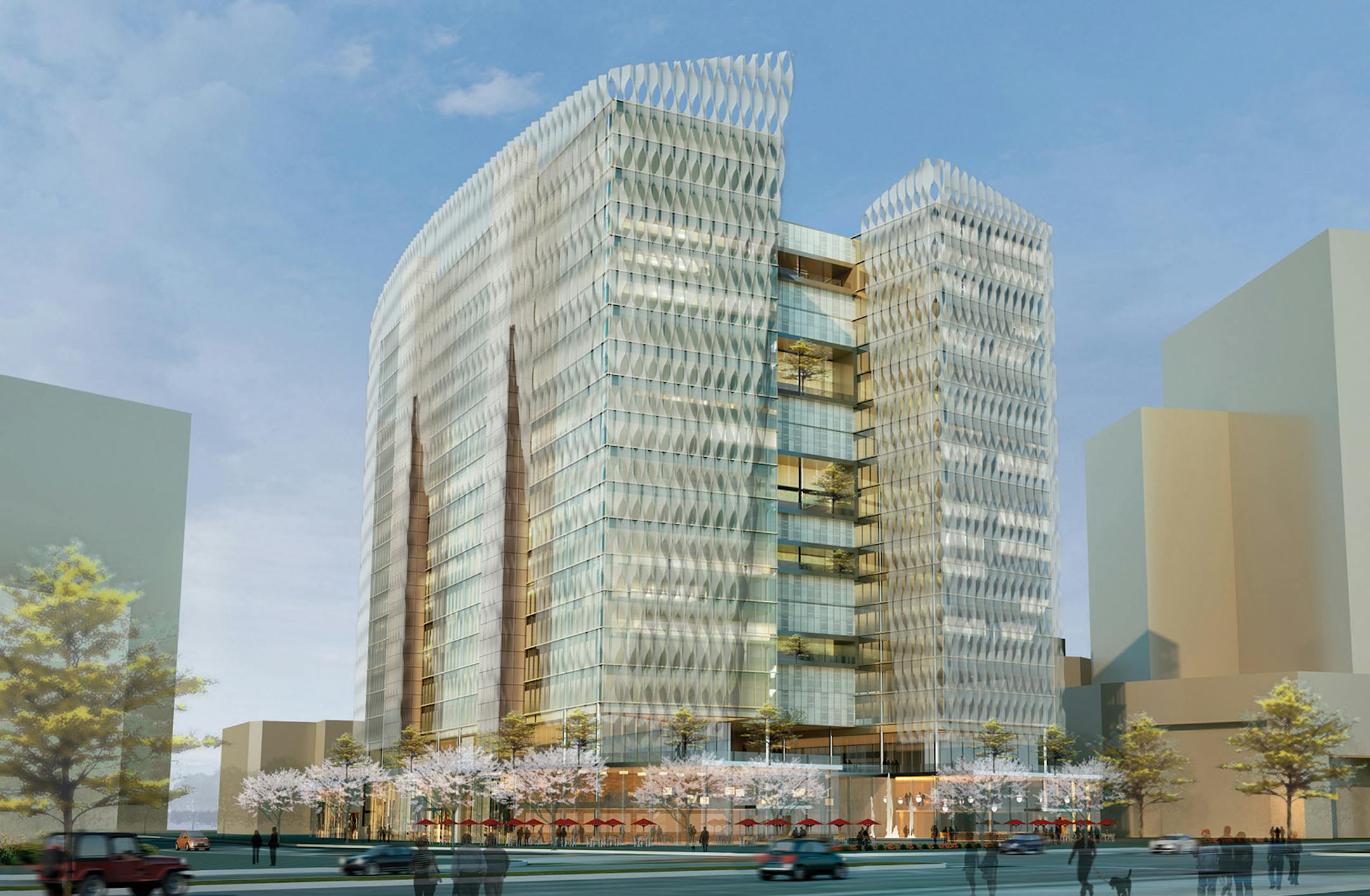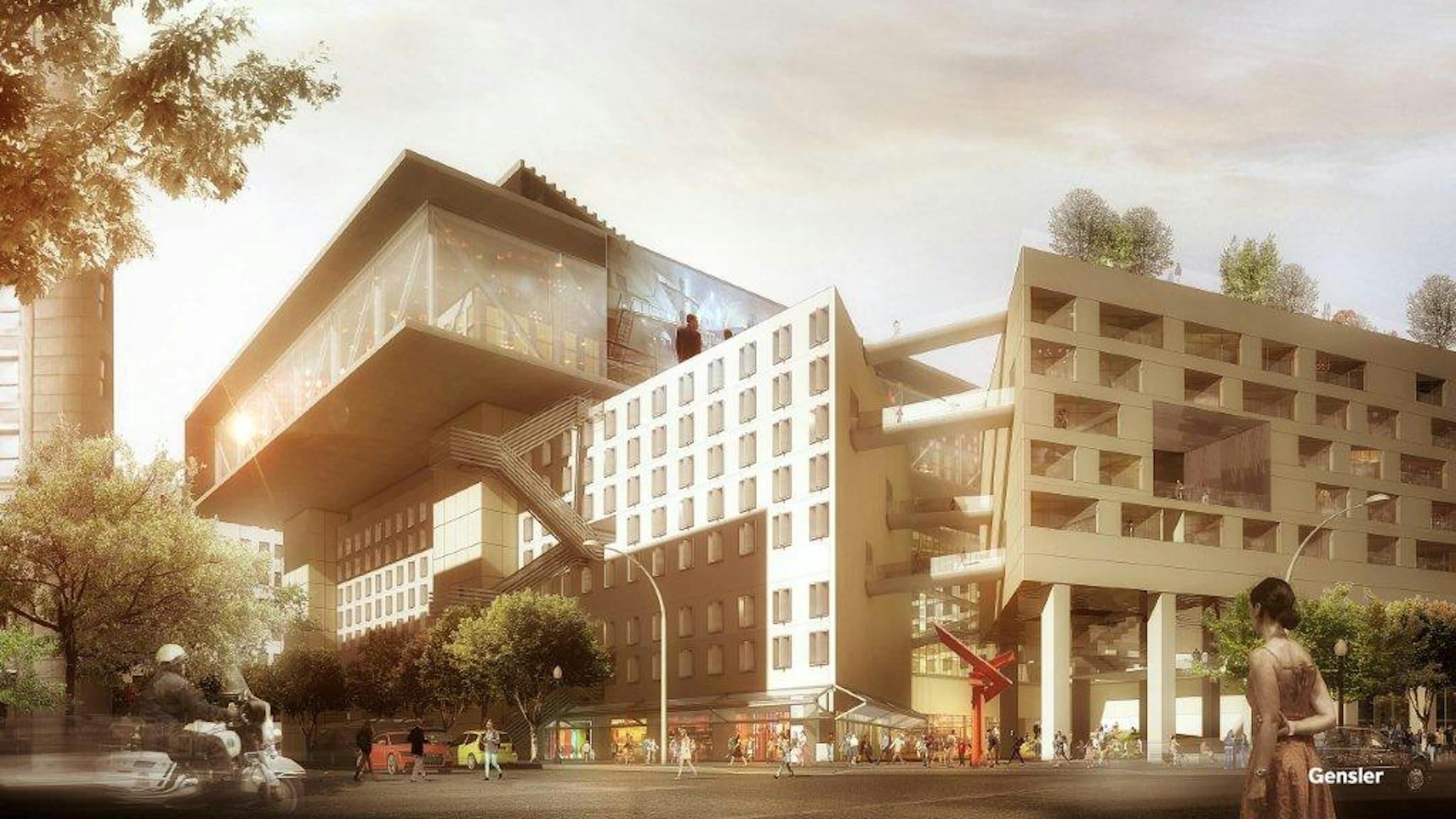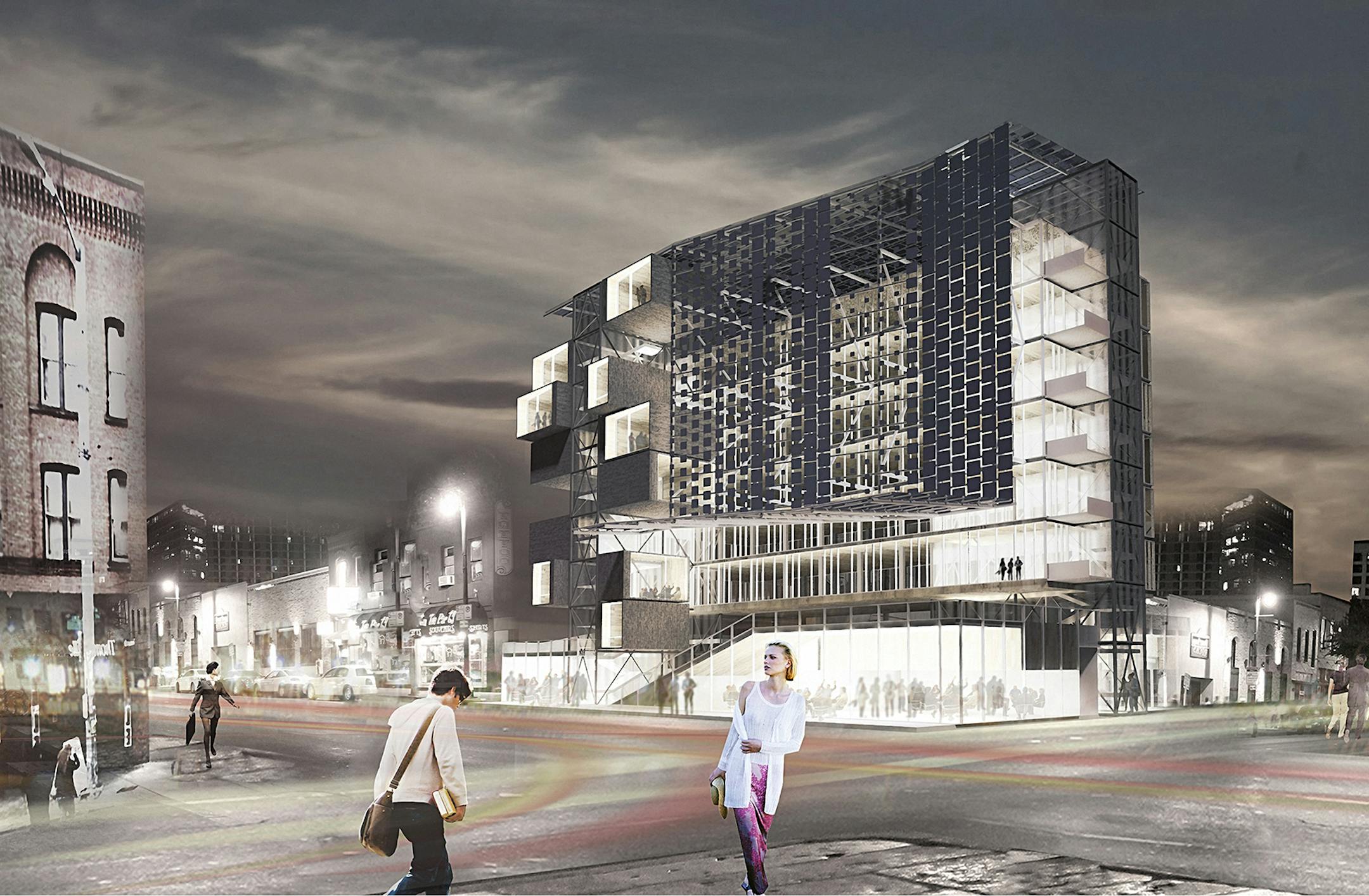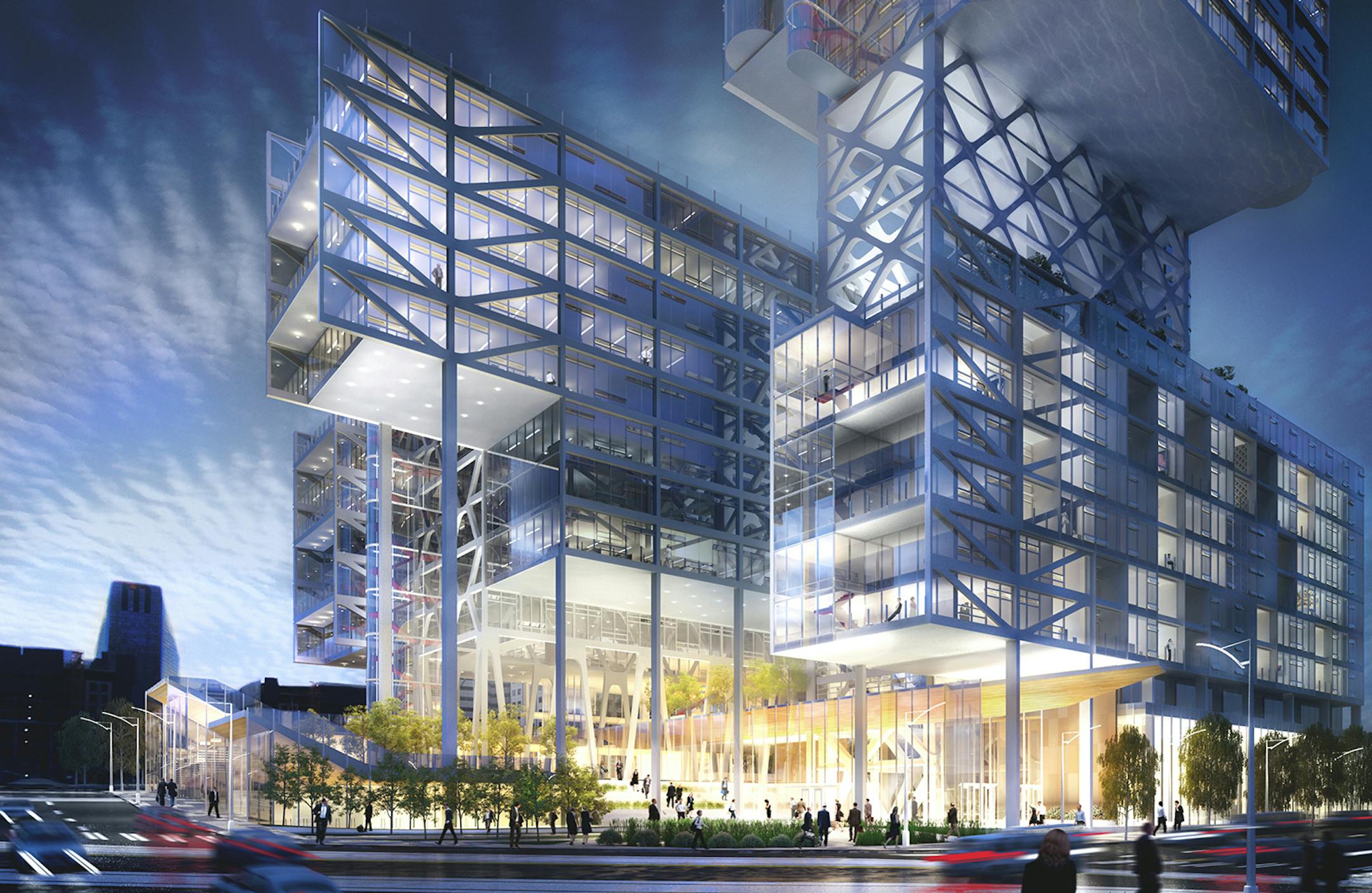
Americans seem to work more than ever these days, but they're not necessarily tethered to the office.
Which begs the question: What will future office buildings look like? And how will they address the changing demographics of the workplace as baby boomers retire and the nation's 80 million tech-savvy millennials enter the workforce?
A recent competition called the Office Building of the Future, sponsored by NAIOP, a national commercial real estate organization, engaged the nation's top architectural firms on the topic. The four winning firms will share their ideas during a panel discussion at 3:30 p.m. Tuesday at the Hopkins Center for the Arts in an event presented by the Minnesota NAIOP chapter.
The winners unearthed often-compelling, sometimes wonky ideas on the topic, ranging from the use of sustainable building materials to emerging psychological trends in the way Americans feel about the workplace.
"There were a lot of imaginative ideas in the competition," said Rick Collins, vice president of development for Minneapolis-based Ryan Cos. U.S. Inc., who will moderate the panel discussion Tuesday. "The common themes involve changing the strategies companies employ about office space, and all of that is driven by changing demographics in the workforce. That's important because the great majority of real estate decisions that are being made now by boomers affect future Gen X and Y employees."
The four winning firms were Gensler, Los Angeles; Hickok Coke Architects, Washington, D.C.; the Miller Hull Partnership, Seattle; and Pickard Chilton, New Haven, Conn. RSP Architects Ltd., of Minneapolis, received an honorable mention.
Several common themes were found in the entries, including the need for buildings to be public-transit and pedestrian friendly, flexible, adaptable and easily reconfigured both internally and externally, and environmentally sustainable in the way they are constructed and maintained.
The Hickok Cole entry notes that future office buildings must accommodate multiple employers who will likely need less space — a theme that was part of RSP's proposal, as well. Gone are the days of sprawling single-company corporate campuses, primarily accessible by car.