

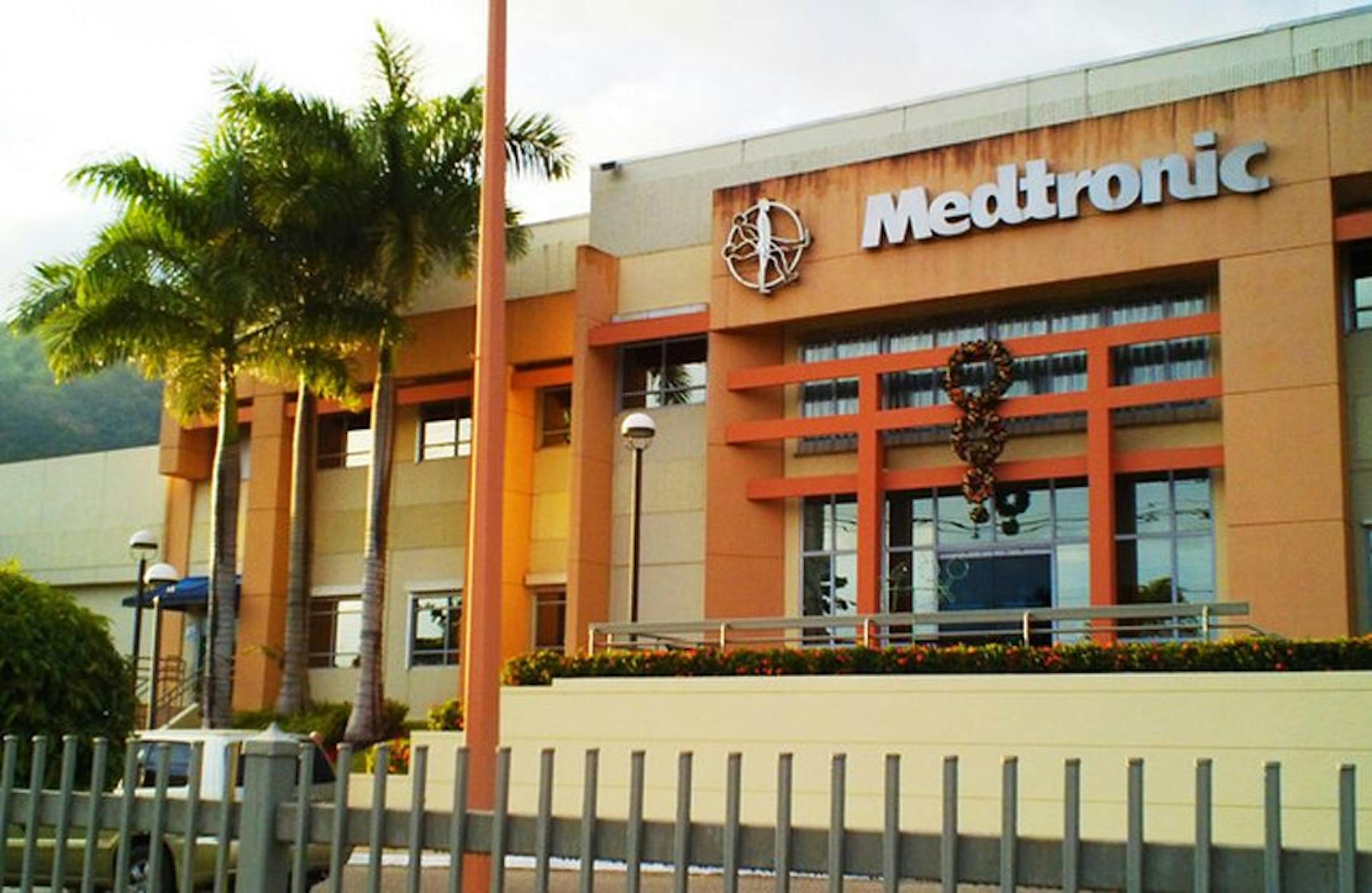
On either side of a two-lane road and surrounded by the lush green mountains of Villalba in central Puerto Rico stand a pair of manufacturing plants owned by Medtronic Inc., the world's biggest maker of heart rhythm devices.
Medtronic does more than half of its $16 billion in annual sales of pacemakers, defibrillators and other devices in the United States. It manufactures the equipment at this facility, legacy of a defunct U.S. tax break designed to encourage investment on the poverty-stricken island. Yet, Medtronic credits the income to a mailbox at an office in the Cayman Islands.
This isn't what Congress had in mind when it eliminated the federal tax credit for companies' Puerto Rican profits. The break was attacked by Republicans and Democrats as too expensive and was ended in 2006. So Medtronic and other companies found a solution: They are avoiding taxes by moving those profits into shell subsidiaries in havens such as the Cayman Islands, Switzerland and the Netherlands.
"By aggressively shifting income to offshore affiliates, companies appear to be getting U.S. tax benefits that are equal to or greater than the ones they did under the old Puerto Rico tax break," said Stephen E. Shay, former deputy assistant secretary for international tax affairs at the U.S. Treasury Department and now a professor at Harvard Law School. "That almost certainly was not the intent of the repeal."
The profits that used to benefit from the Puerto Rico credit are part of a mountain of tax-deferred offshore earnings totaling at least $1.38 trillion, according to J.P. Morgan Chase & Co. Several major U.S. companies, including Apple, Google, Microsoft and Pfizer, are lobbying Congress for a tax holiday to bring those profits home. Without a break, any cash brought back to the United States would be taxed at the federal income-tax rate of 35 percent, with a credit for foreign income taxes already paid.
Medtronic, based in Fridley, paid income taxes in fiscal 2011 at a rate of less than half that -- 16.8 percent. That's also about half Medtronic's rate under the old Puerto Rican tax credit.
As the Obama administration and congressional Democrats take aim at tax breaks for everything from corporate jets to private-equity manager pay, the aftermath of the Puerto Rico credit's repeal shows just how difficult ending such breaks can be.
In a memo sent to IRS auditors in February 2007, the IRS called profit levels "extraordinary" in many of the offshore units created to take over for the subsidiaries that got the Puerto Rican break. In many cases, those units are generating "an inordinate amount of the profits, i.e., amounts in excess of what would be expected, based upon activity," according to an IRS memo.


