

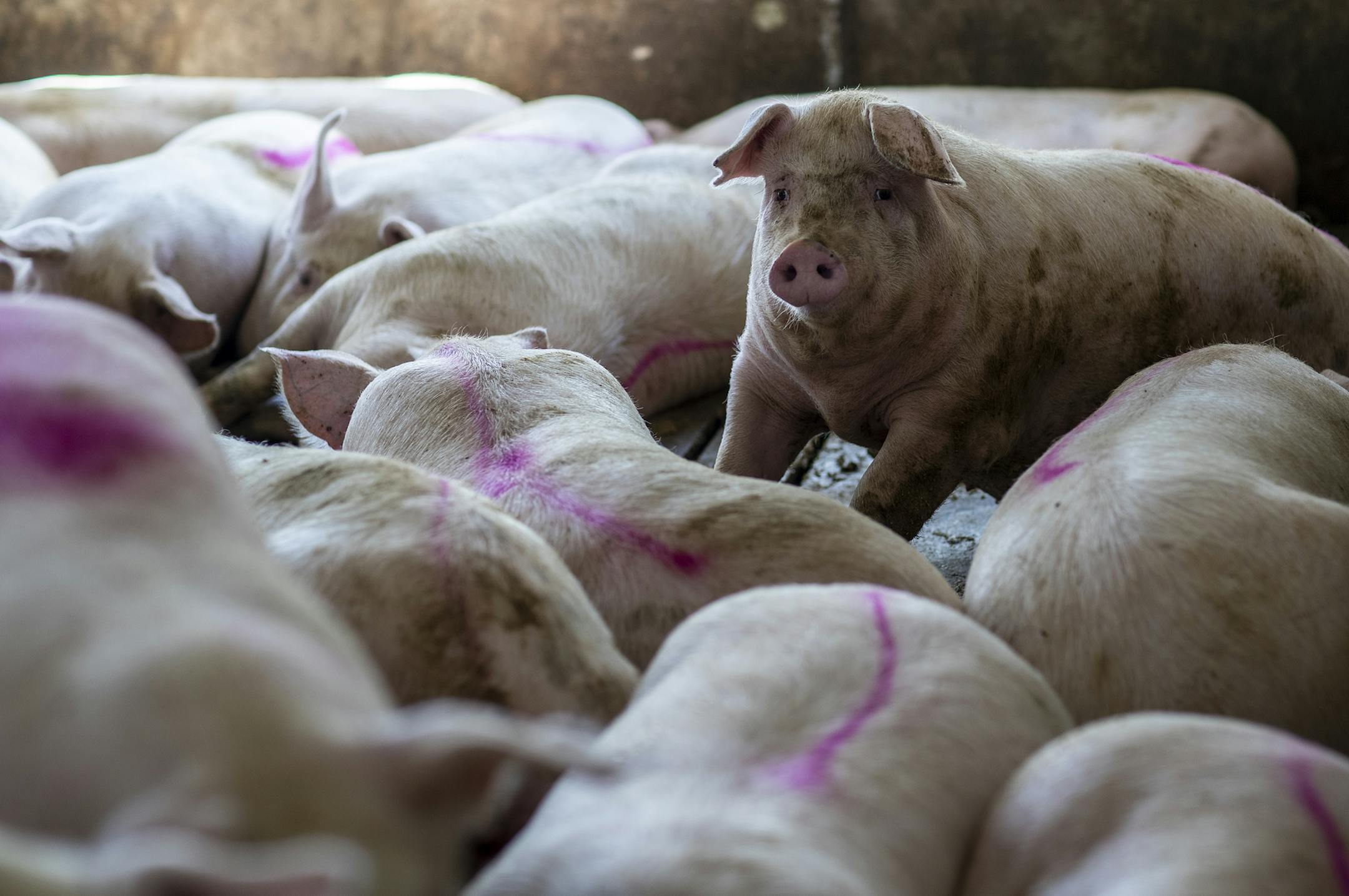
One of America's leading pig slaughterhouses is running faster than ever as meatpackers hustle to keep pork in grocery stores during the COVID-19 pandemic.
Plant worker Hector Ixquier believes it's time to slow down.
Ixquier said he sought medical treatment in January for tendons he strained in his right arm while draining blood from pigs in a Seaboard Foods pork plant in Guymon, Okla.
The 30-year-old immigrant from Guatemala said he requested a transfer to the position piercing jugular veins about five months ago, after an increase in slaughtering speeds made it too tiring to do his previous job: wrestling chains around pigs' hind legs before they are killed.
His new job is also physically taxing, and a doctor recommended rest and avoiding certain tasks at work, Ixquier said. "I'm thankful for the opportunity," he said of the new gig, "but it's still too fast."
Seaboard, the second-biggest U.S. pig producer after Smithfield Foods, sped up its Guymon operations last year after the U.S. government removed limits on pork plant line speeds in late 2019. It was the first plant to operate under the new rule, which was intended to allow processors to produce meat more quickly.
But some workers, such as Ixquier, said they have suffered physically as a result. Seaboard now requires employees to slaughter between about 1,230 and 1,300 hogs per hour, two plant workers who are also union stewards told Reuters. That compares to under 1,100 an hour in 2019, said one of the workers, Jose Quinonez.
Workers and their advocates said the rule change is part of a series of measures finalized by former President Donald Trump's administration that jeopardize employee safety, including exempting dozens of poultry plants from slower line speeds and reopening plants battling COVID-19. The changes, and prevalence of COVID-19 at slaughterhouses, have made it harder to keep workers in their jobs at a time when U.S. companies are trying to build up meat supplies.


