

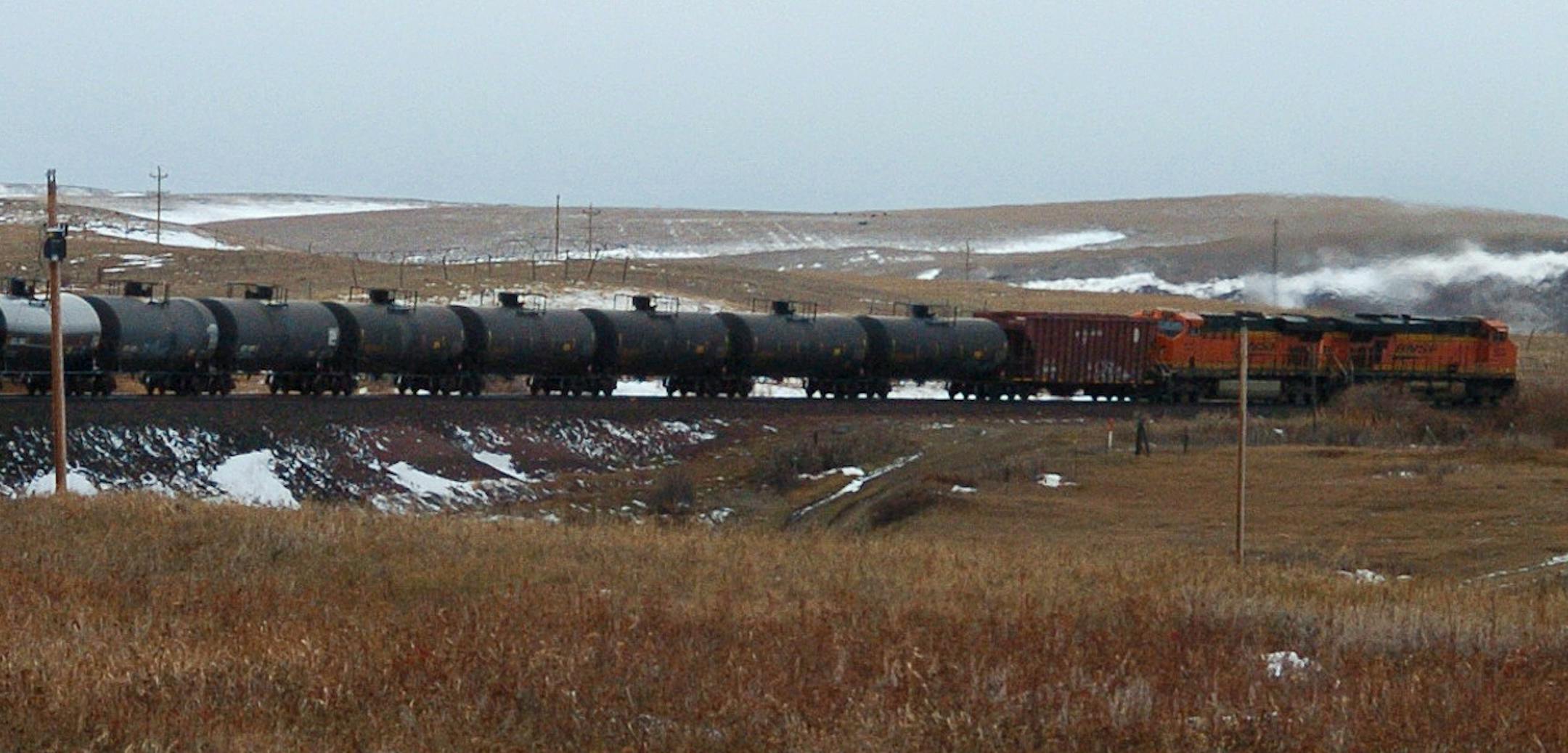
WOLF POINT, Mont. – It's tough to miss the trains hauling crude oil out of the Northern Plains. They are growing more frequent by the day, mile-long processions of black tank cars that rumble through wheat fields and towns, along rivers and national parks.
As common as they have become across the United States and Canada, officials in dozens of towns and cities where the oil trains travel say they are concerned with the possibility of a major derailment, spill or explosion, while their level of preparation varies widely.
Stoking those fears was the July crash of a crude train from North Dakota's Bakken oil patch in Lac Megantic, Quebec, not far from the Maine border, that killed 47 people. A Nov. 8 train derailment in rural Alabama where several oil cars exploded reinforced those worries.
"It's a grave concern," said Dan Sietsema, the emergency coordinator in northeastern Montana's Roosevelt County, where oil trains now pass regularly through the county seat of Wolf Point. "It has the ability to wipe out a town like Wolf Point."
The number of carloads hauled by U.S. railroads has surged in recent years, from 10,840 in 2009 to a projected 400,000 this year.
Despite the increase, the rate of accidents has stayed relatively steady. An Associated Press review of federal hazardous material accident records show most of those incidents involved small quantities of oil.
Railroads say 99.997 percent of hazardous materials shipments reach destinations safely. Representatives said they work hard to prevent accidents and make sure emergency responders are prepared, by training about 20,000 firefighters and others annually.
"It's not something to be afraid of," said Union Pacific CEO Jack Koraleski. He said rail is the safest option.


