

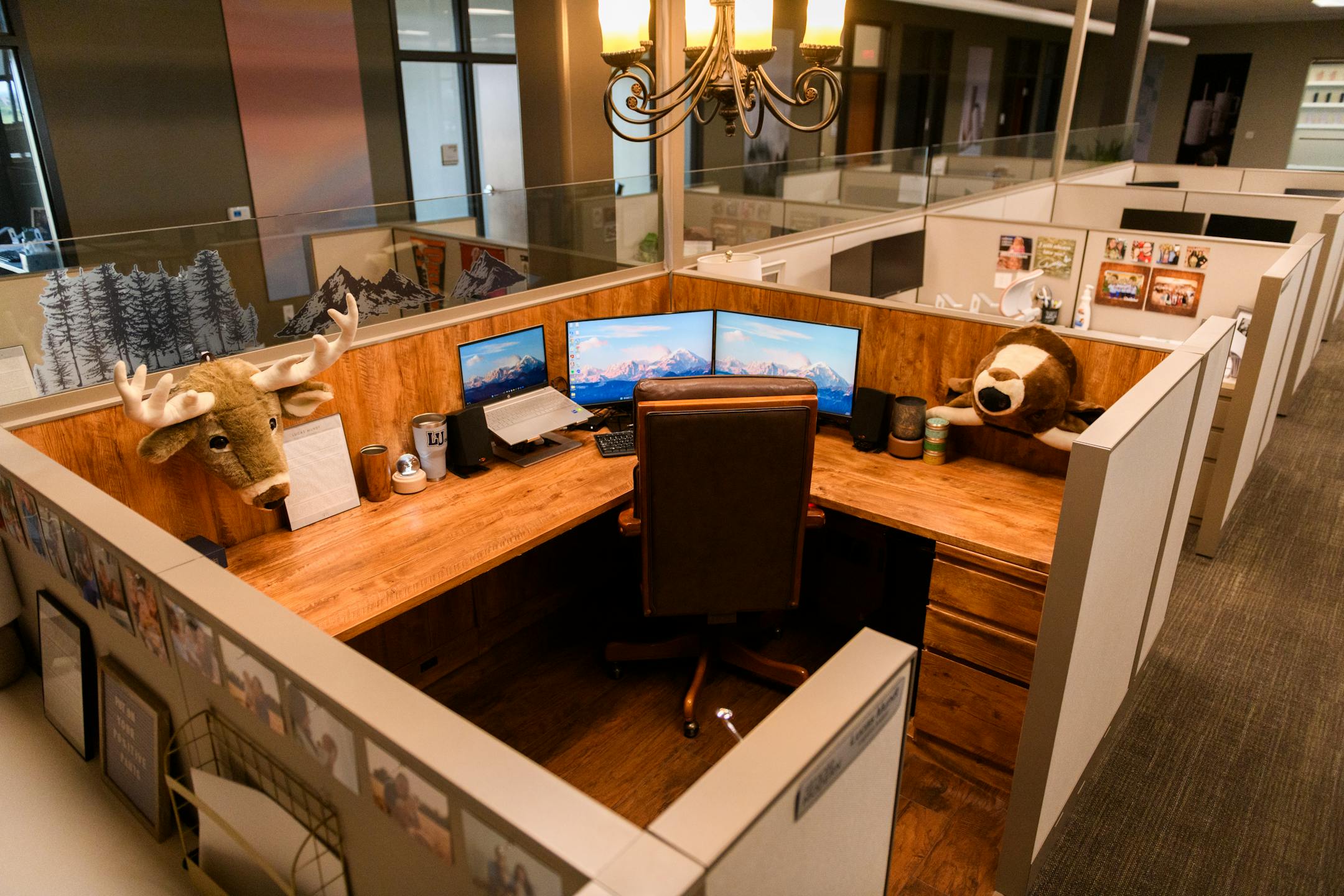
Among office designers and architects, cubicles are rarely mentioned. The once-ubiquitous fixture, so popular in the 1980s and '90s, has become vilified as a sign of the dehumanization of the workforce. Design experts today say cubicles are a "hard no."
And yet cubicles, like scrunchies, are back, spurred by demand from employers and employees alike.
"I frankly thought the cube market was dying," said Brian Silverberg, who sells refurbished and used office furniture with his brother, Mark, in their store, the Furniture X-Change in North Brunswick, New Jersey. "We have sold more cubes in the last three years than in the five years before," he said, adding that 2024 would be "bigger than this year."
COVID-19 was an amplifier of a trend that preceded the pandemic. But as workers returned to the office after months of working at home, quiet spaces became more important, said Janet Pogue McLaurin of Gensler. "We had seen a drop in effectiveness because of noise interruptions, disruptions and a general lack of privacy," she said.
Global demand has pushed cubicles and partitions to a $6.3 billion market, which is expected to grow over the next five years to $8.3 billion, according to a 2022 report from Business Research Insights, a market analysis firm.
Furniture manufacturers had already recognized that workers wanted some privacy despite the tendency of employers to value collaborative areas more highly than individual workspaces.
Anyone who has ever worked in an office with benches "hates the open plan," said Michael Held, vice president of global design at the furniture-maker Steelcase.
Working from home during the pandemic offered some relief from noisy co-workers, but it also brought new distractions, including constant interruptions by family members and roommates and the nagging temptation to do household chores. Employees cite a lack of focus as the biggest problem with remote work, said Ryan Anderson, vice president of global research and insights at MillerKnoll, the furniture-maker, which tracks worker trends with the Boston Consulting Group and the messaging platform Slack.



