

Silicon Valley, the heartland of the U.S. technology industry, takes its name from the chemical element that is the most important ingredient in microchips.
It was there in the 1950s and 1960s where inventions like the transistor and the integrated circuit were refined, helping to transform computers from unreliable machines the size of a room into dependable devices that fit neatly into pockets. That in turn enabled the technology titans of today to prosper.
If data are the new oil, chips are the internal-combustion engines that turn them into something useful.
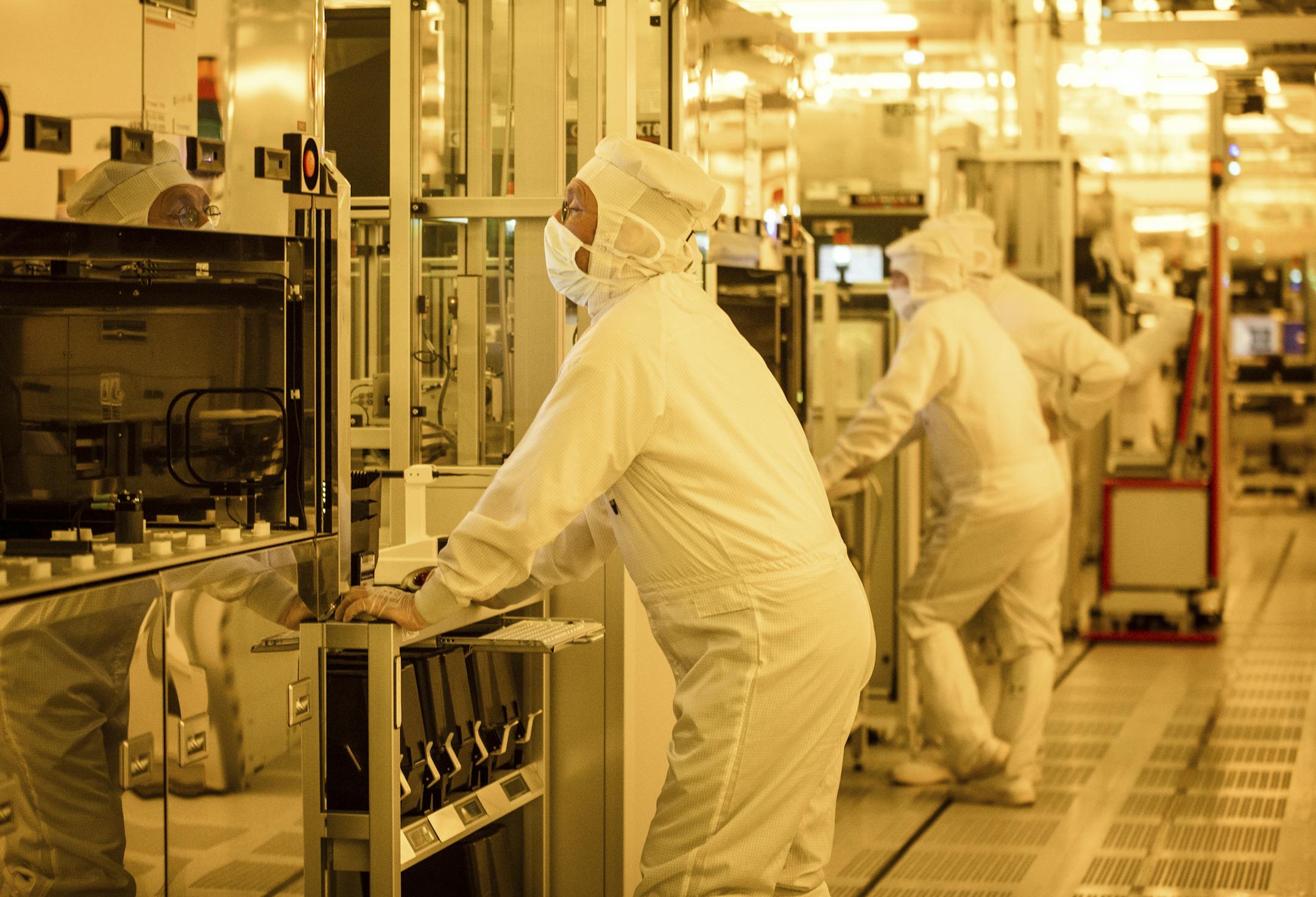
The ubiquity of chips has led to the growth of a vast global industry. Modern microchips have billions of components and are made in ultra-advanced factories that cost tens of billions of dollars to build. Indeed, that such devices can be built at all is a testament to the power of specialization and trade.
Chips are caught up in an increasingly bad-tempered rivalry between the U.S. and China. This brewing technological struggle comes at a historic moment. For 50 years progress has been driven by Moore's Law, which states that the number of components that can be crammed onto a chip doubles every two years and thus, roughly, so does its computational power. But the law is breaking down, leaving the future of the industry looking messier and less certain than at any time in the past.
Geopolitics
The U.S. has long seen its lead in chipmaking as a vital strategic asset. A White House report published in 2017 does not mince its words: "Cutting-edge semiconductor technology is … critical to defense systems and U.S. military strength."
China also sees chips as critical to its future. In 2014, it established the National Integrated Circuit Industry Investment Fund, to channel cash to research and development in the semiconductor industry. One of the targets of "Made in China 2025," a national program to boost high-tech industries, is to increase domestic production.
The U.S. has reacted by trying to slow its rival's progress. In 2015, for instance, it banned the sale of high-end chips made by Intel, the world's second-biggest semiconductor firm, to Chinese labs that design supercomputers. It has thwarted acquisitions of U.S. companies by Chinese firms.


