

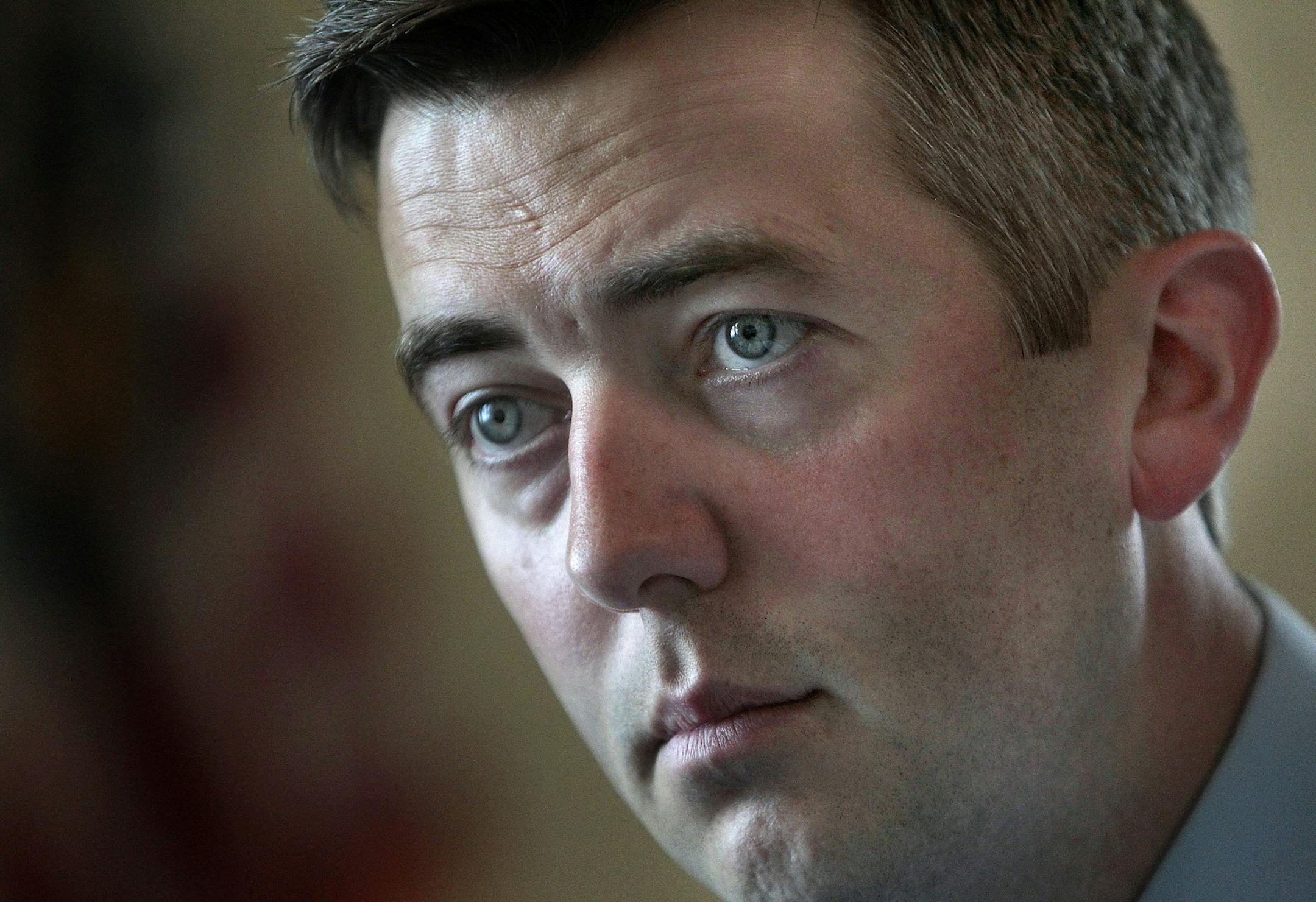
If more politicians were like Duluth's Don Ness, I'd wager, more millennial-generation Minnesotans would enjoy politics. And fewer boomers would fret about the direction democracy will take this state in their declining years.
Those are among several reasons it's a bummer to feature Ness in my almost-annual year-end farewell to politicians exiting the public arena. At the still-tender age of 41 and after only two terms, the Duluth mayor whom one blogger dubbed "the hipster king of the Zenith City" is leaving elective office on Jan. 4. True to hipster form, his final mayoral address was the finale of a "Thank You Duluth" concert on Dec. 16.
Ness will be succeeded by City Council President Emily Larson, an engaging personality who may nevertheless struggle to emerge from her popular predecessor's shadow. (She could commiserate about that with Minneapolis Mayor Betsy Hodges.)
Ness hasn't yet said what he intends to do next, though an announcement may be imminent. That leads to another reason I hate to see him go: I fear he could be drawn to political punditry. He'd be tough competition.
That's evident from Ness' new book, "Hillsider: Snapshots of an Unusual Political Journey." It's a life story, photo album, political commentary and love letter to Duluth, rolled into one self-published volume. A reader doesn't have to be a political insider to get a kick out of it. In fact, political insiders might feel a mite wounded by the kicks it gives them.
Take this, for instance: "So much of politics is just aggressive theater, blunt-force tactics designed to bolster narrow self-interests, and embarrassing displays of power that emphasize rhetorical weaponry over process." Or this description of government: "…an expensive, winner-take-all auction for political power and influence" in which "political strategists, lobbyists, industries, consultants, and the media all get filthy rich from the anti-democratic idea that politics is about rewarding people you like and punishing people you dislike."
The millennials I know voice much the same criticism, though not as eloquently. Too many of them delivered their critique tacitly in 2014 by not voting.
Only 19.9 percent of eligible 18- to 29-year-olds voted last year, the lowest share ever recorded and down from 24 percent in 2010, the last presidential midterm election.


