

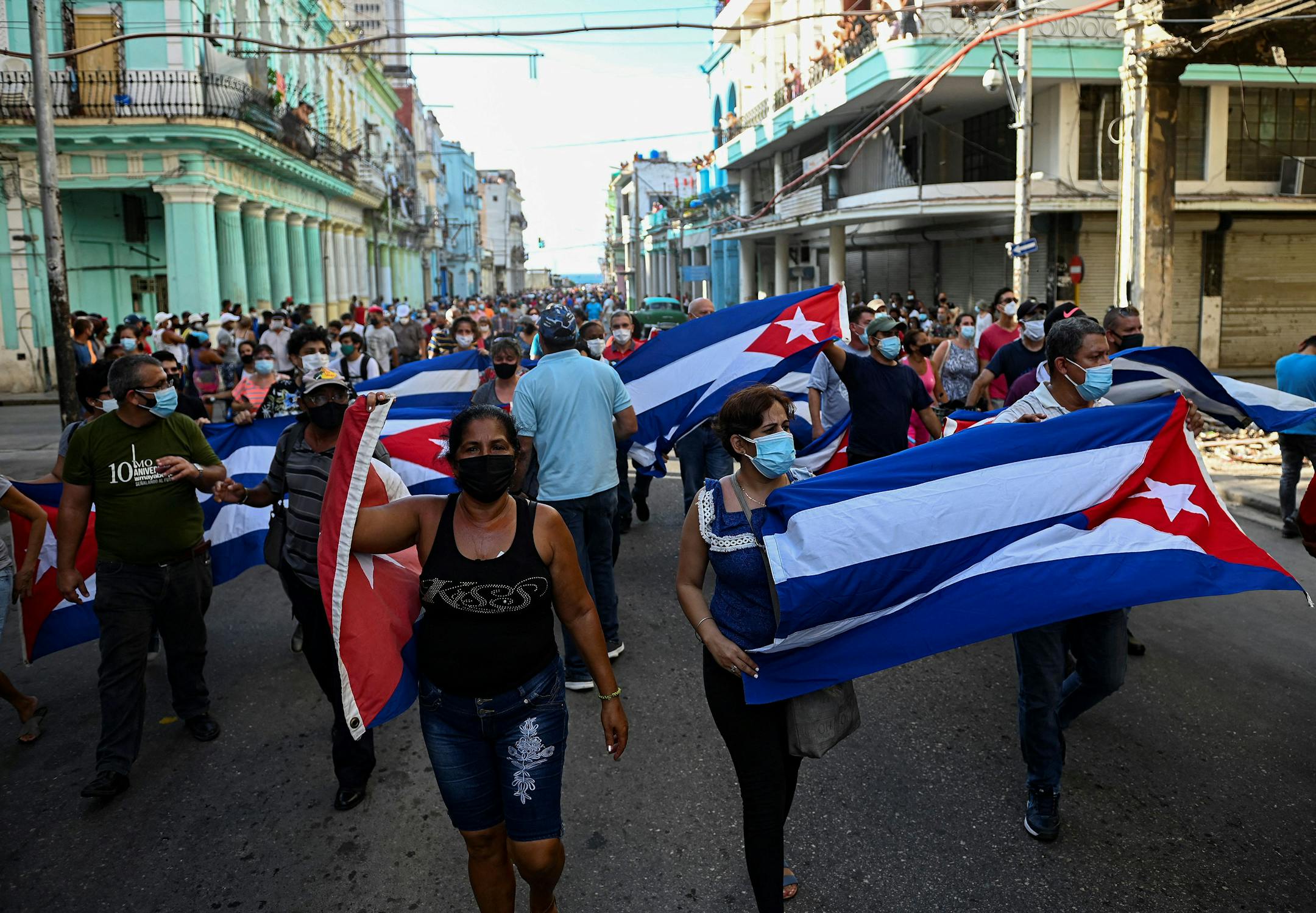
In Cuba, dates significant to the Revolution have traditionally been highlighted on billboards, concrete walls and signs from Pinar del Rio to Santiago.
"11 de julio" is rising to prominence, marking the day when Cuba's citizens reached a breaking point. Mass protests rolled across the battered island in numbers not seen for decades. The movement was bolstered by WhatsApp, Facebook and other sites that enabled participants to send live footage of the protests and the subsequent repressive government response to friends and family off the island. Videos from virtually every province confirmed the unusual scale of the movement.
The internet, a relatively new tool for Cubans, who largely lacked access prior to former President Barack Obama's brief period of engagement, has since been even spottier than usual with some sites intermittently blocked by the government. Cuba's internet infrastructure has China's handwriting all over it, thanks to the vacuum left by America's diplomatic withdrawal.
The Cuban government has called for all communist revolutionaries to "defend the revolution" and staged a counterprotest on Havana's Malecón boulevard last weekend along with their own social media image and video campaign. But the massive scale of unrest will make it difficult to put the genie back in the bottle, as Latin America expert Ted Henken at Baruch College, City University of New York, noted last week.
The eruption of protests had been preceded by an uptick in Cuban migrants leaving the island by "boat" (rafts, rústicos and paddleboards), which is likely to increase. Cubans are no strangers to isolation and hardship after 60-plus years of U.S. embargo. But the combination of COVID lockdown, the absence of U.S. tourism and a U.S.-imposed stranglehold on family remittances — all on top of a slow vaccine rollout and currency changes that have sent inflation skyrocketing — have produced a situation desperate enough to prompt Cubans to risk a dangerous migration.
Our hemisphere is full of migrants fleeing difficult economic and political circumstances. But America's hard-line stance on Cuba has accelerated this humanitarian crisis in tandem with its own government's failures.
Is Cuba entering its own Arab Spring? Will a primavera cubana finally force President Joe Biden's hand, or will he continue to watch and wait, angling for Miami votes as refugees surge into the Florida straits? While Biden has moved quickly to return the U.S. to the international stage, rejoining the Paris Climate Agreement, meeting with European leaders and pledging to donate 80 million vaccine doses around the world, his gaze has fallen past one of our closest neighbors.
Despite campaign promises, Biden's inaction on Cuba in the face of its desperate economic situation lands him squarely in the same camp as his predecessor. On the island, initial euphoria over Biden's presidency has faded into bitter cynicism — more fuel for the current fire escalating an already troubling humanitarian situation.


