

Listen and subscribe to our podcast: Via Apple Podcasts | Spotify | Stitcher
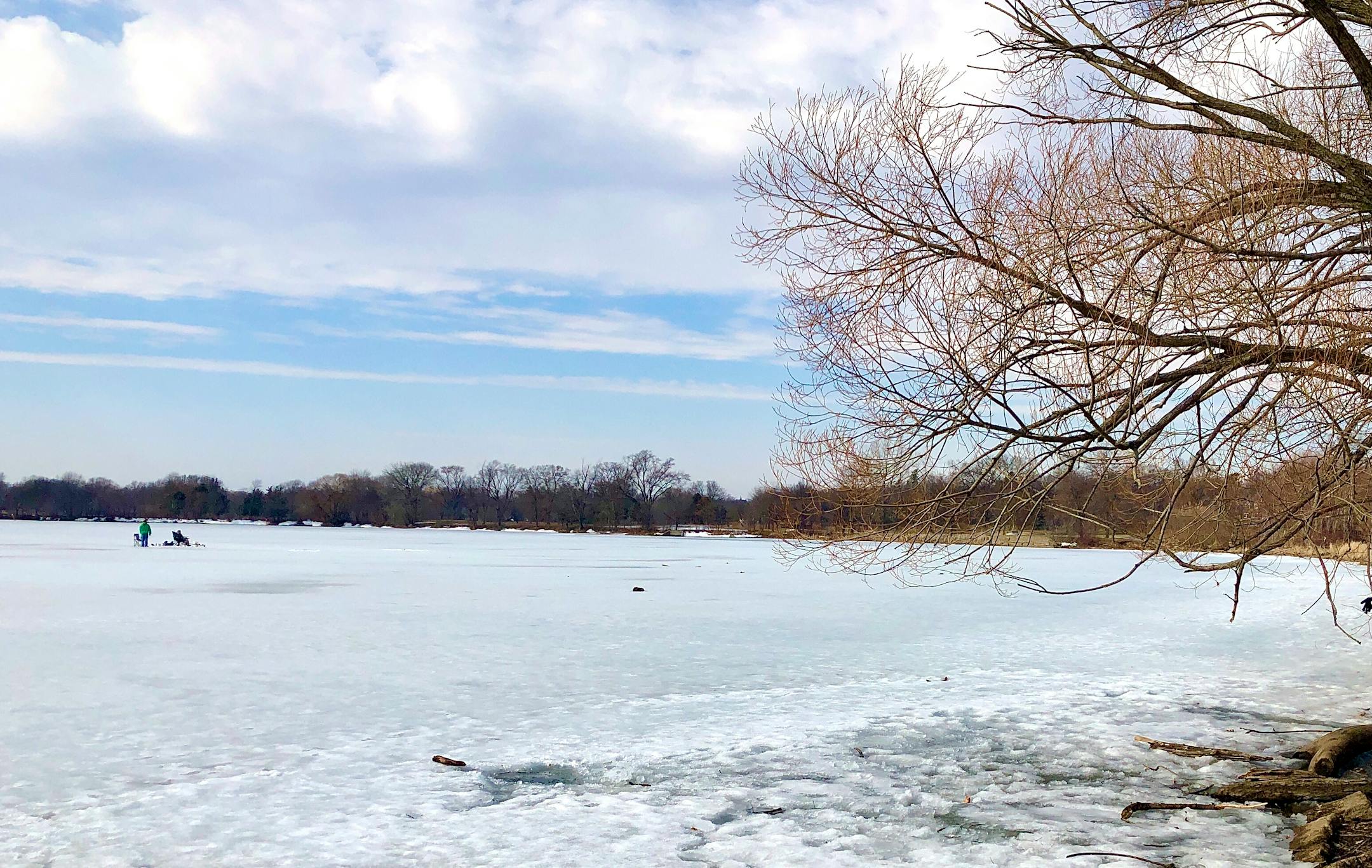
One of the defining sights of a Minnesota winter is looking out on a frozen lake and seeing people sitting on stools, fishing rods in their hands. But for some lifelong Minnesota residents, it can still be bewildering to see another person calmly planted in the middle of an icy lake.
After 26 anglers were stranded on a block of Lake Superior ice last month, one reader turned to Curious Minnesota, our community-driven reporting project fueled by questions from readers. He asked: How safe is it, really, to walk on the iced-over lakes in Minneapolis?
Lisa Dugan, the Minnesota Department of Natural Resources recreation safety outreach coordinator, said you are never going to get a straight answer to that question.
"The standard answer is, really, ice is never 100% safe, which is absolutely true because conditions can change so quickly," Dugan said. "It's really knowing the factors that you need to take into consideration to know if the ice that you're on is going to support your weight."
Four inches is the minimum ice thickness for someone to be able to walk across an iced-over lake. That minimum jumps up to 8-12 inches for cars and 12-15 inches for trucks.
Dugan says the best way to check the safety of the ice is to have an ice chisel with you while moving across the ice. Other ways to check the thickness include an auger, drill and a tape measure.
But the minimums do not guarantee safety. When the weather is warmer and the ice is melting, it is not as safe as during a below-freezing day. Snow cover also slows the freezing process, so ice with a thick snow layer on top is less sturdy.


