

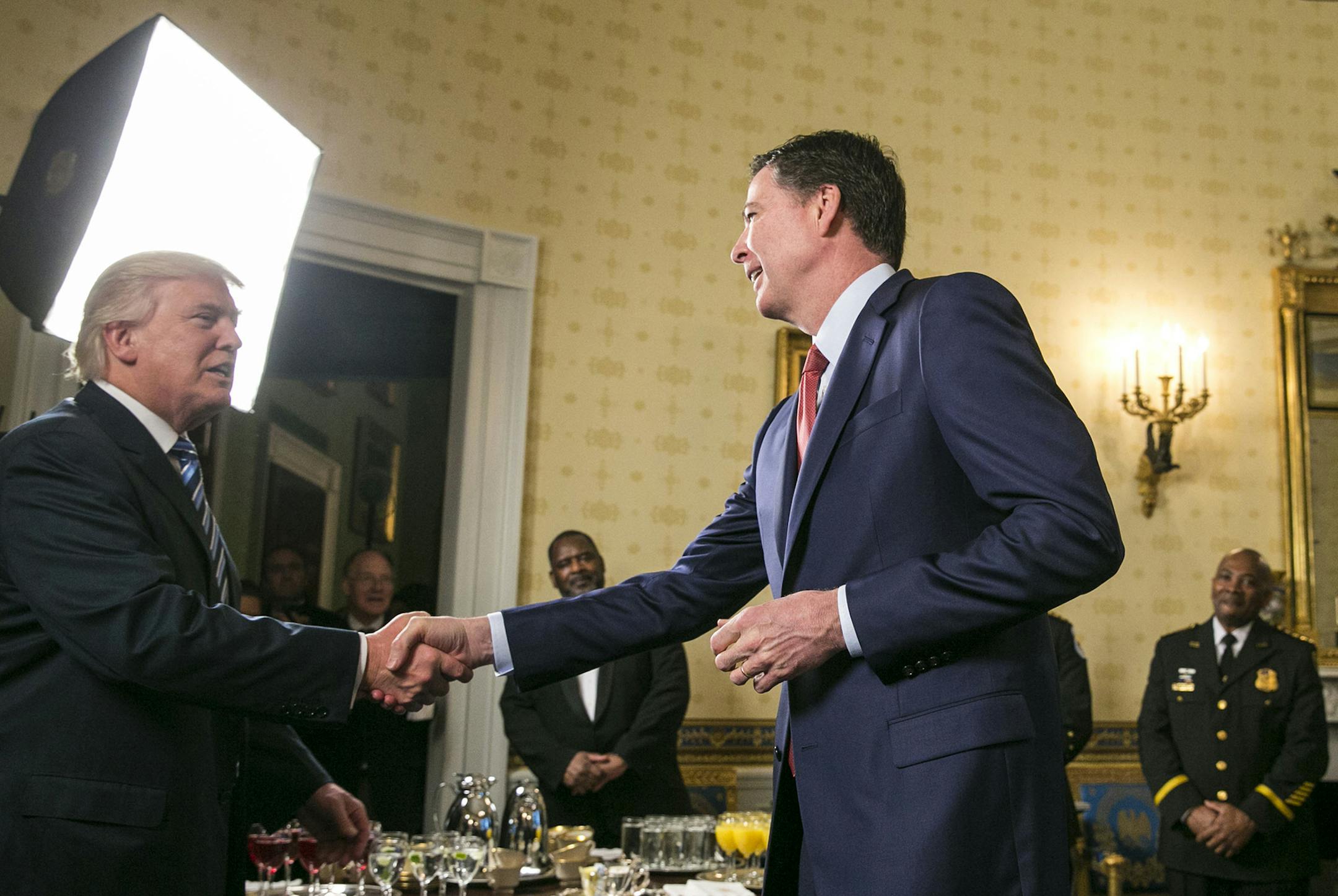
The most dramatic hearing I helped to arrange as chief counsel to a Senate subcommittee took place 10 years ago Monday, when James Comey, then deputy attorney general in the George W. Bush administration, described how he and FBI Director Robert Mueller intervened at the hospital bedside of Attorney General John Ashcroft.
The encounter occurred in 2004, after White House Chief of Staff Andrew Card and White House Counsel Alberto Gonzales tried to overrule Comey's and Mueller's legal objection to a secret terrorist surveillance program. When the White House nonetheless sought the ailing Ashcroft's blessing to proceed, Comey prepared to resign. Ultimately, Comey and Mueller prevailed.
Jim Comey was once my boss and remains my friend. I know that many people are mad at him. He has at different times become a cause for people's frustration and anger on both sides of the aisle. Some of those people may have a point. But on this unsettling anniversary of that testimony, I am proud to know a man who had the courage to say no to a president.
And in the tumult of this time, the question whose answer we should perhaps fear the most is the one evoked by that showdown: Are there still public servants who are prepared to say no to the president?
Now, as the country once again wonders whether justice can be nonpolitical and whether its leaders understand the most basic principles of prosecutorial independence and the rule of law, I recall yet another firestorm that erupted 10 years ago over the abrupt and poorly explained firing of top Justice Department officials in the midst of sensitive investigations. The 2007 affair was not Watergate, the more popular parallel invoked lately, but the lessons of that spring, after the Bush administration inexplicably fired more than eight of its own U.S. attorneys, are worth recalling.
When the actions became public, people suspected political interference and obstruction. Democrats were the most vocal, but some Republicans asked questions, too. The uproar intensified as it became clear that the initial explanations were mere pretext, and the White House couldn't keep its story straight. Public confidence ebbed, and Congress began to investigate.
In response, the Senate launched a bipartisan (yes, bipartisan) investigation into those firings and the politicization of the Justice Department. Early on, the then-deputy attorney general — Comey was gone by then — looked senators in the eye and said the U.S. attorneys were fired for cause; although such appointees certainly serve at will, this assertion turned out to be demonstrably false. We learned that the U.S. attorney in New Mexico, David Iglesias, was fired soon after receiving an improper call from Republican Sen. Pete Domenici pushing him to bring political corruption cases before the election. We learned that Justice Department officials in Washington had improperly applied a conservative ideological litmus test to attorneys seeking career positions, to immigration judges and even to the hiring of interns.
Ultimately, amid the drumbeat of revelations, every top leader of the department stepped down under a cloud. Finally, Gonzales himself resigned. Strict protocols were put in place severely limiting White House contacts with Justice officials on criminal matters. The blow to the morale and reputation of the department was incalculable.


