

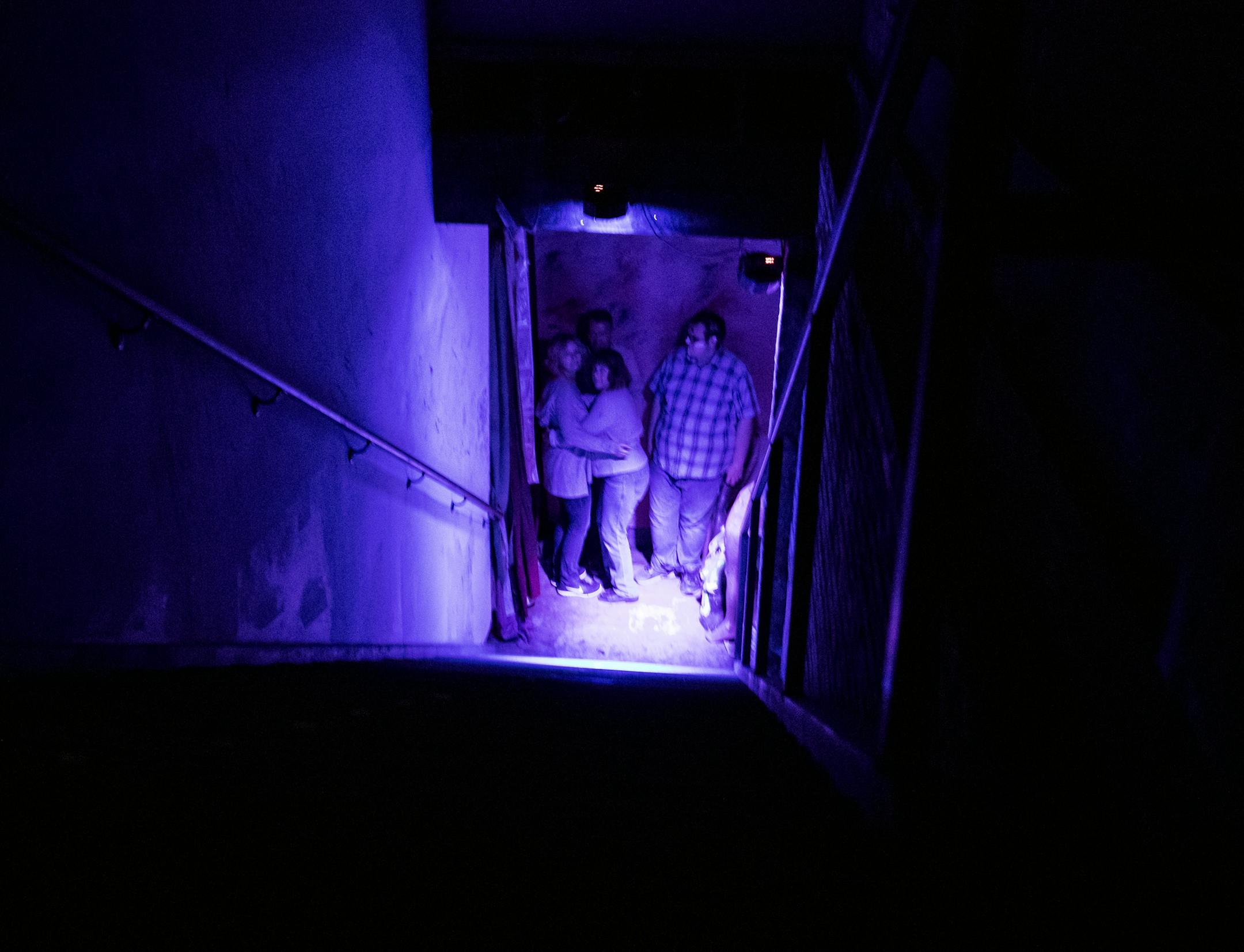
First, you have to sign a waiver acknowledging that what you are about to do could trigger PTSD — or cause bodily harm. Then, you're given a "safe word" to yell if you get too frightened and need to escape. And that's before you even descend the stairs to the Haunted Basement at the Soap Factory art gallery in Minneapolis.
Extreme Halloween attractions like this are a far cry from family-friendly haunted hayrides. More and more, haunt-makers are upping the ante with terrifying blood-soaked scenes ripped from the headlines. They're doing so, they say, because audiences have become so accustomed to real-world terrors that it takes more than a ghostly "boo!" to thrill them.
"Realism is now where it's at," said Bill Zywiec, owner of the Haunting Experience in Cottage Grove.
These days, you can spend a sleepless night camping in "haunted" woods. Or make your way through a suburban kitchen that's been the scene of a horrific crime. Or allow deformed, human monsters to grab you.
"The world has changed," said Jean Sockness, who runs Terror Trail Camping, the overnight experience in the woods of Chisago City, Minn. "I think people expect more and more."
Sockness has been in the haunted house business 25 years, but this is the first time she's taken the fright overnight. At the new attraction, campers can select the "zombie" tent, which promises "endless frightning [sic] interaction keeping you in an endless state of terror," through visits from the undead.
Scaring people is big business. The Haunted House Association estimates there are 4,000 attractions around the world, from corn mazes and hayrides to blood-and-guts bonanzas, creating a $400 million industry globally. The quest to wow customers with the newest, most heart-stopping scare has turned more haunts into torture fests.
At the Haunting Experience, Zywiec has had to adapt to audiences' more extreme tastes.


