
ApothecaryRx is 'anti-chain' drugstore chain

A down-home, higher-tech business model is catching the wave of retiring pharmacists.

July 9, 2008 at 3:28AM
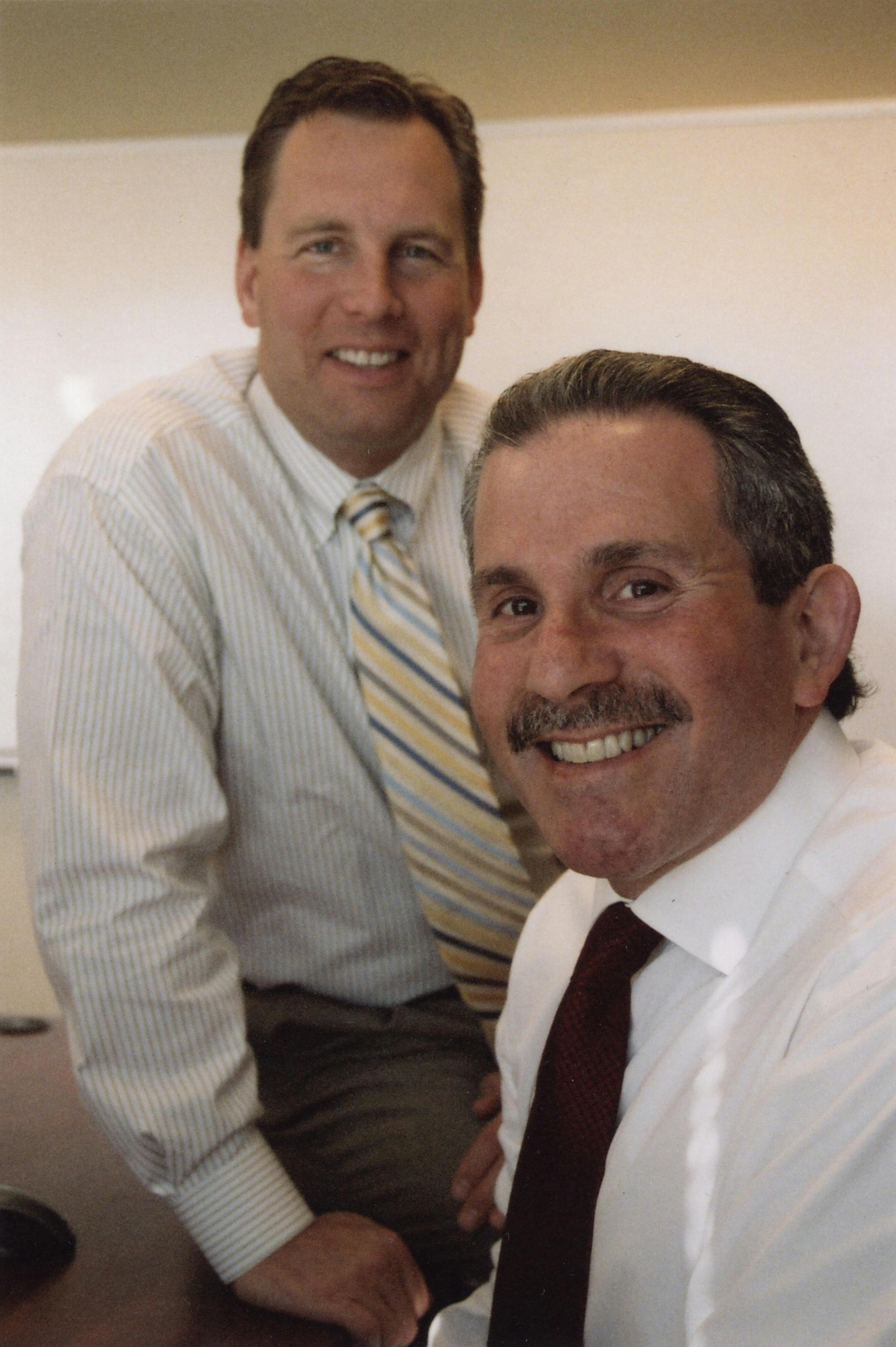
Lewis Zeidner(front) and James Cox are founders of ApothecaryRX, which is building a chain of "independent" drug stores aquired from owners who are near retirement. the company grossed $40.7 million, its first full year in business.
ApothecaryRx founders James Cox, left, and Lewis Zeidner (Star Tribune/The Minnesota Star Tribune)

In 25 years as a hospital administrator, pharmacy chain executive and founder of a hospital pharmacy business, Lewis Zeidner saw dozens of small, independent drugstores close or be snapped up by national chains as their owners reached retirement age.

He thought there might be a better way. So he set out two years ago to offer retiring pharmacy owners an alternative to selling out to the big chains.

Zeidner's answer: another drugstore chain.

He and business partner James Cox are founders of ApothecaryRx, a Golden Valley company that has acquired 18 independent drugstores in five states since mid-2006 as the foundation for what Zeidner calls "the anti-chain chain."

Translation: Their aim is to capitalize on the efficiencies of a chain operation while retaining the features and community loyalty behind successful independent pharmacies, which they pledge will continue to operate autonomously.

The score so far: ApothecaryRx grossed $40.7 million in 2007, a year that started with five stores and ended with 10. The net before interest and taxes was $763,000.

And with 14 stores on board by the end of the first quarter, the company posted nearly $16 million of sales and a $597,000 pretax net in the first three months of 2008.

The stores acquired in 11 transactions so far are in Illinois, Oklahoma, Colorado, Missouri and Minnesota, including two stores apiece in Red Wing and St. Cloud plus one in Wayzata.

Zeidner figures that's just the beginning.

"In 2007, the National Association of Chain Drugstores estimated that owners of about 2,000 independent drugstores were nearing retirement age," said Zeidner, 52, the company's president and CEO. Backed by bank financing underwritten by a private investor, he figures to latch onto a significant share of those prospects.

The strategy is to acquire already successful stores with above-average revenues of at least $5 million, a level that Zeidner calls "a sign of success and a signal that the community values it."

The plan is to keep the stores' names, signage, merchandising and personal service policies, including such perks as charge accounts and free deliveries. And because customer relationships are regarded as essential, personnel and their wages and benefits also will remain the same, Zeidner said.

"I believe in the service model of the independent pharmacies, where they know their customers, talk to their customers and educate their customers," he said.

Yet having labored as CEO of a company that managed hospital pharmacies in 35 states, he's also aware of the financial savings inherent in a larger organization.

Volume discounts on inventory are a significant plus, and so is a standardized computer system that promotes more efficient work flow. Most of the acquired stores did not have state-of-the-art systems, said Cox, 36, the company's vice president of operations.

In tandem with the updated computer system, a standardized accounting system offers the opportunity "to watch the business on a daily basis, so we can react more quickly to problems and opportunities," Cox said.

A company-wide benefits plan also provides savings on volume, Zeidner said, adding that the benefits "are at least as good as before the acquisitions, if not better."

Altogether, the changes have improved the bottom line by about 1.5 percent so far, he said.

Zeidner and Cox also have added services aimed at boosting sales and cementing customer loyalty. For example: Because some diabetics, mainly older ones, require special fittings and inserts for their shoes, they opened small shoe departments in nine of the stores so far and are working on adding them to the remaining stores soon.

And when they realized that many customers were forgetting to refill their prescriptions on time, they added an application that alerts pharmacists to phone a reminder to the patient. The same process also tracks prescriptions that are switched to other pharmacies, so a query letter can be made to identify any problems that might have triggered the change.

Trained as a clinical psychologist, Zeidner spent his career in the health-care field. Before starting ApothecaryRx, he was a co-founder of PrairieStone Pharmacy, which operated pharmacies in Lunds and Byerly's stores. That's where he met Cox, a veteran pharmacist who wound up as PrairieStone's director of operations.

They started the company with $17.5 million in bank loans backed by an Oklahoma businessman who has become a majority shareholder in ApothecaryRx. The credit line subsequently was expanded to $45 million, of which $17.2 million has been spent.

Zeidner said he expects two more stores to be added in August, with three more targeted for acquisition by year-end.

Dick Youngblood • 612-673-4439

about the writer

about the writer

DICK YOUNGBLOOD, Star Tribune

More from Business

See More
card image
Jeremy Olson/The Minnesota Star Tribune

Triage unit treats many children without ever taking them into the actual ER, freeing up time for the rest of the emergency medical staff.

card image
card image
