
Antarctic penguins are breeding earlier, and that could lead to their extinction

As the ground warms, it’s leading to food shortages for young chicks.

The Associated Press
February 14, 2026 at 12:00PM
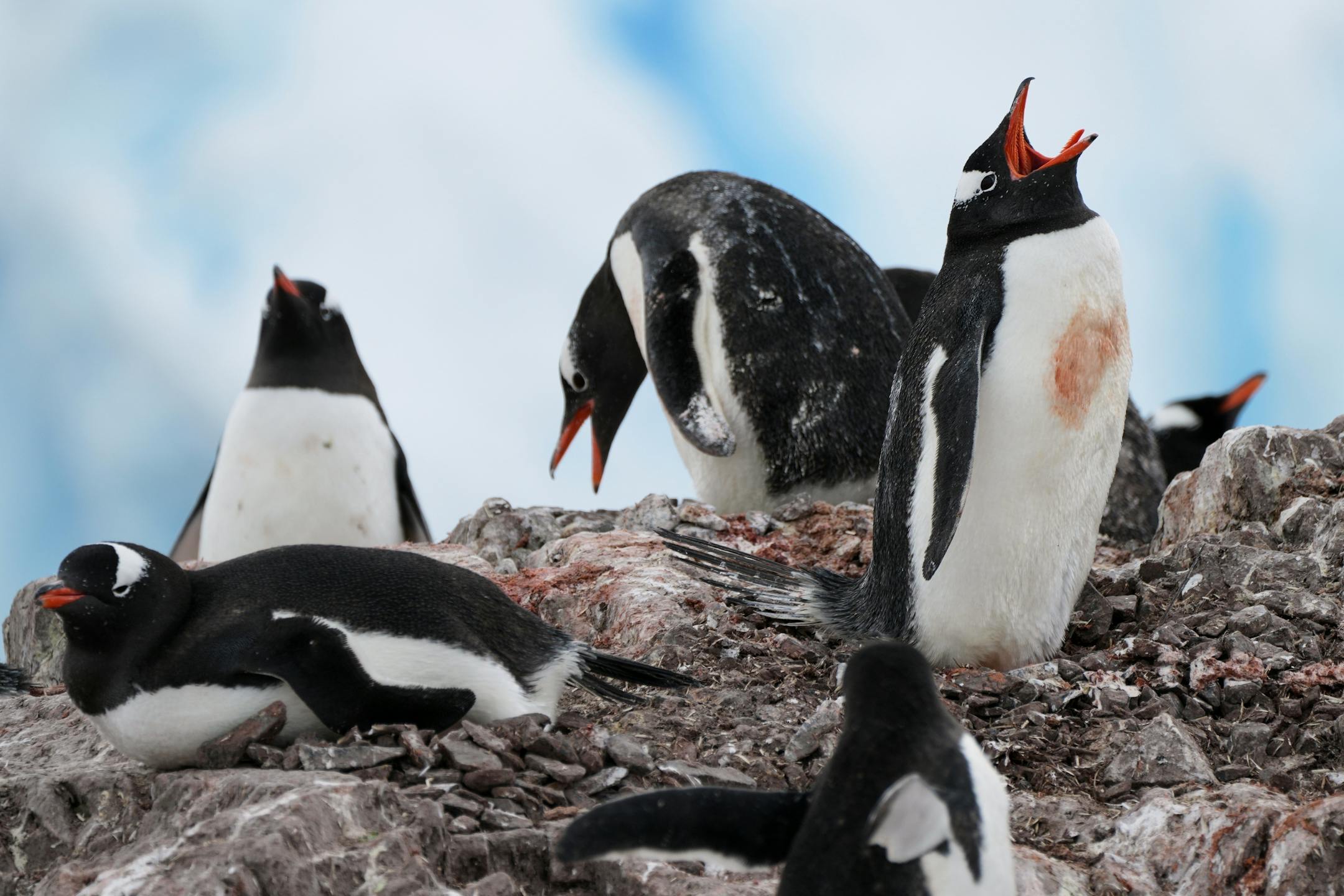
Gentoo penguins nest at Neko Harbour in Antarctica. The gentoos are more aggressive in finding food and establishing nesting areas and so are thriving as temperatures warm in the continent. (Mark Baker/The Associated Press)

WASHINGTON — Warming temperatures are forcing Antarctic penguins to breed earlier and that’s a big problem for two of the cute tuxedoed species that face extinction by the end of the century, a study said.

With temperatures in the breeding ground increasing 5.4 degrees from 2012 to 2022, three different penguin species are beginning their reproductive process about two weeks earlier than the decade before, according to a study published last month in Journal of Animal Ecology. And that sets up potential food problems for young chicks.

“Penguins are changing the time at which they’re breeding at a record speed, faster than any other vertebrate,” said lead author Ignacio Juarez Martinez, a biologist at Oxford University in the United Kingdom. “And this is important because the time at which you breed needs to coincide with the time with most resources in the environment and this is mostly food for your chicks so they have enough to grow.’’

For some perspective, scientists have studied changes in the life cycle of great tits, a European bird. They found a similar two-week change, but that took 75 years as opposed to just 10 years for these three penguin species, said study co-author Fiona Suttle, another Oxford biologist.

Researchers used remote control cameras to photograph penguins breeding in dozens of colonies from 2011-21. They say it was the fastest shift in timing of life cycles for any backboned animals that they have seen. The three species are all brush-tailed, so named because their tails drag on the ice: the cartoon-eye Adelie, the black-striped chinstrap and the fast-swimming gentoo.
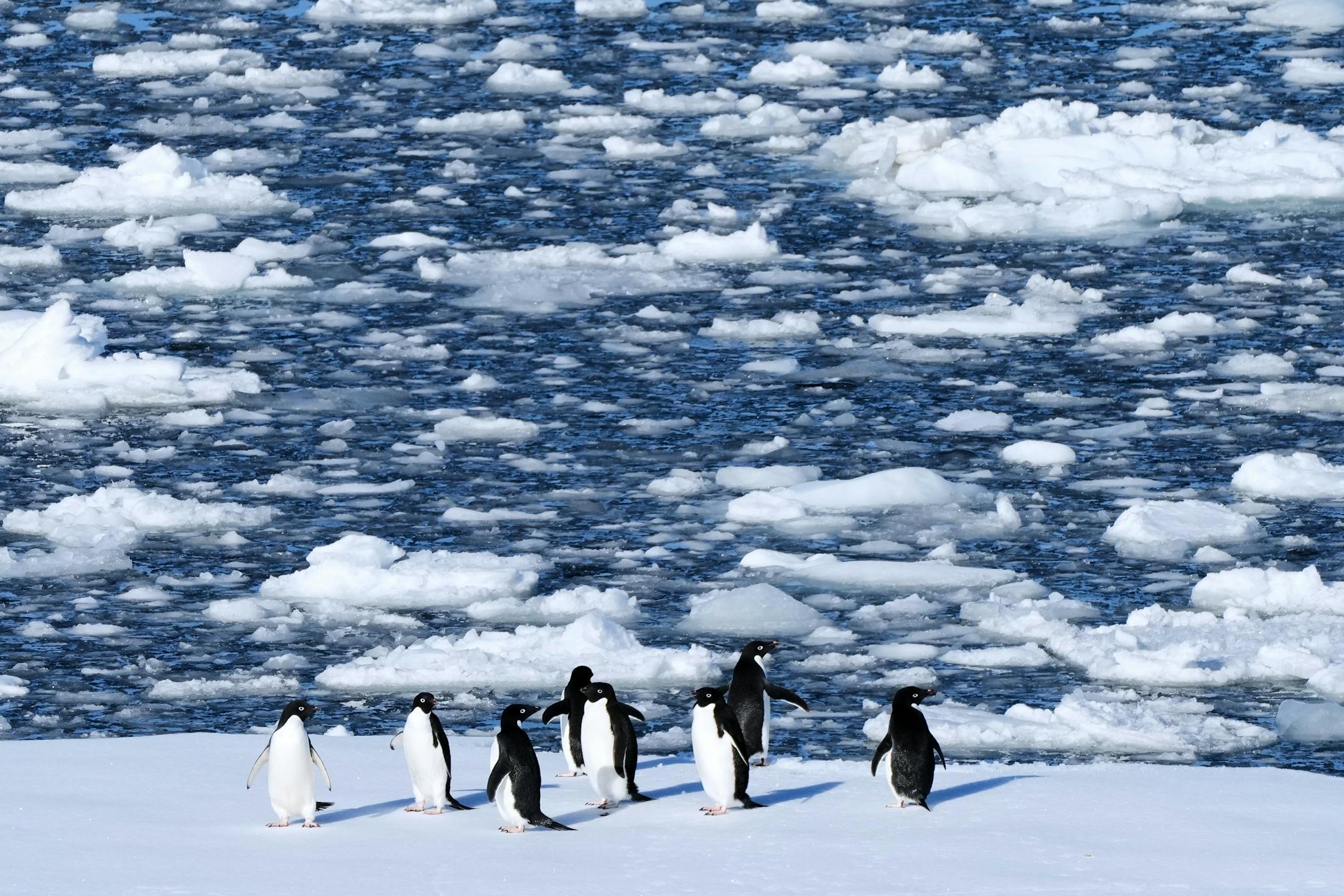
Adelie penguins stand on a block of floating ice at Yalour Islands in Antarctica. Biologist Ignacio Juarez Martinez predicts that the species could become extinct from the Antarctic Peninsula before the end of the century. (Mark Baker/The Associated Press)

Winners and losers

Suttle said climate change is creating winners and losers among these three penguin species and it happens at a time in the penguin life cycle where food and the competition for it are critical in survival.

The Adelie and chinstrap penguins are specialists, eating mainly krill. The gentoo have a more varied diet. They used to breed at different times, so there were no overlaps and no competition. But the gentoos’ breeding has moved earlier faster than the other two species and now there’s overlap. That’s a problem because gentoos, which don’t migrate as far as the other two species, are more aggressive in finding food and establishing nesting areas, Martinez and Suttle said.

Suttle said she has gone back in October and November to the same colony areas where she used to see Adelies in previous years only to find their nests replaced by gentoos. And the data backs up the changes her eyes saw, she said.

“Chinstraps are declining globally,” said Martinez. “Models show that they might get extinct before the end of the century at this rate. Adelies are doing very poorly in the Antarctic Peninsula and it’s very likely that they go extinct from the Antarctic Peninsula before the end of the century.”

Martinez theorized that the warming western Antarctic — the second-fasting heating place on Earth behind only the Arctic North Atlantic — means less sea ice. Less sea ice means more spores coming out earlier in the Antarctic spring and then “you have this incredible bloom of phytoplankton,” which is the basis of the food chain that eventually leads to penguins, he said. And it’s happening earlier each year.

Not only do the chinstraps and Adelies have more competition for food from gentoos because of the warming and changes in plankton and krill, but the changes have brought more commercial fishing that comes earlier and that further shortens the supply for the penguins, Suttle said.

This shift in breeding timing “is an interesting signal of change and now it’s important to continuing observing these penguin populations to see if these changes have negative impacts on their populations,” said Michelle LaRue, a professor of Antarctic marine science at the University of Canterbury in New Zealand. She was not part of the Oxford study.

With millions of photos — taken every hour by 77 cameras for 10 years — scientists enlisted everyday people to help tag breeding activity using the Penguin Watch website.

“We’ve had over 9 million of our images annotated via Penguin Watch,” said Suttle. “A lot of that does come down to the fact that people just love penguins so much.”

about the writer

about the writer

Seth Borenstein

More from Outdoor Activities

See More
Bald eagles congregate on the ice, near an open stretch of the Mississippi River, below Lock and Dam No. 4 on Jan. 2, 2021, in Alma. During winter, much of the river freezes up and so bald eagles congregate near areas where the water is not frozen in order to hunt for food, including fish, which are a large part of their diet.
card image