

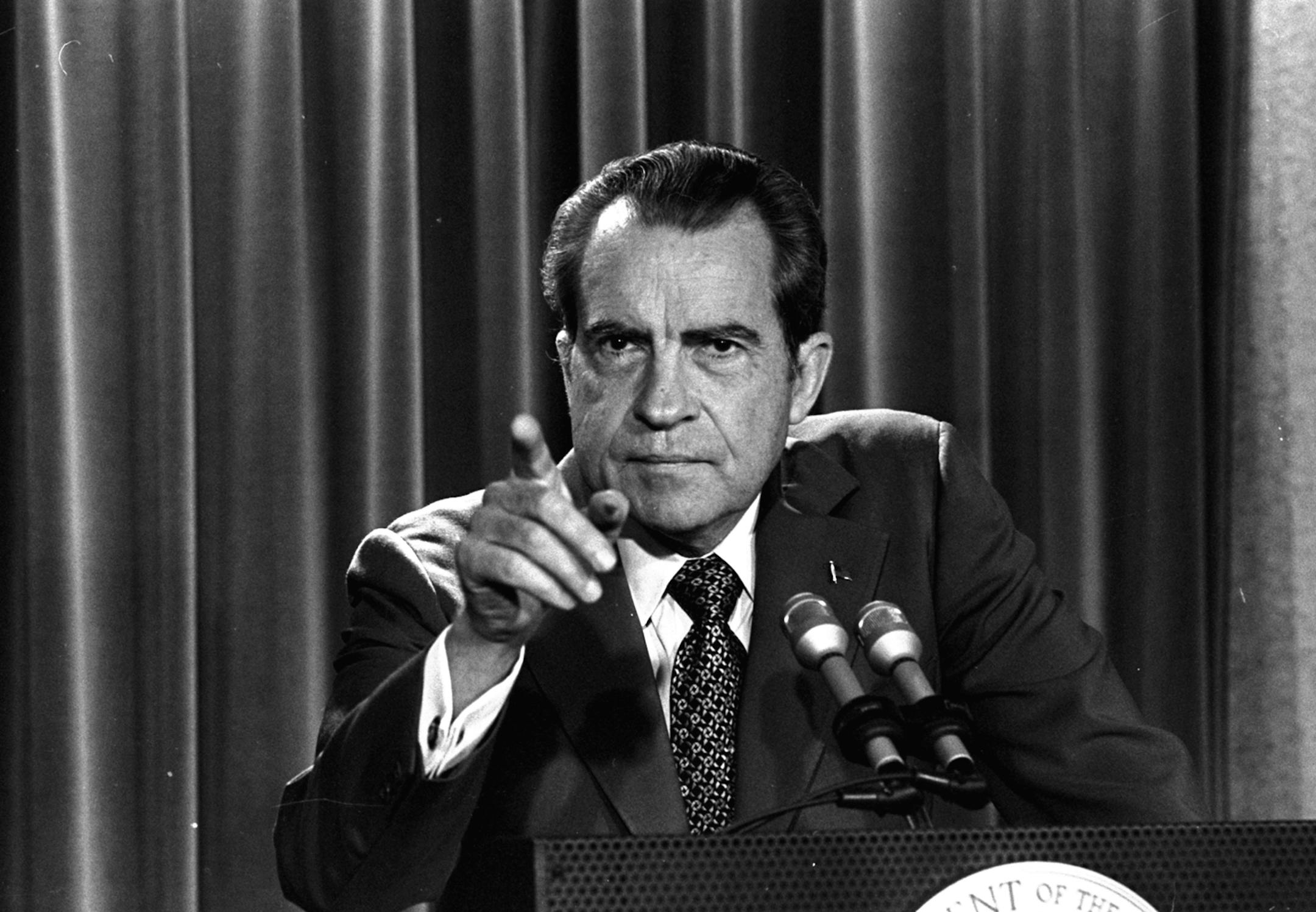
I don't mean to pile on, but it's getting hard to ignore this whole "Watergate déjà vu" discussion.
After President Donald Trump fired FBI Director James Comey, a flurry of stories in the financial media looked back at the brutal global bear market of 1973-74 that coincided with the unraveling of the Nixon presidency more than four decades ago, asking the provocative question: "Could it happen again?"
The Dow peaked in December 1972, shortly after Nixon was re-elected to a second term. By the time he resigned in August of 1974, the Dow had fallen almost by half. It would take another eight years for the index to get back to its pre-crash level in nominal dollar terms and 20 years to recover in real, inflation-adjusted terms.
Given the severity, it's no surprise that the "Watergate bear market" instills fear. While our current political drama still has lots of plot twists to play out before the final act, headlines, investigations and indictments since the Comey firing have only increased comparisons to that earlier Shakespearean tragedy. So as my New Year's gift to readers, here are a few things to keep in mind when professional market watchers or your know-it-all brother-in-law make comparisons with that earlier era.
First, the global market swoon of 1974 was precipitated by huge and rapid changes in the global economy. The collapse in 1971 of the Bretton Woods system, a decades-old international monetary agreement that fixed currency exchange rates tied to gold, triggered devaluation of the dollar against other currencies. But the price of oil imported into the U.S. was slow to adjust. The stage was set.
During the 1973 Yom Kippur War, Arab member states of OPEC imposed an oil embargo on Israeli allies. The subsequent quadrupling of oil prices ushered in a 16-month period of stagflation, with inflation topping 11 percent, GDP falling 3.2 percent, unemployment reaching 9 percent and interest rates headed toward 25 percent — hardly the macro environment we see today.
Steve Jobs and Bill Gates were in their late teens during Watergate. Seven of the top 10 names in the Fortune 500 back then were oil and auto companies, with General Motors on top. Today, tech, health care and conglomerates share the top 10 slots with retail giant Walmart at No. 1 and GM at No. 8.
Today's global, high speed, interconnected trading environment looks nothing like the much smaller, less integrated stock market of four decades ago. In the early 1970s, investors bought and sold one stock at a time. Discount brokers didn't exist and high fixed commissions on stock trades created "market friction." Fewer than 15 million shares traded hands on an average day at the New York Stock Exchange and the average holding period was almost five years. Organized options and stock futures only began trading officially in 1973.


