
Anderson: Twins fans shouldn’t complain — losses for Minnesota bird hunters have been much worse

Since Twins arrived in 1961, team has won as many as they’ve lost. Not so ducks and pheasants.

Columnist Icon
The Minnesota Star Tribune
August 15, 2025 at 5:00PM
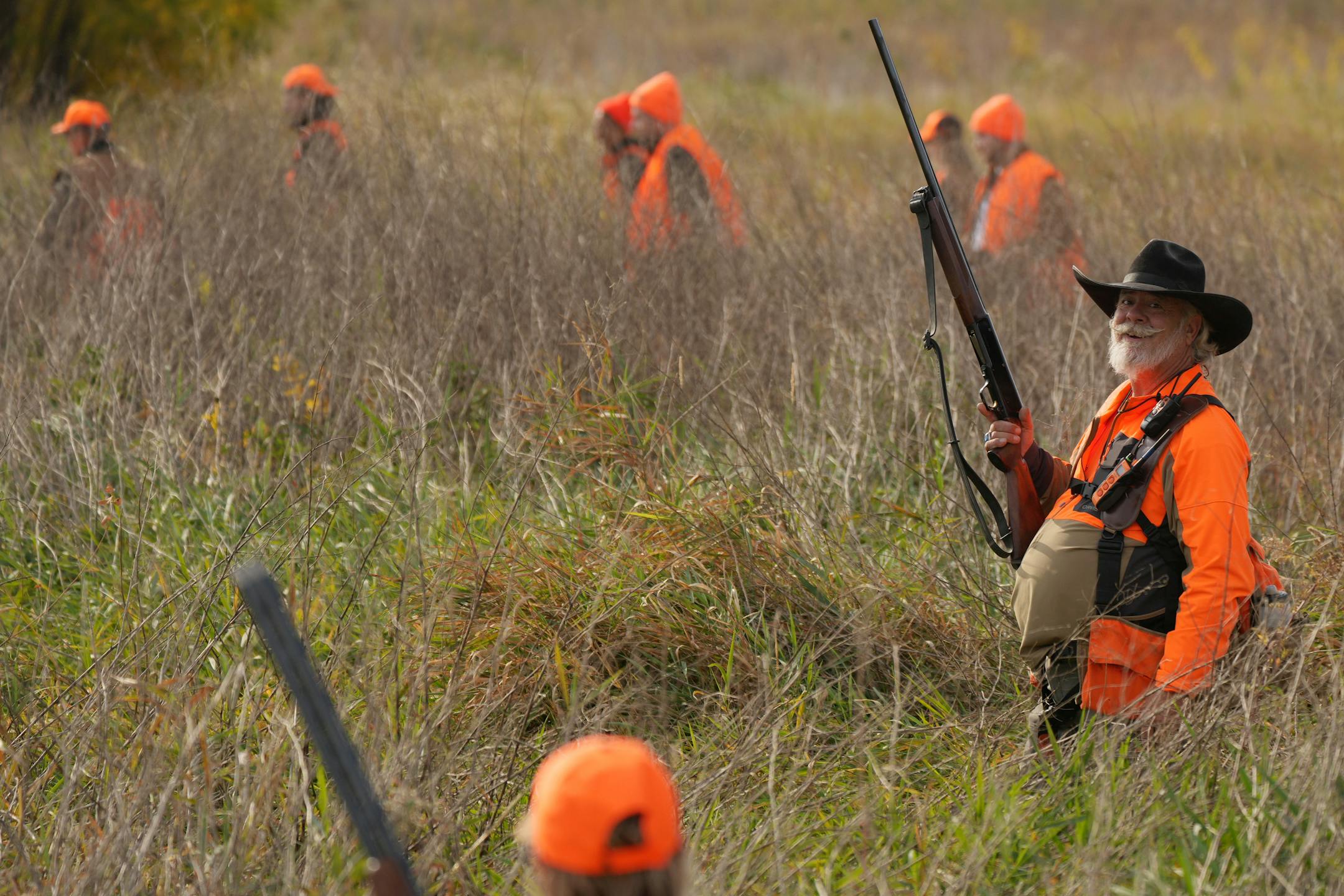
Hunters at the annual Minnesota Governor's Pheasant Hunting Opener last October. The ranks of pheasant and duck hunters have fallen over the years in tandem with the resource. (Anthony Soufflé/The Minnesota Star Tribune)

Count bird hunters among those baffled by the angst Minnesota Twins enthusiasts have demonstrated over the club’s trades and announcement the team won’t be sold.

If anyone should complain about wins and losses in Minnesota since Calvin Griffith moved his scrappy outfit here in 1961, it should be those who will go afield in coming months looking to roust a pheasant or a duck.

By comparison, the state’s baseball fans have had a pretty good ride in the last half-century.

Let’s take a look.

Since the Twins’ inaugural season in Minnesota, they’ve prevailed in just about half their games, 5,036 victories vs. 5,091 losses.

In that span, the Twins have won 13 division titles, four in the AL West and nine in the AL Central. And they’ve appeared in three World Series, losing in 1965 to the Dodgers but beating the Cardinals in 1987 and Atlanta in 1991.

Minnesota pheasant hunters would take that record any day.

Here’s why:

In 1961, when Minnesota had a population of 3.5 million people, some 270,000 residents followed a Labrador, English setter, Brittany or other canine into the hinterlands, searching for roosters.

Compare that to the approximately 55,000 Minnesotans (out of a population of 5.8 million), who will hope to flush a ringneck or two this fall when the season opens Oct 11.

Why so few hunters?

Too few birds.

The state’s rooster harvest hovered around 210,000 in recent years. By comparison, in 1961, the kill was 1.3 million birds.

If pheasant hunting were a game, like baseball, the falloff perhaps could be chalked up to poor shooting — the equivalent of a batter whiffing on a fastball or changeup.

But the downturn is instead telling of how much the state’s pheasant range has changed in the past half-century. Many of the region’s grasslands have been plowed under, wetlands drained and crops ladled with pesticides.

Pheasants haven’t been the only losers. Dickcissels, loggerhead shrikes, meadowlarks and other songbirds have suffered. Some people can’t drink water from their wells, eat fish they catch or swim in their favorite lake or river

Now consider ducks.

For more than a century, Minnesota waterfowlers were the equivalent of the Bronx Bombers — long-ball hitters who year after year experienced their most memorable days in October.

Historically, the state had more duck hunters and killed more ducks because we had more wetlands and shallow lakes than any other state, particularly more clean wetlands and shallow lakes.

These resources produced a lot of ducks, which in turn nurtured a culture of resource appreciation that Minnesotans have expressed, and continue to express.

Old-time carvers Abe Nelson of Heron Lake and Ole Gunderson of Lake Christina are among the state’s many whittlers whose waterfowl renditions are still peddled at decoy shows up and down the Mississippi River.

Painters Les Kouba, Dave Maass, and Jim, Bob and Joe Hautman are among the many Minnesota artists whose widely admired paintings harken to waterfowling’s good old days, while inspiring hope for better times ahead.

Minnesota retriever trainers Tony Berger, Billy Wunderlich, Wells Wilbor, Charlie Hays, Bob Wolfe and Dave Rorem, among many others, set a national standard for dog work in the field, ensuring that fowl that are dropped from the sky are recovered for the table.

As testament to the goodwill most Minnesotans have for the outdoors, these and similar achievements continue to flourish, even though many Minnesota ducks — and duck hunters — have gone missing

In 1961, about 127,000 duck hunters went afield, killing 376,000 mallards. Today, about 55,000 Minnesotans waylay between 60,000 and 100,000 mallards annually.

Counterintuitively, perhaps, when Minnesota had a lot of ducks decades ago, hunting started at noon, so hen mallards in particular had a chance to survive the opener and return to Minnesota the next spring to breed.

Now, when ducks are scarce, the season opens a half-hour before sunrise (except during early teal season, when it’s sunrise). That’s too dark for most hunters to identify ducks flying over their decoys.

It’s telling also that in 1961, Minnesota duck hunting started on Oct. 14 and ran for 40 days, with a reported limit of two ducks daily, with twice that amount in possession.

Now, the DNR sponsors a 60-day duck-hunting marathon that will begin just after Labor Day. An early teal season runs Sept. 6-10 (when some ducks haven’t yet fledged), followed by an early over-water goose season Sept. 6-21, a youth waterfowl hunt Sept. 13-14, and statewide duck hunting Sept. 27.

What’s more, the daily duck limit this fall will again be six, with 18 allowed in possession.

Minnesota duck management began its long slide in 2000, when DNR Fish and Wildlife Division Director Roger Holmes retired.

Surrounded by capable managers who were experienced in the field and passionate about the state’s resources — Ed Boggess, Tim Bremicker, Tom Isley and others — Holmes adhered to the conservation ethos of DNR predecessors Dave Vesall and Bob Jessen and U.S. Fish and Wildlife Service duck guru Art Hawkins.

Under Holmes, duck seasons and limits were conservative to ensure the state’s breeding ducks were protected.

All of that is out the window now, and has been for decades, as the DNR pours the coals to its silly “we’re going to shoot our way to more ducks’’ license-selling scheme it disguises as duck management.

Perhaps most baseball fans, like the citizenry at large and especially the politicians in St. Paul, don’t care that Minnesota pheasants and ducks and the conservationist-hunters who steward them have a winning percentage far below the Twins’ .497.

But they should find comfort knowing things could be worse.

A lot worse.

about the writer

about the writer

Dennis Anderson

Columnist

Outdoors columnist Dennis Anderson joined the Star Tribune in 1993 after serving in the same position at the St. Paul Pioneer Press for 13 years. His column topics vary widely, and include canoeing, fishing, hunting, adventure travel and conservation of the environment.

See Moreicon

More from Outdoors

See More
Rising above the treeline (Top of this photo), on the shore of Birch Lake, the Twin Metals Copper Nickel Mine Plant site and Tailings Management site is part of the proposed plan. ] In theory, the copper-nickel mine Twin Metals wants to build in the headwaters of the Boundary Waters Canoe Area Wilderness is a zero-discharge mine — a closed loop that will endlessly recycle millions of gallons of water, including rainwater and the polluted process water it uses to extract ore and
Brian Peterson/The Minnesota Star Tribune

The copper-nickel mine is controversial for its proximity to the Boundary Waters Canoe Area Wilderness, and the Biden Administration had canceled its leases.

card image
card image