


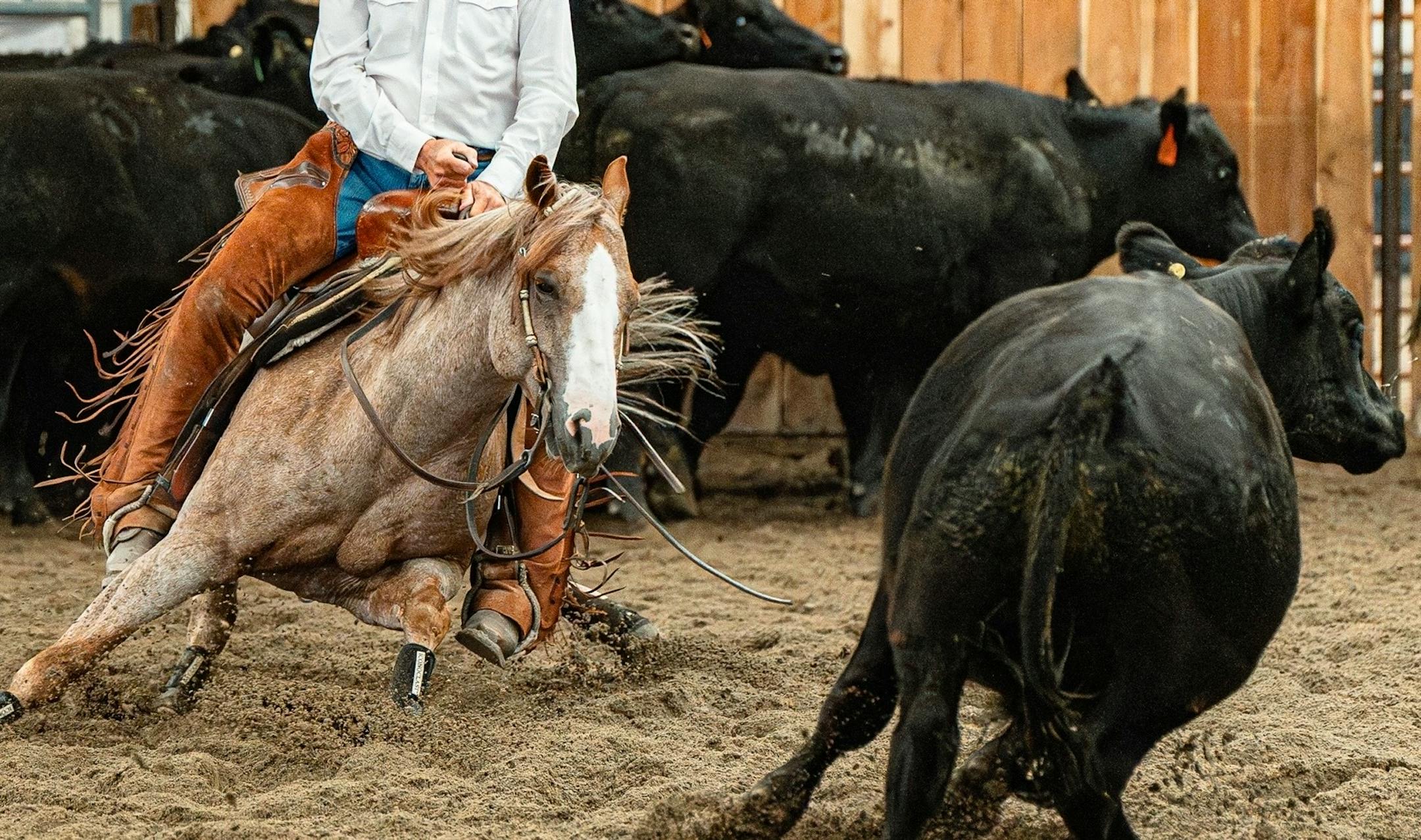
In these shoulder seasons you never quite know how much to air out a horse trailer, whether to open windows or close them, and whether the stock you’re hauling will need a warm blanket or just a sheet. I had opted for a sheet for Olaf, and he clambered into the dark trailer believing wherever we were going, we would be together. Soon the diesel hummed and the headlights burrowed a hole in the still-dark night. Sunrise was an hour down the road.
Olaf and I would burn up most of the day getting to a barn I’d never been to. A hauler friend would pick Olaf up the next day and bring him to Texas. Unless your horse is rank, you’re of two minds when you decide to sell him, and I was all of that.
Three years ago I had met the same hauler traveling north from Texas and transferred Olaf from his trailer to mine. This was in April and the plan with this new horse was to make a straight shot home. But snow came, then wind and cold, and I pulled my rig into a podunk town whose lone motel had one room vacant. “Forty-five dollars,” the woman said, and I backed my trailer to within a couple of feet of the ramshackle establishment. Triple blanketed, with the trailer shut tight against the storm, Olaf spent his first night north of the Mason-Dixon line tied and trailered.
Some people buy horses and keep them their entire lives, and I’ve done that. The first cutting horse I owned was named Lynx, and I had him shipped up from Texas by way of Tennessee, sight unseen. He was 8 then and he died in our pasture 20 years later, as sad a day as our family has known. Big hipped with a pretty head, and black as coal, Lynx was a great competition horse and also a featured attraction at our kids’ birthday parties. A neighbor girl took Lynx to 4H shows when I wasn’t hauling him to cuttings, and he papered her bedroom walls with blue ribbons.
Yet mostly, performance horse ownership is a transitory affair. You buy and you sell. Otherwise you can’t keep your money together, and when that happens the bank comes for your truck, your trailer and whatever tack you haven’t peddled online or stashed with a friend. Tumbleweeds rolled up against a new barn make for a desultory sight, and wage earners aren’t the only losers. Horses have busted high rollers, too, lots of them.
“Horses are worth what you’re willing to pay,” Buster Welch told me years ago at his ranch in west Texas. “Just remember. They buy easier than they sell.”
I had packed a lunch, and in the soft twilight that bridges night and day I pulled into a rest area to check on Olaf and to feed him a few apple slices I had tucked between a sandwich and a piece of my wife’s apple pie.
The spurs on my boots jangled as I walked back to the trailer, a sound Olaf knew well. Perking his ears in my direction, he curled his top lip in anticipation of the treats.


![Attendees of Frostbike made their way through the convention Saturday at the Quality Bike Products campus in Minneapolis. ] (AARON LAVINSKY/STAR TRIBUNE) aaron.lavinsky@startribune.com Frostbike 2016 was held at the Quality Bike Products Campus on Saturday, Feb. 27, 2016 in Bloomington, Minn.](https://arc.stimg.co/startribunemedia/NH2BSHB74ND2V6GF2G2HI5X4MM.jpg?&w=252&ar=3:2&fit=crop)