

Anderson: DNR says ‘no’ to leading a Duck Summit this winter, but outdoors groups endorse the idea

Fergus Falls and Swan Lake clubs are on board with a meeting to discuss the future of ducks and duck habitat in Minnesota.

Columnist Icon
The Minnesota Star Tribune
October 3, 2025 at 5:00PM
Thousands gather at the Minnesota State Capitol Mall for the Rally for Ducks, Wetlands and Clean Water on April 2, 2005. (JIM GEHRZ)

A few weeks ago I proposed a Duck Summit be held this winter in Minnesota, and suggested the Department of Natural Resources lead it.

I can report now a Summit will be held, though where and when haven’t been decided.

I can also report the DNR, whose job it is to manage ducks and duck hunting in the state, and sell licenses and stamps to waterfowlers, isn’t interested in leading this important meeting.

Nor will the agency dedicate its Roundtable, held in January each year, to ducks and duck management, according to DNR wildlife section chief Dave Trauba.

Trauba also nixed a proposal to hold a Duck Summit the day before the Roundtable, which typically is offered on a Friday.

The idea for a wintertime gathering among duck hunters isn’t novel.

The former Minnesota Waterfowl Association (MWA) held similar convocations annually so everyone concerned about these birds and what they represent to Minnesota, the Mississippi Flyway and the nation could discuss their status and future.

U.S. Fish and Wildlife Service biologists and managers presented at the meetings, as did their DNR counterparts, as well as experts from Ducks Unlimited, Delta Waterfowl and MWA.
Now, more than ever, a similar symposium is needed.

Ducks are scarce and waterfowl-hunting license sales have plummeted. Worse, there appears to be no cohesive strategy to return Minnesota to its once lofty status as a major duck producer.

Yet the DNR continues to offer liberal bag limits and hunting opportunities to duck hunters, including an over-water early goose season, an early teal season, a youth waterfowl hunting weekend and a regular duck opener — all in September, before the state’s duck season historically began.

That’s not all. Opening day shooting now begins one half-hour before sunrise, rather at 9 a.m. or noon, as was previously the case in Minnesota.

The earlier shooting prevents hunters from distinguishing between male and female ducks, especially hen from drake mallards.

Minnesota also previously ended shooting at 4 p.m. in the early season to allow ducks to rest and to encourage them to stay in the state longer, rather than begin (or continue) their migration.

I spent a lot of time in duck blinds with the late Bud Grant, who in his long life saw duck populations rise and fall many times.

“When someone says these regulations don’t affect ducks” Bud would say, “they’re lying. Of course they affect ducks.”

Funny, because that’s what the late Art Hawkins, the preeminent U.S. Fish and Wildlife Service biologist, also said.

“Hunting ducks in early September before some them are even fledged makes no sense,” he would say.

Which is why more and more hunters are wondering whether the DNR is primarily concerned about peddling hunting licenses and less so about conserving these birds and their habitats.

Maybe the reasons the DNR offers liberal duck hunting seasons are biologically sound.

Maybe they’re not.

No one knows, because the agency’s waterfowl committee meetings are held out of the public eye, with no input from hunters or outside professionals.

There’s no shortage, after all, of retired DNR and federal waterfowl biologists and managers who oppose Minnesota’s duck hunting regulations.

But the DNR doesn’t ask them. Or anyone else.

Discontent about duck management has been prevalent among the state’s waterfowlers for a generation and more. Year after year, liberal hunting regulations are handed down by the Fish and Wildlife Service and the DNR. Yet too often in the field hunters see mostly empty skies.

As Chico Marx once said, “Who you gonna believe, me or your own eyes?”

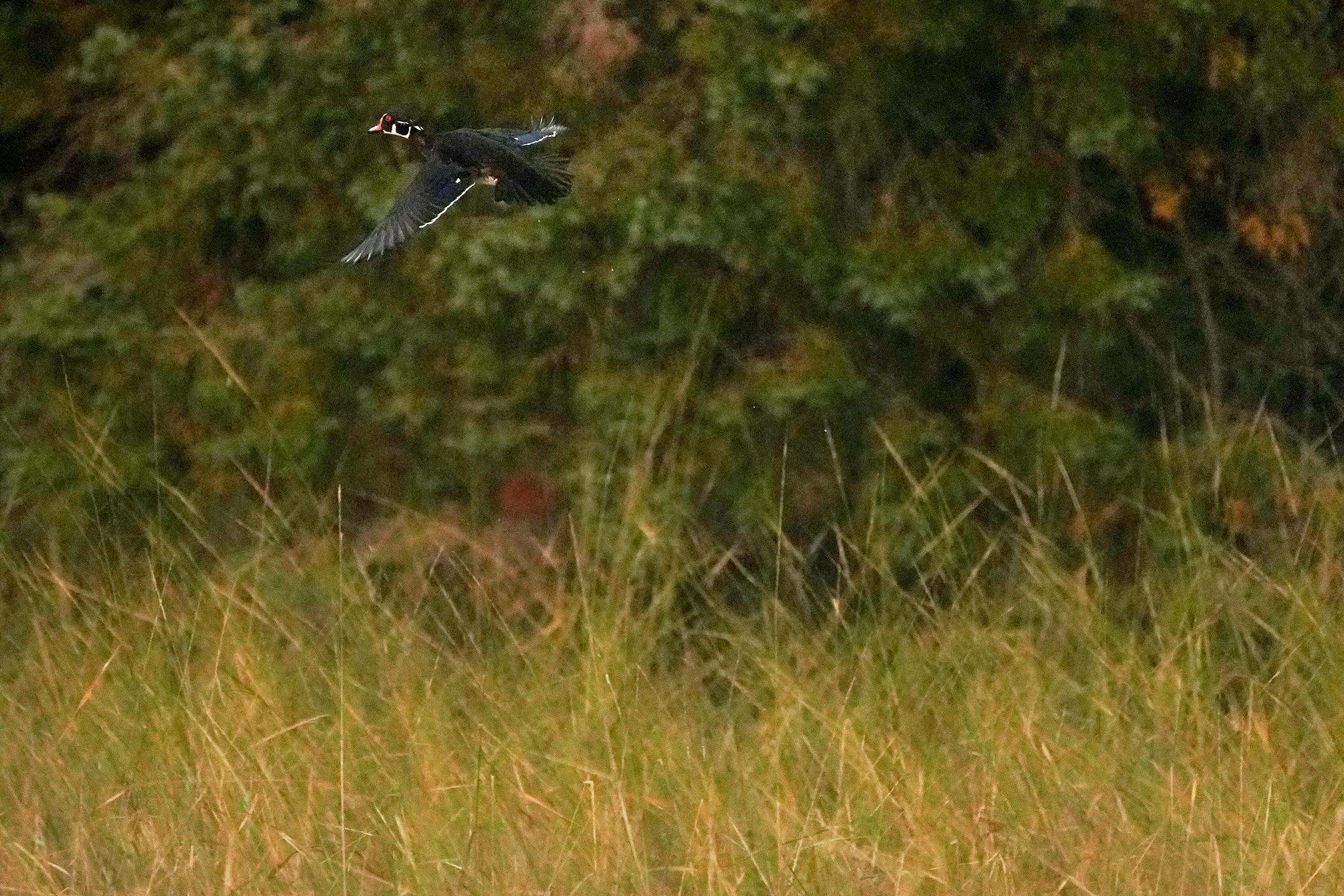
A wood duck takes flight over Lake Itasca in the early morning hours. (Anthony Soufflé/The Minnesota Star Tribune)

Yet a Duck Summit would be more than a venue for hunters to whine about limits and season lengths.

The bigger issue is how we conserve the wetland habitat we have while adding more.

To that end, hunters ask:

  • How does the DNR spend money from sales of state duck stamps, which are required of hunters?
    • Since passage of the Legacy Act, the DNR has received hundreds of thousands of dollars to restore wetlands and manage shallow lakes. Has it made a difference for ducks? If not, what changes can be made to increase effectiveness?
      • Ducks Unlimited, Pheasants Forever, the Board of Water and Soil Resources and the U.S. Fish and Wildlife Service also have received large Legacy grants to benefit ducks and other wildlife, and wetlands. Are those programs more cost-efficient than DNR’s?
        • The DNR recently requested more than $23 million from the Lessard-Sams Outdoor Heritage Council for shallow lakes and wetlands enhancement. Much of the grant would be used to pay for 10 DNR employees. Is there a cheaper way to “make habitat” than hiring more staff?
          • Are DNR, USFWS and other habitat projects undertaken in cooperation with one another to maximize the likelihood of positive outcomes?
            • Bottom line: What can be done that isn’t currently being done to improve wetland habitat and duck numbers?

              Leaders of the Fergus Falls Fish and Game Club support a Duck Summit and will bring the idea to their membership in the coming days.

              Another big outfit, the Nicollet Conservation Club, also supports a Summit, as does the Swan Lake Area Wildlife Association, which approved the proposal last weekend.

              Maybe one of those clubs will step forward and organize a Summit. Or maybe a group such as the Izaak Walton League will take the lead.

              Readers of a certain age will recall that in 1988 the “Ikes” provided the tax-exempt conduit through which readers of my column, then in the Pioneer Press, ponied up $650,000 to buy federal wildlife agents a helicopter to stop duck poaching on the Gulf Coast.

              Yet even if every conservation and wildlife club, and every duck hunter in Minnesota, backs a Summit, it doesn’t mean the DNR, the Fish and Wildlife Service, Ducks Unlimited, Delta Waterfowl or any of the other big players in state waterfowl management will sign up to present their opinions and ideas.

              Different as they are, these outfits represent a brotherhood of sorts, and in some cases are business partners. Doubtless their leaders will consider carefully the positives and negatives of meeting with Joe and Jane Hunter before they commit.

              So maybe a “Duck Summit” will end up being little more than a dozen or so waterfowlers meeting in the back room of a VFW somewhere. If so, I’m buying.

              Or perhaps the Summit will be held at a university or an environmental learning center or similar facility and represent a watershed moment not only in Minnesota duck management history, but in wetland and shallow-lake conservation — the latter of which is critical to everyone.

              Readers might recall that 6,000 Minnesotans attended the Ducks, Wetlands and Clean Water Rally on the Capitol Mall in 2005 that led to approval by voters of the Legacy Act.

              That event was organized by an amalgam of hunting and environmental groups — a joining of “guns and greens,” as it were.

              A Duck Summit is worthy of the same support.

              We’ll see what Minnesotans — especially Minnesota duck hunters — want to do.

              Write me with ideas at stribandy@gmail.com.

              about the writer

              about the writer

              Dennis Anderson

              Columnist

              Outdoors columnist Dennis Anderson joined the Star Tribune in 1993 after serving in the same position at the St. Paul Pioneer Press for 13 years. His column topics vary widely, and include canoeing, fishing, hunting, adventure travel and conservation of the environment.

              See Moreicon

              More from Outdoors

              See More
              Rising above the treeline (Top of this photo), on the shore of Birch Lake, the Twin Metals Copper Nickel Mine Plant site and Tailings Management site is part of the proposed plan. ] In theory, the copper-nickel mine Twin Metals wants to build in the headwaters of the Boundary Waters Canoe Area Wilderness is a zero-discharge mine — a closed loop that will endlessly recycle millions of gallons of water, including rainwater and the polluted process water it uses to extract ore and
              Brian Peterson/The Minnesota Star Tribune

              The copper-nickel mine is controversial for its proximity to the Boundary Waters Canoe Area Wilderness, and the Biden Administration had canceled its leases.

              card image
              card image