Analysis: Mexico tariff threat sends message that the U.S. is an unreliable trade partner

The Trump administration has told the world that no deal is ever a done deal.

The New York Times
June 1, 2019 at 5:05AM
This June 24, 2018, photo shows unsold 2018 Suburbans at a Chevrolet dealership in Englewood, Colo. Automobile sales in the U.S. fell 2% in the first quarter, another sign the nation's economy is starting to slow. (AP Photo/David Zalubowski)
Consumers could pay: Tariffs would increase car prices. General Motors shares fell by more than 4% Friday, while Ford was down 2%. (The Minnesota Star Tribune)

The Trump administration has sent a message to the world with its new tariff threats against Mexico: No deal is ever a done deal.

That effect may be bigger than the immediate 5% tax on Mexican imports set to go into force June 10 and escalate to 25% over time. Mexico had seemed to resolve its trade tension with the United States, in the form of a reworked NAFTA now known as the United States-Mexico-Canada Agreement, or the USMCA. The deal was moving toward fruition after the United States lifted steel and aluminum tariffs on its North American neighbors just days ago, and lawmakers in all three countries began considering it.

The new tariff threats, announced by President Donald Trump in a tweet Thursday, are aimed at pressuring the Mexican government to do more to combat migrants traveling from Central America to the U.S. border to seek asylum. It's an issue not really related to trade policy at all. But the tariff threats amount to a vivid signal, especially to allies, that there is no permanent trade peace with the Trump administration, and could have significant consequences for future trade negotiations. "I don't see how our trading partners will continue to negotiate with us as if we have any credibility going forward," said Emily Blanchard, a trade economist at Dartmouth's Tuck School of Business. "They're going to have a much harder time selling any costly domestic reform or sacrifice that is a concession to the U.S., because the U.S. is acting like an erratic bully."

The escalating trade war between the United States and China had put Mexico in a promising position, as a destination for businesses making decisions about where to locate their supply chains and wary of tensions with China. Mexico has higher labor costs than China, perhaps, but it has an appealing geographical proximity to the United States and the favorable trade relations that seemed to be codified by the USMCA deal announced at the White House last fall.

Even if the new tariff is canceled before it is scheduled to begin, the action sends a signal that any cross-border supply chain — for decades a crucial strategy for large multinational firms and quite a few smaller ones — is inherently risky.

"Mexico and Canada looked like a safe harbor because you just signed USMCA," said Philip Levy, a senior fellow on the global economy at the Chicago Council on Global Affairs. "This action is saying, no, there really isn't a safe harbor."

The Trump administration's trade strategy had seemed to be coming into focus.

There was the USMCA deal, a relatively calm period of relations with Japan and Europe, and increased pressure on China.
It all looked like a fairly coherent strategy of reaching trade peace with allies before starting a concerted assault on a range of problematic Chinese practices.

The renewed trade tension with Mexico, driven by issues unrelated to trade, could undermine that strategy.

If you are selling a car to a stranger on the internet, you may try to strike as aggressive a deal as possible.

And if you're unethical, you might even hide some problems with the car or try to change the terms after shaking the buyer's hand.

But when selling a car to your next-door neighbor, you'll probably be a lot more upfront. You need a sense of mutual trust, and selling the neighbor a lemon or reneging on an agreed deal is no way to establish it.

When two countries that share a long border are negotiating a trade deal, it is very much part of a repeating game. Mutual trust matters, because there will be an endless series of disputes that need resolving and much to gain from having a good relationship.

That kind of trust may have just taken a hit that will last.

"A very straightforward interpretation is that trade deals with the U.S. buy you nothing," Levy said. "You may be asked to jump through hoops and do things that are painful, but in the end you have no guarantees that the president won't stick on tariffs when something irritates him."

It is true that Mexico — and other major trading partners — need the huge American market. And Trump's constant threat of tariffs may succeed at getting victories on some discrete issues.

But if you sell the family next door a lemon, don't be surprised if nobody in the neighborhood wants to do business with you again.


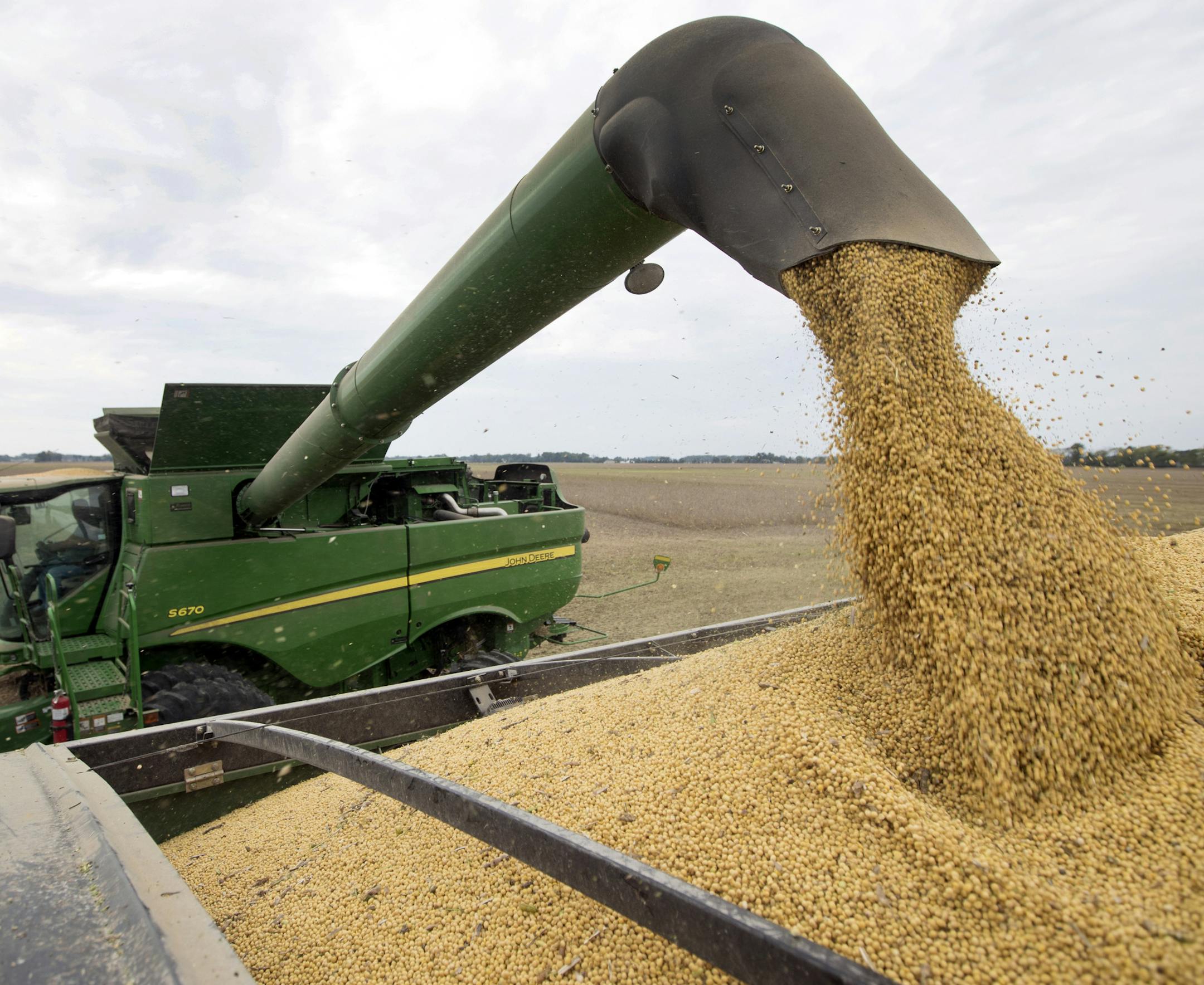
FILE - In this Sept. 21, 2018, file photo, Mike Starkey offloads soybeans from his combine as he harvests his crops in Brownsburg, Ind. For months, the U.S. economy has shrugged off the tariffs slapped by America and China on tens of billions of dollars of each other’s goods. In drawing up its list of targets, Beijing focused specifically on soybeans and other farm products in a direct shot at Trump supporters in the U.S. (AP Photo/Michael Conroy, File)
Latest blow to farmers: Mexico is a major export market for Minnesota’s corn, poultry, wheat and dairy, as well as soybeans and pork. (The Minnesota Star Tribune)
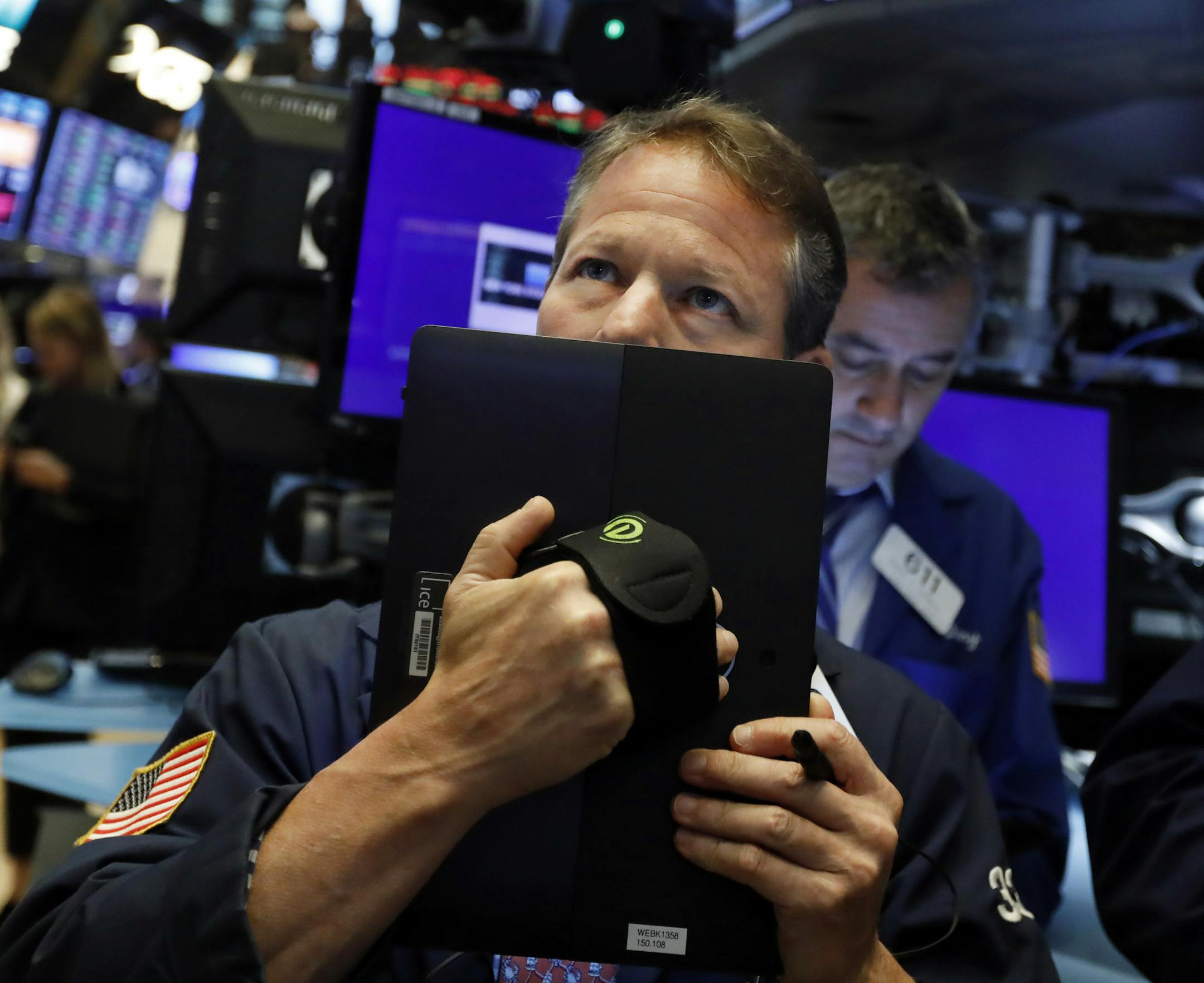
FILE - In this May 17, 2019, file photo trader Robert Charmak works on the floor of the New York Stock Exchange. An unexpected escalation in the trade war between the U.S. and China jolted investors into a defensive position in May. (AP Photo/Richard Drew, File)
Markets rattled: Stock prices slid Friday, continuing a monthlong retreat, with the S&P 500 down nearly 6% last month. (The Minnesota Star Tribune)
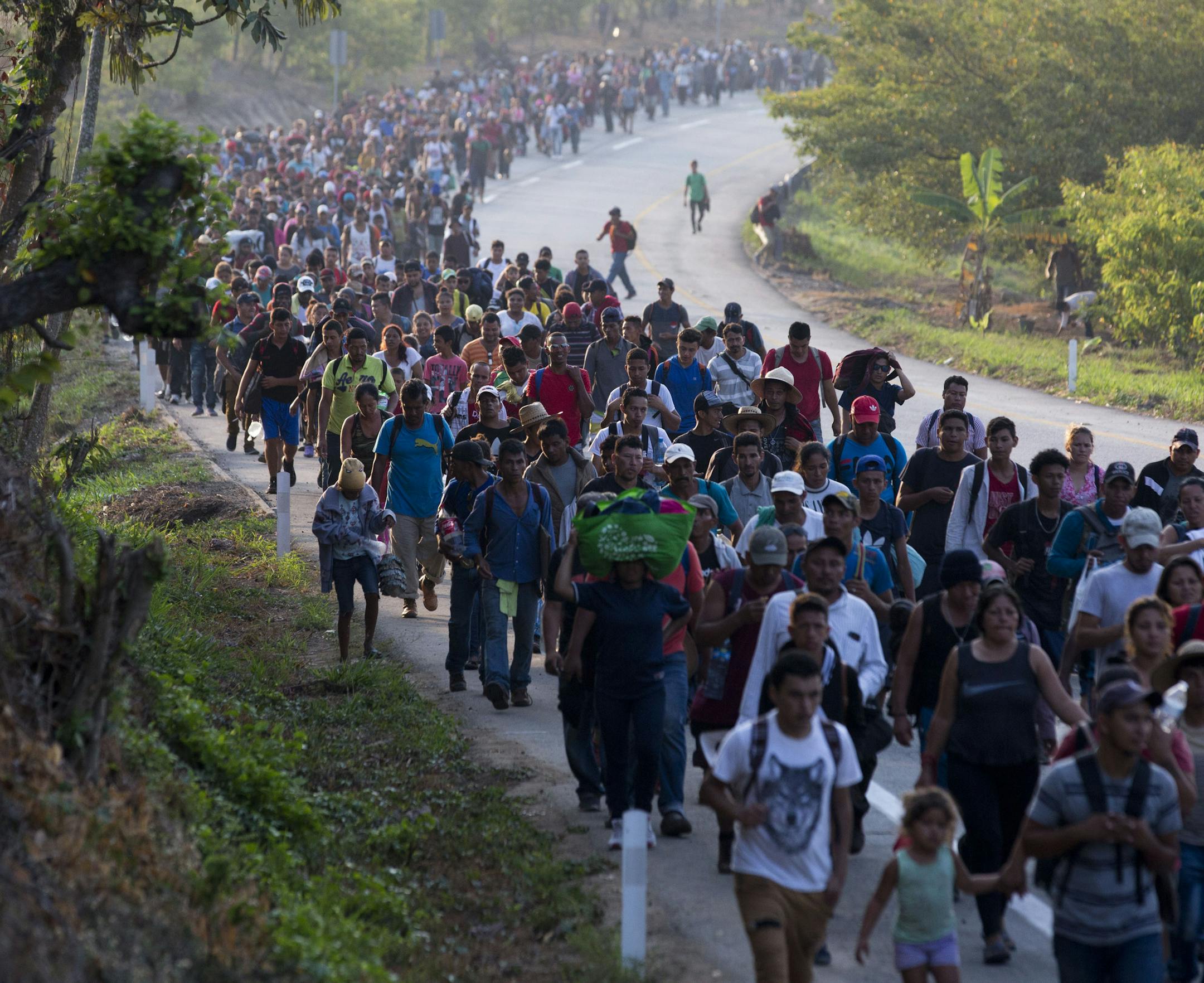
Central American migrants, part of a caravan hoping to reach the U.S. border, move on the road in Escuintla, Chiapas State, Mexico, Saturday, April 20, 2019. Thousands of migrants in several different caravans have been gathering in Chiapas in recent days and weeks. (AP Photo/Moises Castillo)
Watching the border: Trump said the tariffs would escalate each month until Mexico stopped migrants from crossing into the U.S. (The Minnesota Star Tribune)
about the writer

about the writer

Neil Irwin

More from Business

See More
card image
Fairview Health Services

The school is changing an elective course while still working with the Eden Prairie-based health care giant after students raised concerns.

This transmission electron microscope image shows SARS-CoV-2, the virus that causes COVID-19, isolated from a patient in the U.S., emerging from the surface of cells cultured in the lab. (NIAID/TNS) ORG XMIT: 1659810
card image