

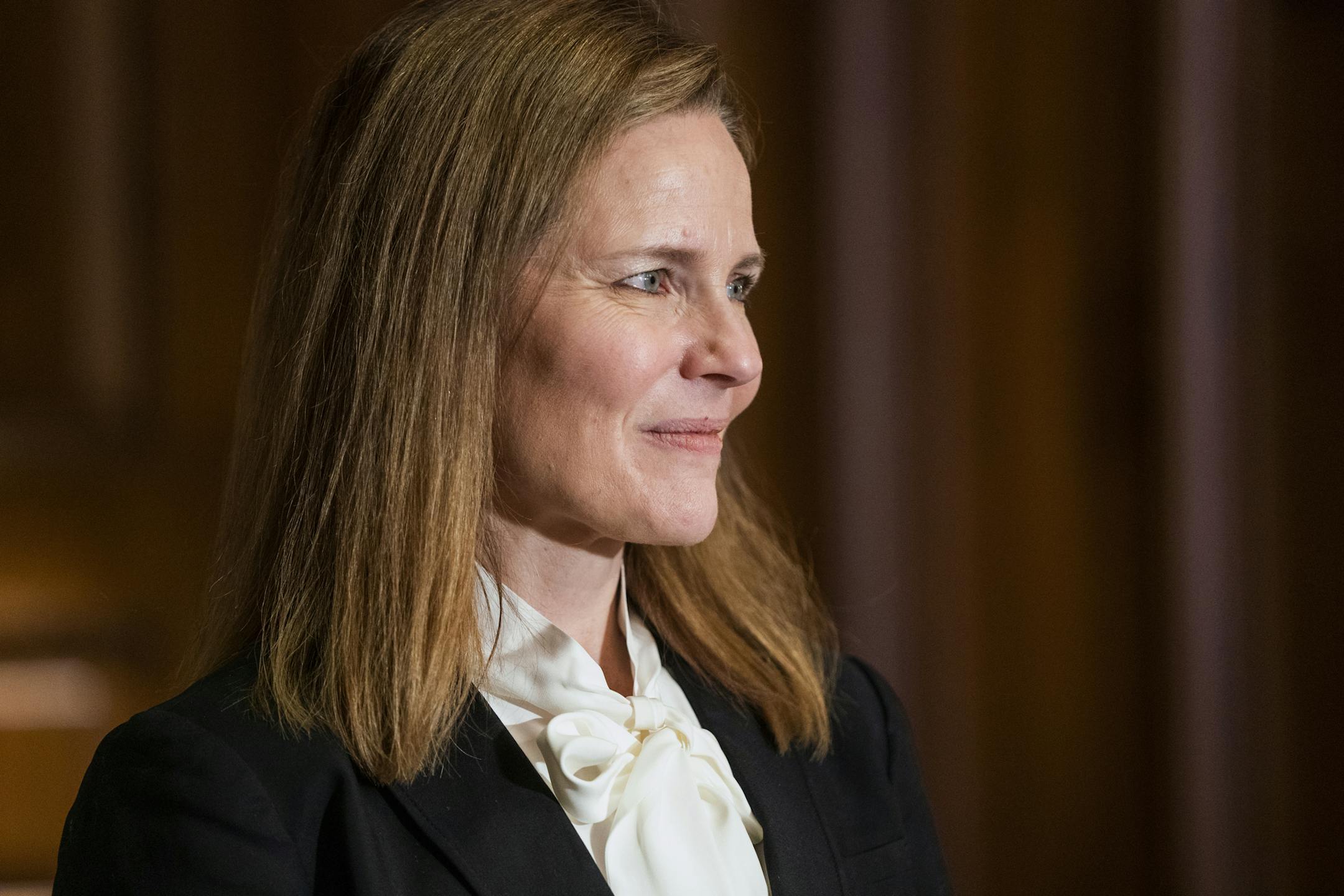
One of the chief dividing lines in American politics is how Supreme Court justices interpret the Constitution. Rarely has that line been brighter than today. The enthusiasm for Amy Coney Barrett grows from a belief among conservatives that the court has been too creative in reading the Constitution and that her arrival will put a stop to such abuses.
Upon her nomination to the court, the White House said she "has demonstrated a steadfast dedication to upholding the Constitution as written, and not legislating from the bench." Barrett, said Sen. John Cornyn, R-Texas, supports "an independent judiciary that interprets the law and Constitution as-written."
Barrett is of the school of legal thought known as originalism, which emphasizes rigorous adherence to the text of the Constitution and the intentions of those who brought it into being. Among its adherents are Justices Clarence Thomas, Samuel Alito, Neil Gorsuch and the late Antonin Scalia, for whom Barrett clerked.
In its usual billing, this approach sounds unassailable. Who wants judges to ignore the words of the Constitution? Who wants judges to effectively legislate from the bench according to their own whims?
Even liberal justices and scholars give considerable weight to the literal text of the Constitution and what it meant at the time it was ratified. But strict fidelity to originalism is a bit like strict compliance with all traffic laws: more appealing in theory than in practice.
The attacks on "legislating from the bench" go back to the 1950s, when the court, under Chief Justice Earl Warren, banned racial segregation in public schools. William F. Buckley's conservative magazine National Review called the decision "an act of judicial usurpation" that "ran patently counter to the intent of the Constitution." In some respects, that was true, but it was also the right decision.
Warren was vilified on the right as long as he was on the bench. But where would we be without the Warren Court? Before it acted, as University of Chicago law Profs. Geoffrey Stone and David Strauss wrote in their book "Democracy and Equality," states were free to ban interracial marriage, impose poll taxes to disenfranchise African Americans, forbid the sale of contraceptives and violate the principle of "one person, one vote." Police didn't have to inform suspects of their rights, and evidence acquired in illegal searches could be used in court.
Would conservatives really want to restore the unconscionable practices this liberal court ruled against? If so, they aren't likely to admit it.


