

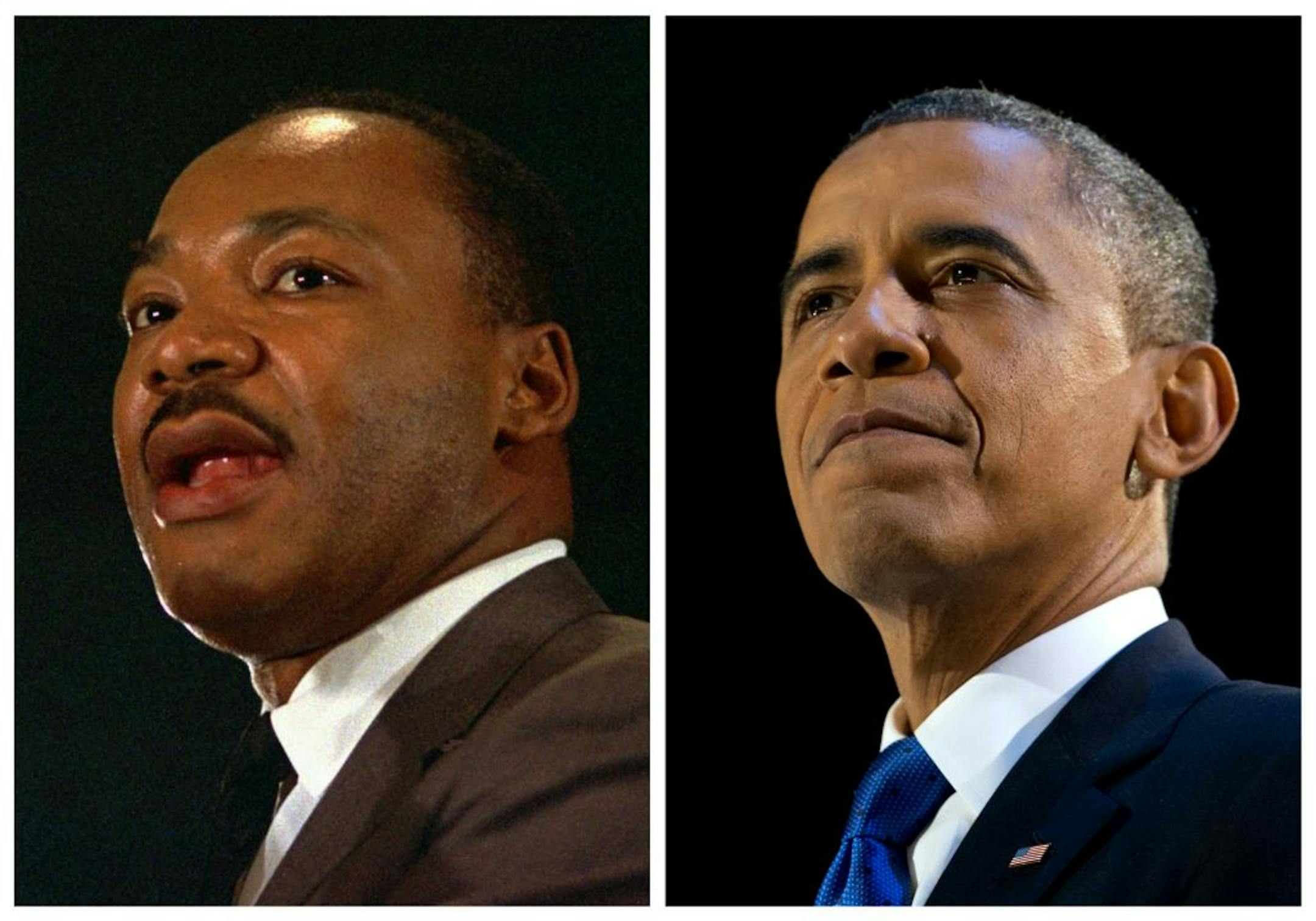
When Martin Luther King Jr. made his most famous speech during the great march on Washington in 1963, Barack Hussein Obama was 2 years and 24 days old.
Obama was only 6 when King was assassinated in 1968.
So, except through reading history, and perhaps taking some black-studies classes, the man who would become the first black president of the United States didn't know King like those born a generation earlier.
Some have argued that because of the time and place of his birth (in Hawaii in 1961), Obama never experienced the overt, de jure discrimination that King fought against. And besides, some black elitists said during the 2008 presidential campaign, Obama didn't have "slave ancestry" because he's the son of a white Kansan mother and black Kenyan father.
That observation was considered by some a kind of ridiculous "evidence" that Obama was not a "true" black American. I won't dignify the assertion by discussing the degree of one's blackness, whether someone is more black than somebody else.
As I've pointed out before, African-Americans didn't define black when it came to race in America; it was white people who came up with the "one-drop" rule: One drop of black blood, no matter how white you looked, made you black.
But, let's leave that alone for now.
Despite the gap in their ages and the generational and geographical differences that helped define Obama and King, their legacies are inextricably tied, albeit the president's legacy is still in the making. Since Obama's nomination in 2008, there have been some momentous instances that, though coincidental, have connected the two men -- happenstance that some of us have seen as divine providence.


