

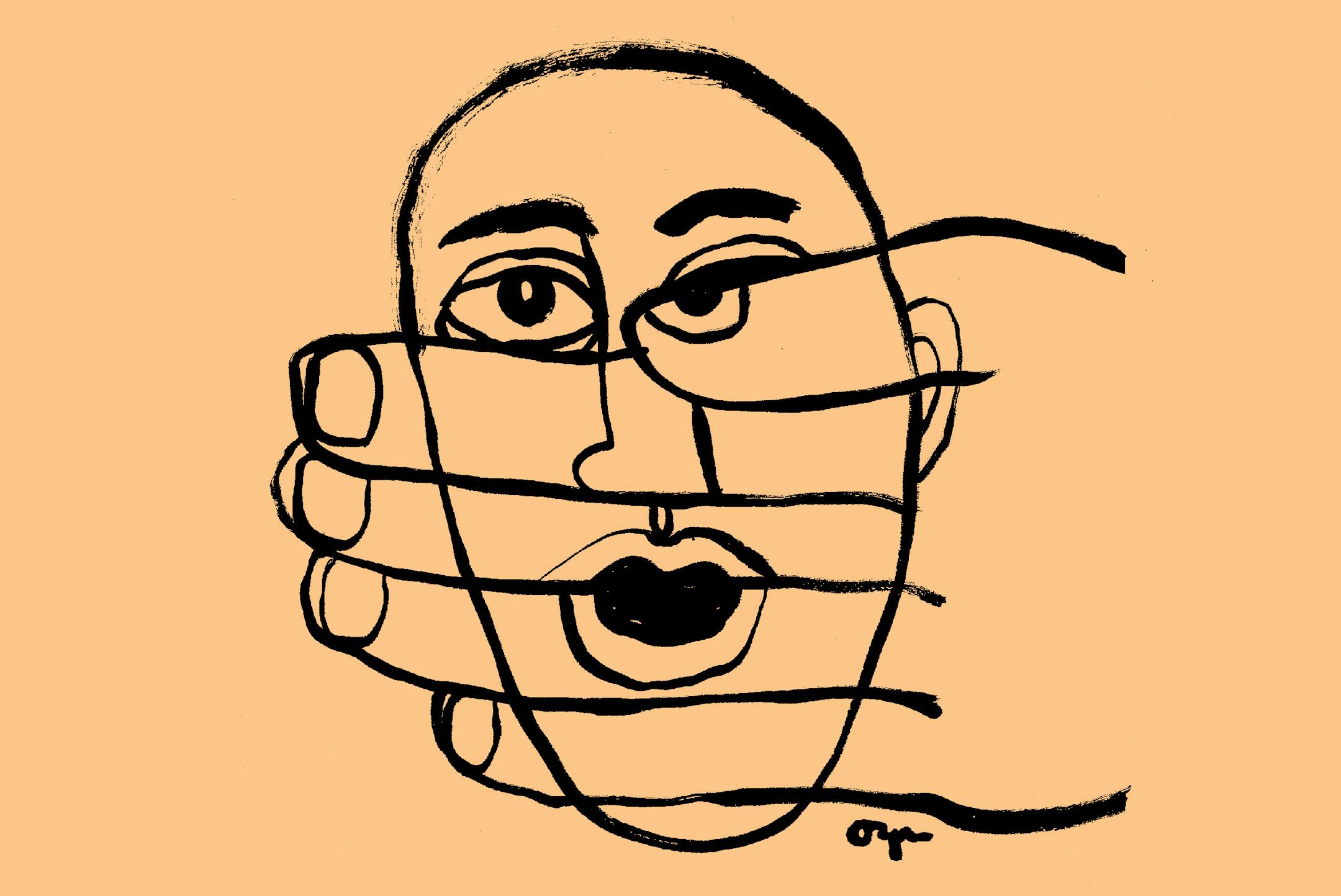
Black ties, red carpets, gold statues and colorful acceptance speeches mark an awards season that hits full force over a fortnight spanning the Grammy Awards on Sunday and the Academy Awards on Feb. 26. This American celebration of artistic excellence is excessive, some say. But better that than the censorship and attacks on artistic freedom that darken too much of the globe.
"Artists continue to be silenced all over the world," according to Freemuse, an independent, international organization dedicated to defending artistic freedom. Its annual report, "Art Under Threat," tracks a record 1,028 attacks on artists and violations of their rights across 78 countries in 2016 — a striking rise of 119 percent from last year's report — as artists were "censored, tortured, jailed and even killed for their creative expressions."
Many of these cases occur under repressive regimes that also jeopardize journalists, like Iran, Turkey, Egypt, Nigeria, China and Russia. But increasingly there is concern that the rising tide of populist politics worldwide — including in Western democracies — poses a threat, too.
"With populist and nationalist leaders questioning the universality of human rights, now is the time to document violations and use those facts to defend and amplify threatened artistic voices," the report states.
Voices, and more generally music itself, are the art form that suffered the most violations of artistic freedom, with 46 percent of total cases, according to Freemuse. In extreme cases the suppression goes beyond harassment to assassination, as in the case of Amjad Sabri, a celebrated Suffi spiritual music performer gunned down by two anti-Shiite militants on a motorbike.
"The special thing about music is it reaches people much more than any art form because it transcends age, gender, social status and education level, and connects in many societies with differing levels of literacy," said Ole Reitov, executive director of Freemuse.
Reitov, speaking from London, added that much of the music repression is from fundamentalist countries such as Iran, where women are particular targets. The Freemuse report details an internal power struggle within the country's political, religious and social institutions that has landed music "in the middle of the battlefield" between factions, sending some musicians to Iranian prisons.
Music's eloquence and power is matched by theater and visual arts, which surged from fourth to second place in the rankings of art forms attacked.


