

It is quite possible 2020 will be remembered as a turning point in American history, a moment after which the country became irretrievably different from what it had been before.
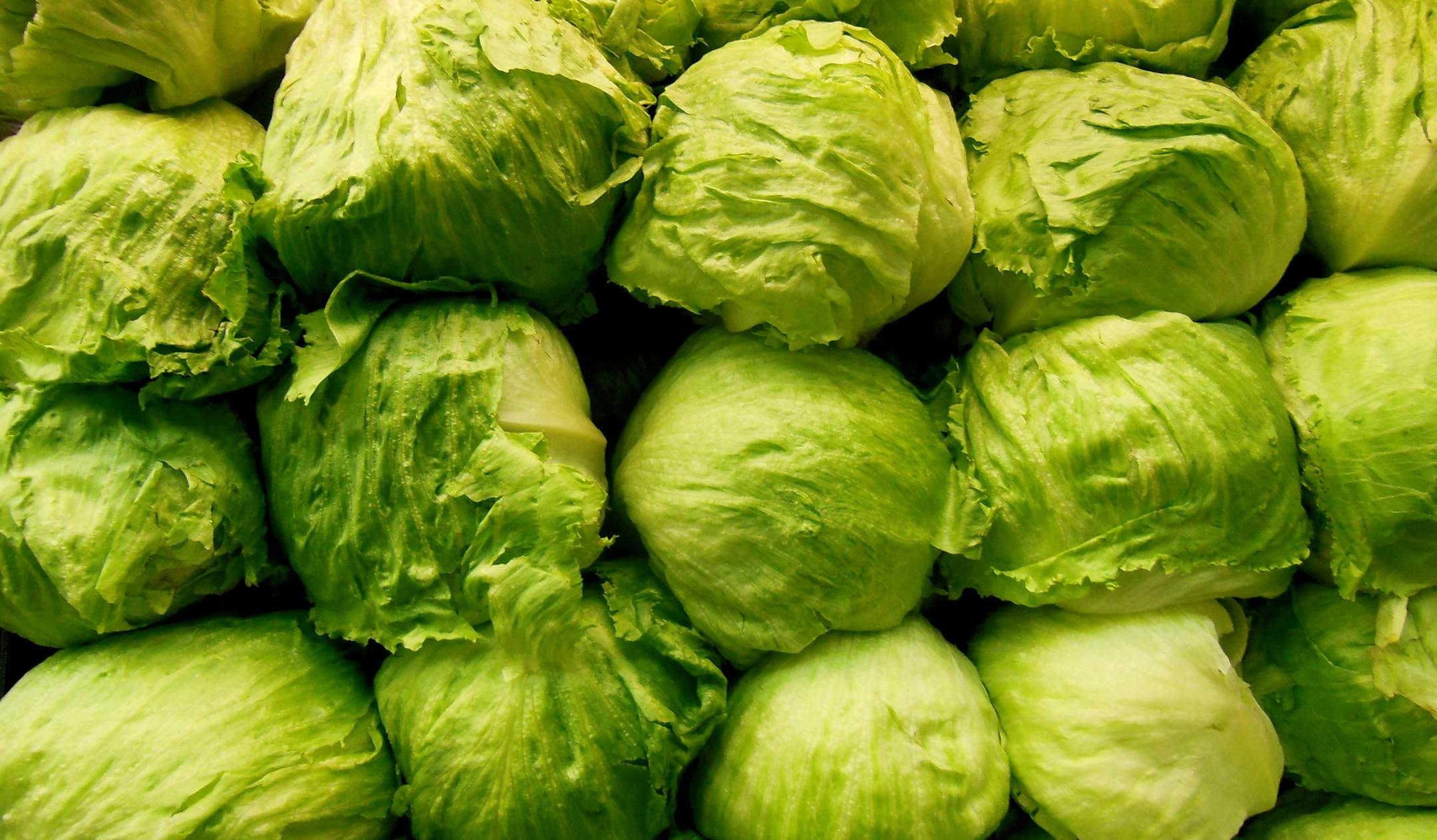
Yes, that's right, this could be the year consumption of romaine and other leaf lettuce finally surpasses that of head lettuce, which is mostly iceberg lettuce.
Then again, it might not be. The 2019 data, released in September, actually show lettuce heads doing slightly better against lettuce leaves than in 2017 and 2018 (ahead by 0.3 pounds instead of 0.1). Perhaps New Yorker magazine food correspondent Helen Rosner's August 2018 manifesto, "It's Time to Admit That Iceberg Is a Superior Lettuce," turned the tide.
Still, it's been quite a comedown over the past three decades for America's lettuce, introduced by seed purveyor W. Atlee Burpee & Co. in 1894. The standard explanation is that the great American food awakening that began in 1961 with the publication of Julia Child and Simone Beck's "Mastering the Art of French Cooking" and Craig Claiborne's "The New York Times Cookbook" led to an embrace of lettuces and other greens more flavorful and less watery than what filmmaker John Waters once called "the polyester of greens."
Or as Nora Ephron put it in a 2006 New Yorker recounting of her cooking experiences, "arugula was discovered" in the mid-1960s, which was followed by endive, which was followed by radicchio, which was followed by frisee, which was followed by the three M's — mesclun, mâche and microgreens — and that, in a nutshell, is the history of the past 40 years from the point of view of lettuce.
That history is not inaccurate, at least from the perspective of a Manhattan gourmet. But head lettuce consumption actually didn't peak nationally until 1989. That happens to be when, after more than 20 years of trying, California grower Fresh Express (now a subsidiary of Chiquita Brands Inc.) finally figured out how to put precut, prewashed salad greens in a bag and keep them fresh.
Before then, sturdy, compact iceberg heads had a big advantage over other lettuces in ease of transport and use. As Burkhard Bilger described in a 2004 New Yorker article, a protégé of the great California chef (and iceberg-lettuce-detractor) Alice Waters named Todd Koons seized upon the new technology as a way to deliver mesclun and mâche to the masses in supermarkets across the country. You can learn a lot about lettuce from reading the New Yorker!
You can also learn a lot about lettuce, and other leafy greens, from the per capita food availability data released by the U.S. Department of Agriculture each summer and fall. These statistics don't exactly measure what Americans eat; the USDA's Economic Research Service uses agricultural production and import/export data to calculate how much food is out there to be consumed. But they provide the longest-running proxy measures of food consumption available, with numbers on some foods (meats and dairy products, mainly) going all the way back to 1909. As such they offer an unparalleled view into culinary fashion, societal change and technological progress.


