
Americans love the cocoa bean

We're about to enter peak chocolate-eating season. It's the "affordable luxury," one analyst said, and demand is rising in the U.S. even as prices have surged.

Bloomberg News
October 26, 2014 at 7:00PM
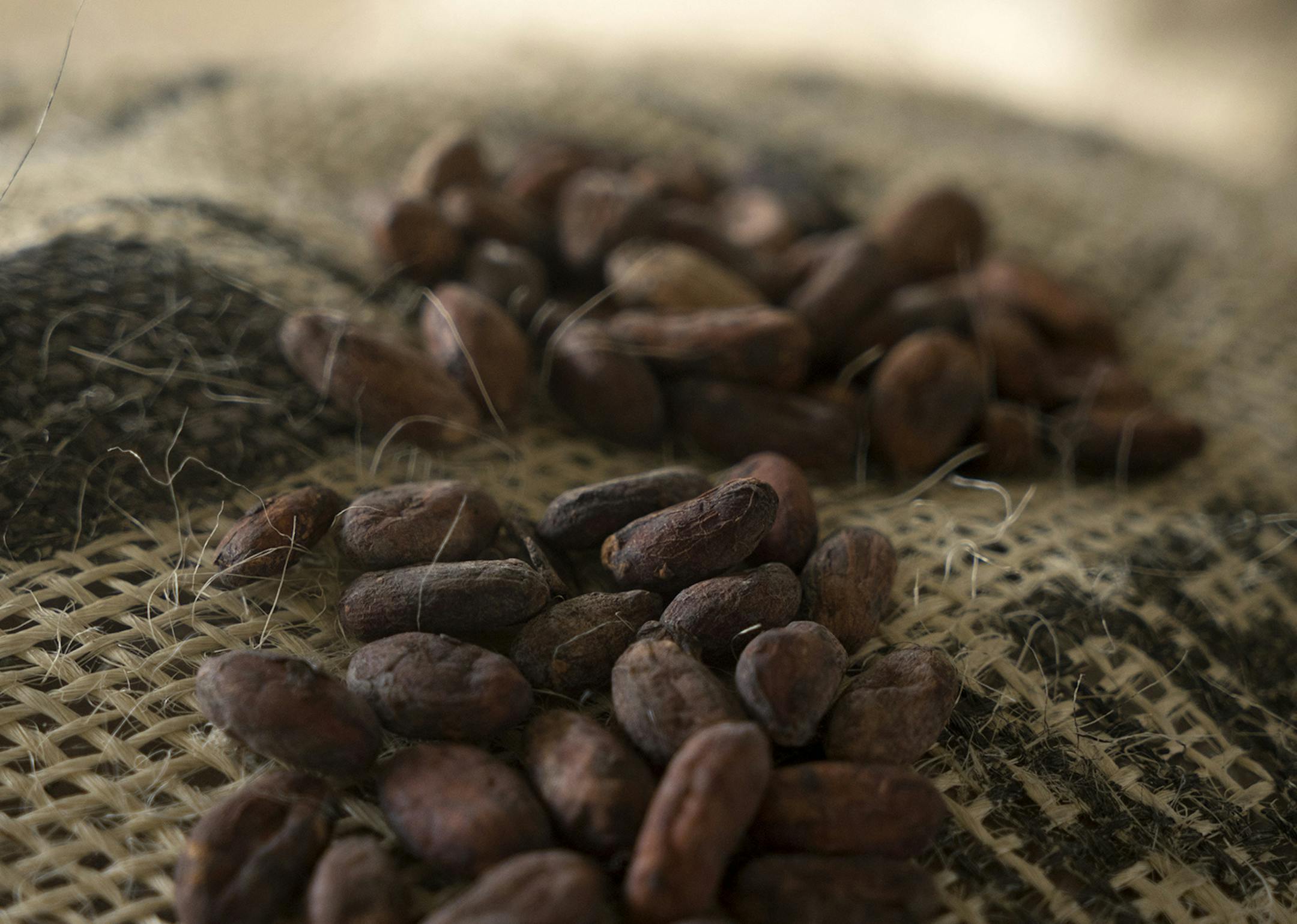
Cacao beans from Boyaca, winner of the national cocoa contest "Concurso Cacao de Oro" organized by Swiss-company and Proexport, are arranged for a photograph at the Cacao Hunters chocolate factory in Popayan, in the Cauca department of Colombia, on Monday, Oct. 6, 2014. Colombian cocoa growers have held talks with some of the world's top chocolate makers including Barry Callebaut AG and Ferrero SPA in a bid to replicate the success of the country's high-end coffee industry. Photographer: Mariana
As global incomes have risen, so have chocolate sales, especially of premium and organic brands. Colombian growers, who grew these award-winning beans, are among those trying to cash in on the premium chocolate market. (The Minnesota Star Tribune)

NEW YORK – Jacques Torres is betting Americans simply can't kick their chocolate habit even after the price of cocoa surged to the highest point in three years.

Torres, a former pastry chef at New York's swanky Le Cirque restaurant who dubbed himself Mr. Chocolate, spent more than $3 million on a Brooklyn confection-making plant last year and doubled his eponymous shops in New York to eight from four, with seven Manhattan locations. He said 2014 sales will top last year's record of $10 million.

"People love chocolate," Torres said by telephone from his Hudson Street store, where a 12-piece box of popular treats sells for $19.20 and three monthly of deliveries of assorted goodies fetches $145. "Business is still strong. The market is there. The economy in New York and the U.S. is better."

No country consumes more chocolate than the United States, where sales will climb to a record $17.75 billion this year, market researcher Euromonitor International estimates. As demand grows, producers including Hershey are raising prices to cover ingredient costs. Cocoa climbed 2.2 percent last month on concern that the deadly Ebola outbreak will disrupt shipments from West Africa, the world's biggest growing region.

Consumers will spend a record $2.5 billion in candies for Halloween, with 75 percent of that going to chocolates, said the National Confectioners Association, which represents manufacturers, including Hershey and Mondelez International Inc., the maker of Cadbury chocolate.

Halloween falls on a Friday this year, which will boost demand, said Susan Whiteside, an NCA spokeswoman in Washington.

With the U.S. on track for its biggest job expansion since 1999 and consumer confidence improving, Americans are spending more on chocolate as prices drop for gasoline and many foods.

"For many, chocolate is seen as an affordable luxury," said Pinar Hosafci, a packaged-food analyst at Euromonitor in London. "The demand for chocolate remains still very strong. In the U.S., growth for premium-chocolate variants and also bite-sized chocolates is quite high."
Cocoa futures climbed 15 percent this year, pushing the cost of cocoa butter, the main chocolate ingredient, up 5 percent. That prompted chocolate manufacturers including Hershey and Mars to raise prices in July. The Bloomberg Commodity Index slumped 7.4 percent this year, while the MSCI All-Country World Index of equities lost 1 percent. The Bloomberg Treasury Bond Index rose 5.5 percent.

Even with higher prices, chocolate sales rose 1.9 percent to 2.2 billion pounds (1 million metric tons) in the 52 weeks ended Oct. 5, compared with a year earlier, according to market researcher IRI, which tracks data from retailers including supermarkets and convenience stores. Chicago-based IRI declined to provide a 2014 forecast.

Chocolate consumption typically peaks from Halloween on Oct. 31 through Easter, which will be celebrated on April 5 in 2015, according to the National Confectioners Association in Washington, and output has been rising. Cocoa processing in North America climbed 4.6 percent to 138,027 tons in the third quarter, the highest since the association began tracking the data in early 2009.

Feel good for $48 a box

For many chocolate lovers, paying more isn't a turnoff.

"Chocolate makes you feel really good," said Trudy Kane, a retired principal flutist at the Metropolitan Opera in New York. "When everything is right, and you feel so wonderful because everything is just as it should be — you get the same feeling from a great piece of chocolate," Kane said as she tasted dark champagne truffles at La Maison du Chocolat at the Plaza Hotel in Manhattan that sell for $48 a box.

Sahar Kandah plans to buy eight 50-piece bags of Halloween candy to hand out to trick-or-treaters in her Bronxville, N.Y., neighborhood, compared with seven last year, even though Mars Chocolate North America raised prices, including for her beloved Snickers bars, by an average of 7 percent in July, the same month that Hershey imposed an 8 percent increase.

"When I buy chocolates from drugstores, I don't even look at the price because they're not such a big part of my budget anyway," said Kandah, a bookkeeper at a private financial firm in Manhattan. "I just pick out what I like," mostly because she will keep leftovers for herself.

The United States isn't alone in its love for chocolate. Global cocoa processing increased 3.7 percent to 4.26 million tons in the ending in September, a fourth straight record, according to the London-based International Cocoa Organization, a group of producing and consuming countries known as ICCO. While output rose 10 percent to 4.3 million tons, global inventories equaled 38.9 percent of demand, a four-year low, ICCO data show.

Impact of Ebola

Consumption is rising at a time when the Ebola virus has spread to five of the seven counties in Guinea and Liberia that share borders with Ivory Coast, the world's largest cocoa producer.

Nestlé, which makes Kit Kat sold outside the United States, said it is on "high alert" because the company has operations in Africa including Ivory Coast, Ghana, Guinea, Nigeria, Cameroon and Senegal. "Our cocoa supply comes out of that region," Chief Executive Paul Bulcke said in an Oct. 16 conference call. Nestlé is "caring for our people and the people that are working with our people."

The cocoa rally may not last. Ebola probably won't have a significant impact on supply, the ICCO said. While harvesting and shipping were "seriously curtailed" by the disease in Guinea, Liberia and Sierra Leone, the countries account for 0.7 percent of global output, the industry organization said. Ivory Coast and Ghana supplied 61 percent.

Ghana will raise prices paid to farmers by 51 percent to $1,591 a ton this season, a person familiar with the government decision said. That may encourage farmers to spend more on fertilizers and soil nutrients, boosting supply, Judy Ganes-Chase, an industry consultant, said in an interview in New York.

Consumption isn't growing everywhere. In Europe, where the economy of the eurozone may expand just 0.8 percent in 2014 after two years of recession, cocoa grindings fell 1.1 percent in the third quarter, the second straight decline, industry data show.

There are few signs that higher prices dissuade consumers. In March 2011, when cocoa climbed to the highest in 32 years, demand for the beans expanded 5.4 percent that season, industry data show. On average, cocoa accounts for 14 percent to 15 percent of what it costs to make chocolate, Euromonitor's Hosafci said.

That's true even for premium beans purchased for high-end products at Jacques Torres. He buys 120 tons of raw chocolate a year from Belgium, including about 10 tons of cocoa beans, for use at his 40,000-square-foot plant in Brooklyn, up from 100 tons a year ago. Premium-cocoa prices are up 40 percent, which boosts the cost of making chocolates by 6 percent to 8 percent, Torres said, though so far he hasn't raised prices.


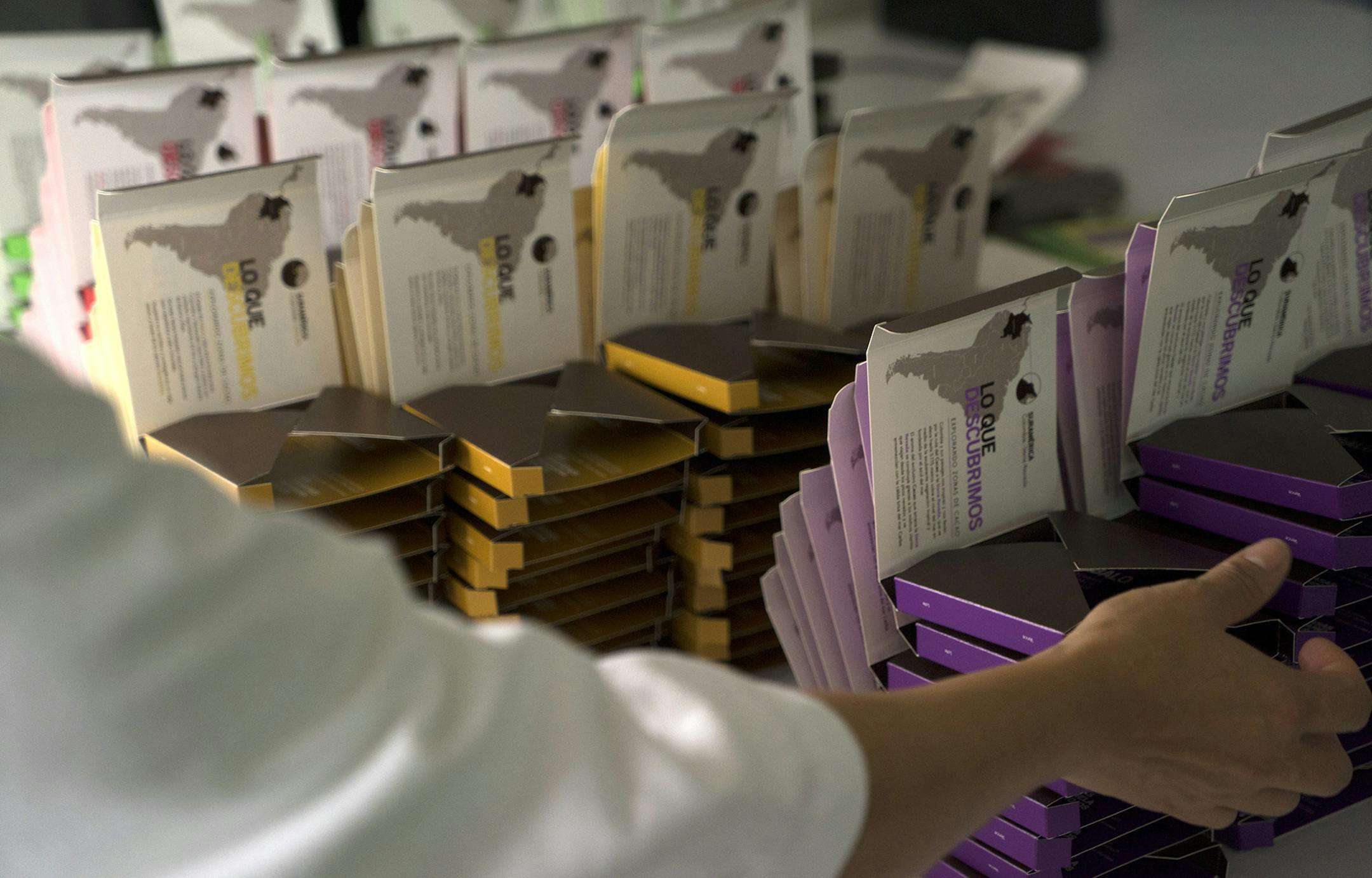
A worker packages chocolate for export to Japan at the Cacao Hunters chocolate factory in Popayan, in the Cauca department of Colombia, on Monday, Oct. 6, 2014. Colombian cocoa growers have held talks with some of the world's top chocolate makers including Barry Callebaut AG and Ferrero SPA in a bid to replicate the success of the country's high-end coffee industry. Photographer: Mariana Greif Etchebehere/Bloomberg ORG XMIT: 517667489
Colombian growers have held talks with top chocolate makers hoping to replicate the country’s high-end coffee industry. (The Minnesota Star Tribune)
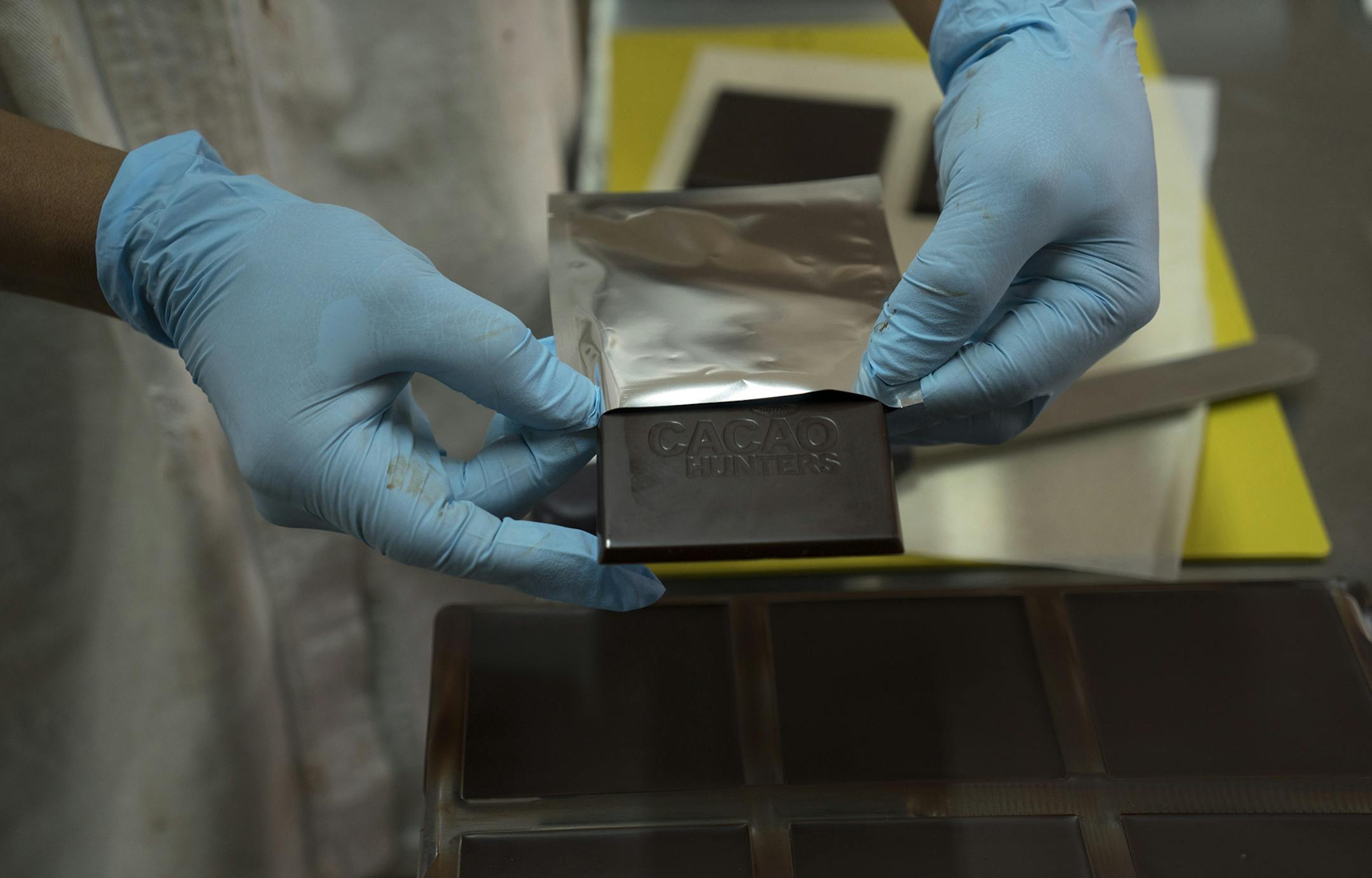
A worker puts chocolate in a package after removing it from a mold at the Cacao Hunters chocolate factory in Popayan, in the Cauca department of Colombia, on Monday, Oct. 6, 2014. Colombian cocoa growers have held talks with some of the world's top chocolate makers including Barry Callebaut AG and Ferrero SPA in a bid to replicate the success of the country's high-end coffee industry. Photographer: Mariana Greif Etchebehere/Bloomberg ORG XMIT: 517667489
A worker packages chocolate at a factory in Popayan, Colombia. Global cocoa processing hit its fourth straight record this year. (The Minnesota Star Tribune)
about the writers

about the writers

Marvin G. Perez

Luzi Ann Javier

More from Business

See More
Ten skids of loose peanut butter crackers wait to go to the land fill Saturday Feb. 7, 2009 as Gleaners Food Bank destroys products containing peanut butter as part of the nation wide recall of foods containing Salmonella tainted products from Peanut Corp. of America . (AP Photo/The Indianapolis Star,Michelle Pemberton)
The Minnesota Star Tribune

Gold Star Distribution, which supplies several Halal markets in the Twin Cities, is voluntarily recalling a list of food and merchandise products stretching 44 pages and including products from candy to medicine.

card image
card image
