

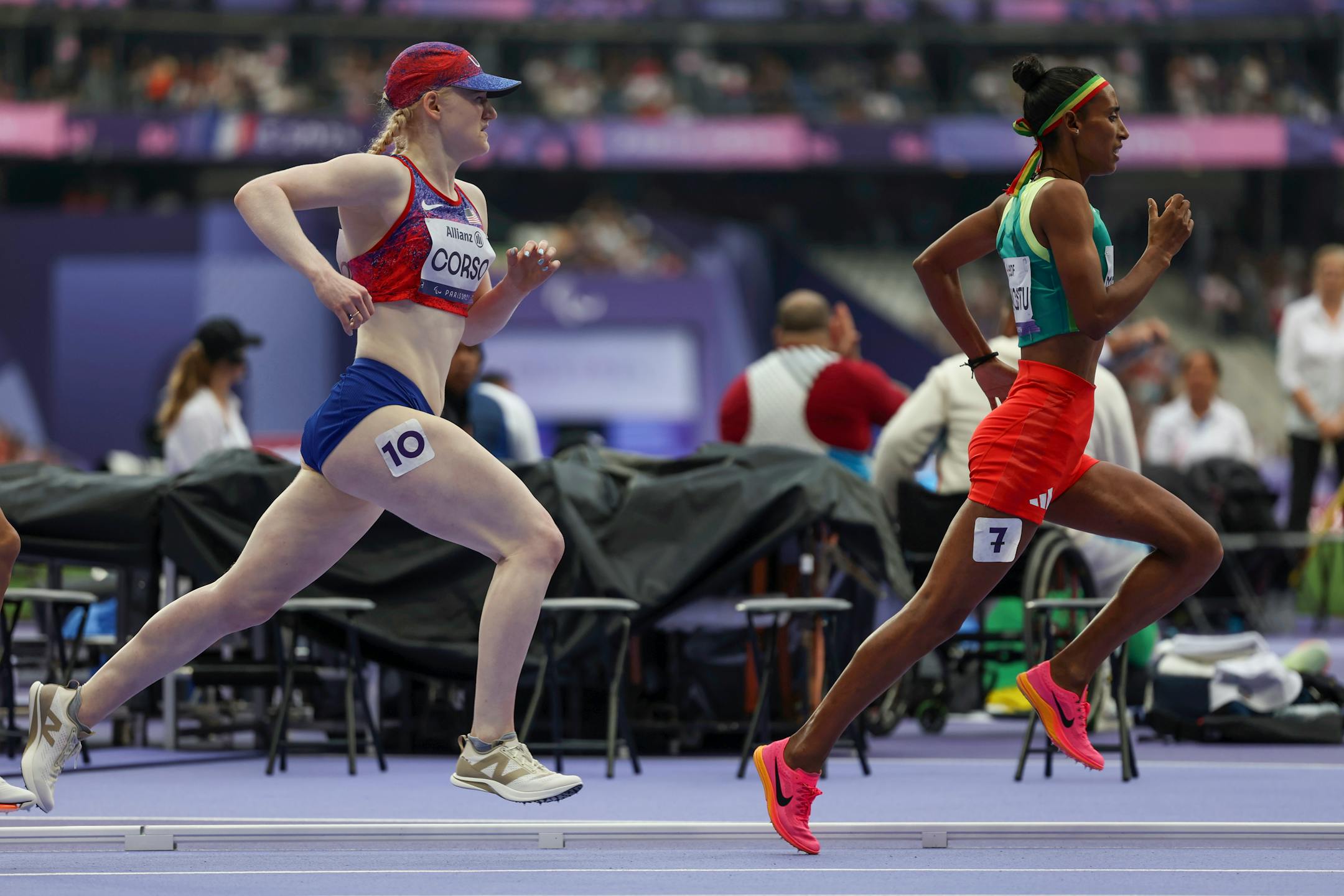
PARIS — Team USA runner Liza Corso is leaving Paris with her second Paralympic medal, but is hopeful other rewards are in her near future.
Corso won bronze in the women's 1,500 meters T13 classification (visual impairment) on Saturday after winning a silver medal at the Tokyo 2020 games. Corso will also continue to chase Paralympic gold while running cross country and track for Lipscomb University in Nashville.
More than half of Corso's Paralympic teammates have competed collegiately, according to the U.S. Olympic and Paralympic Committee, but she is part of the first generation that can profit off marketing deals while still competing as an NCAA athlete.
Corso's deals range from smaller sponsorships on social media to partnerships with worldwide brands like Toyota, and, announced earlier this month, Samsung.
''Especially when larger brands are supporting more Paralympic athletes, I think that definitely means a lot to us as athletes, just realizing that they value Paralympic sport is super important,'' Corso said.
This is thanks to the NCAA's 2021 decision to allow athletes to make money from their names, images and likenesses, referred to as NIL. Prior to that, athletes would lose their eligibility for any commercial activity, but the passage of state laws pressured the NCAA into changing its rules. Since then, collegiate athletes have been able to monetize their NIL through brand sponsorships, licensing agreements, product endorsements and other activities.
The total projected market for NIL deals has expanded from $917 million in its first year to a projected $1.67 billion this year, according to an annual report from Opendorse, a prominent NIL deal marketplace.
The new NIL rules took effect less than two months before the last Paralympic games in Tokyo. The NIL market has flourished since then, making the 2024 Paralympics one of the first major brand-building opportunities for collegiate athletes in adaptive sports.


