

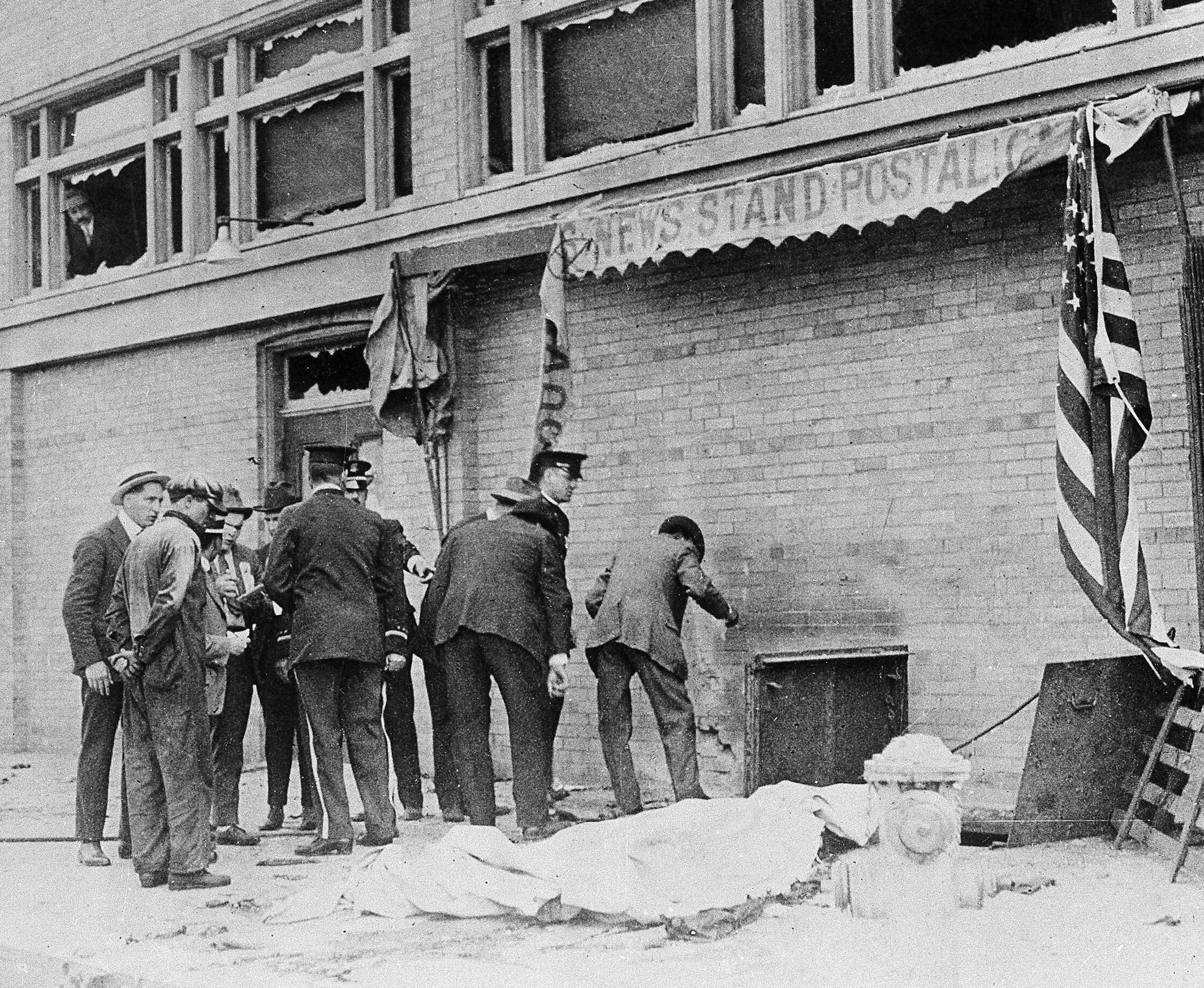
The bombing and attempted attacks in New York, New Jersey and Minnesota have further raised legitimate fears that the U.S. may be entering a dangerous era of homegrown terrorism. It's worth remembering how the country endured similar ordeals in the past.
The most fraught period of bombings and other terrorist tactics occurred during the Gilded Age, when anarchists resorted to violence, aiming to destroy both capitalism and the state. The movement began in Europe, where the first generation of anarchists — Peter Kropotkin, Johann Most, Errico Malatesta and others — began implementing a program of "propaganda by deed."
That was shorthand for revolutionary violence. Thanks to Alfred Nobel's invention of dynamite in 1864, a weapon was readily available, and the first generation of anarchists studied bomb-making with the same dedication they read esoteric tracts on political radicalism.
The German anarchist Johann Most led the way, publishing information on bomb-making in his radical newspaper, "Die Freiheit." These tips were then reproduced in a tidy little pamphlet, "The Science of Revolutionary Warfare," rapidly translated into English.
By the mid-1880s, anarchists began a bombing campaign that left much of Europe on edge. A New York Times article from 1883 denounced what it called the "dispensation of dynamite" that had taken hold. "Random and seemingly capricious dynamite plots are contrived in all directions," it reported. Such plots would soon reach American soil.
Most historians trace the opening shot of anarchist terrorism in the U.S. to May 4, 1886, when someone — the culprit was never identified — threw a bomb at the police during a labor demonstration in Chicago's Haymarket Square. A riot and gun battle ensued, leaving at least 11 people dead and many more wounded. A brutal crackdown on anarchists led to the conviction of eight people; four eventually went to the gallows, though the evidence against them was flimsy at best.
In the wake of Haymarket, newspapers and politicians seized on the idea that the country could be undermined by an inside enemy consisting almost entirely of foreign-born anarchists.
Raids of the hideouts of suspected anarchists were covered breathlessly. The Chicago Tribune reported on a typical raid in March 1886, which found a "regular anarchist arsenal" — nitroglycerin, dynamite, guns and other weapons, and a copy of Most's "Science of Revolutionary Warfare." For the rest of the decade and into the 1890s, bombs became a fact of life in American cities, though it was in Europe that anarchists had the greatest success in assassinating political and economic leaders.


