

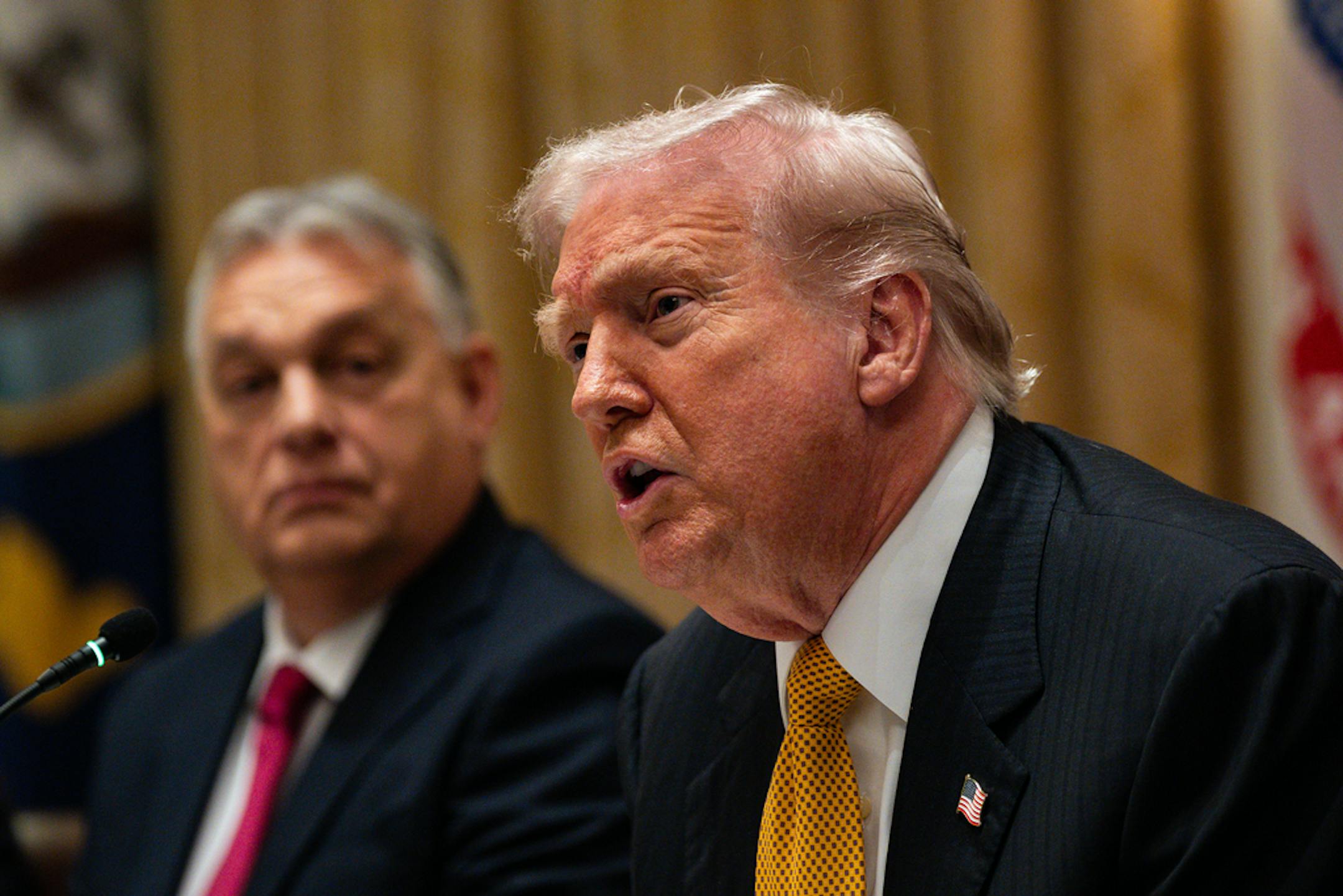
WASHINGTON — President Donald Trump has been dining with Wall Street bigwigs. He has embarked on an opulent revamp of the White House at a time when Americans are struggling to pay their bills. He has expressed support for granting visas to skilled foreigners to take jobs in the United States. He approved a $20 billion bailout for Argentina, helping a foreign government and wealthy investors at a moment when the U.S. government was shut down.
For a president who returned to office promising to avoid foreign entanglements, make life more affordable and ensure that available jobs go to U.S. citizens, it has been a significant departure from the expectations of his loyal base. And it is starting to open a rift with his supporters who were counting on a more aggressively populist agenda.
The divisions within Trump’s movement, spawned by his own actions, have only been amplified by the latest developments on a story that he has been doing his best to quash: his relationship with convicted sex offender Jeffrey Epstein.
Much of the president’s Make America Great Again movement, and many of his top aides, pushed for years for all the investigative files on the Epstein case to be made public, insisting that a rich and well-connected man — and his network of wealthy and powerful friends — needed to be held accountable for any abuse of young women.
But Trump, who has emphatically denied any involvement in or knowledge of Epstein’s sex-trafficking operation, showed again this week that he was resisting further disclosures, leaving a small but vocal group of Republicans angry over his about-face, and risking a further rupture in the movement heading into next year’s midterm elections.
“When they’re protecting pedophiles, when they are blowing our budget, when they are starting their wars overseas, I’m sorry, I can’t go along with that,” Rep. Thomas Massie, R-Ky., said on CNN this week. “And back home, people agree with me. They understand. Even the most ardent Trump supporters understand.”
Trump allies are aware that his more populist message has become muddled in recent months, as the president has spent time courting wealthy donors and making no secret of his desire to win a Nobel Peace Prize for his work on foreign conflicts.
Trump told aides recently that he might attend the annual World Economic Forum in Davos, Switzerland, a gathering of the political and business elite, according to two people familiar with the matter. Some of his advisers, however, feel such a trip would send the wrong message at a moment when they are trying to recapture a political edge on the economy.


