KENT, Wash. — As Mike Roth steps into Amazon.com's newest warehouse here, he spreads his arms wide and asks what is different about this facility from the 96 other warehouses the Web giant operates around the world.
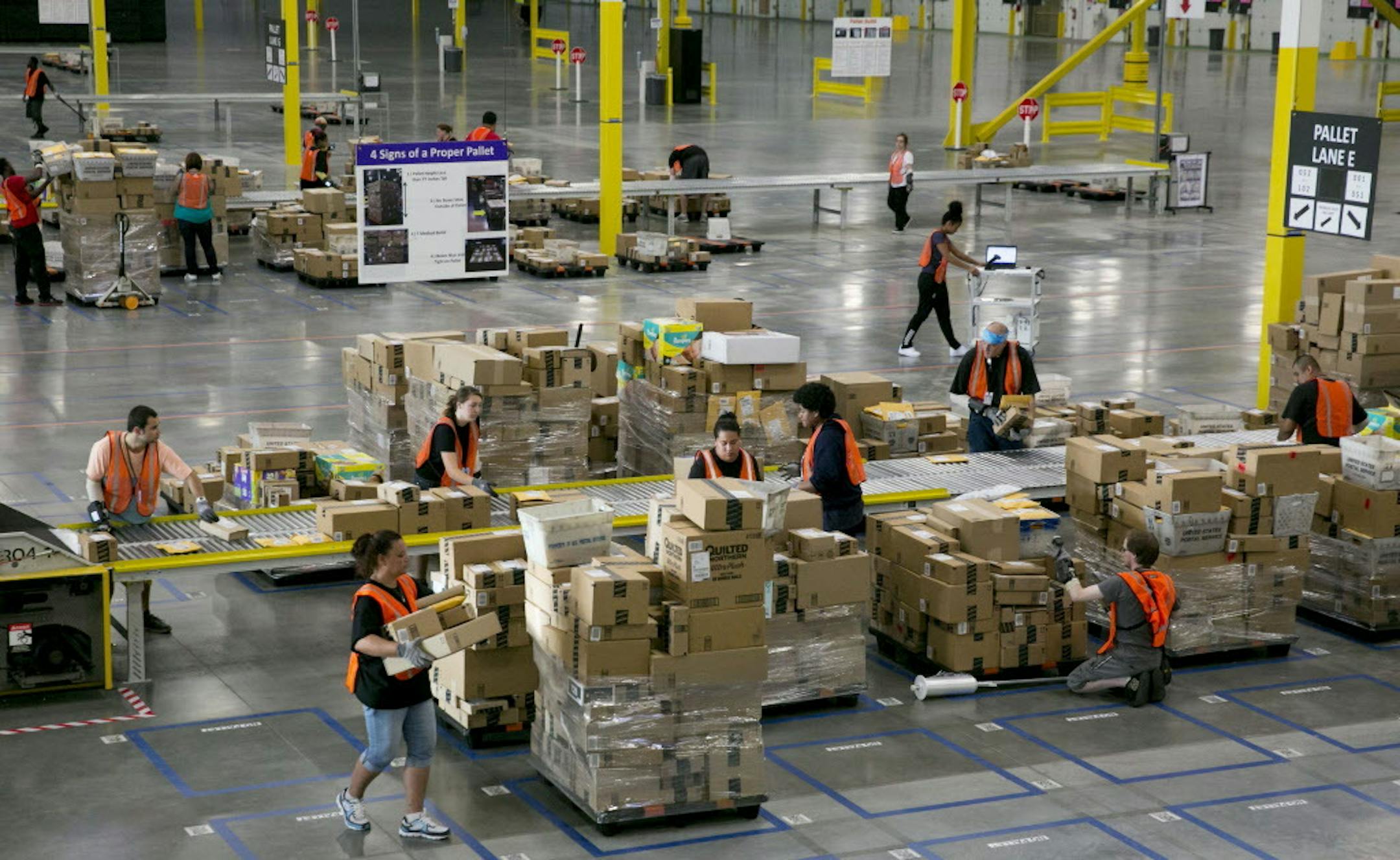
To anyone who has ever set foot in one of those 1 million-square-foot buildings, known in Amazon parlance as fulfillment centers, the answer is obvious. There is not a product in sight. No books. No toasters. No toothpaste. There aren't the rows and rows of shelves on which those products are shelved.
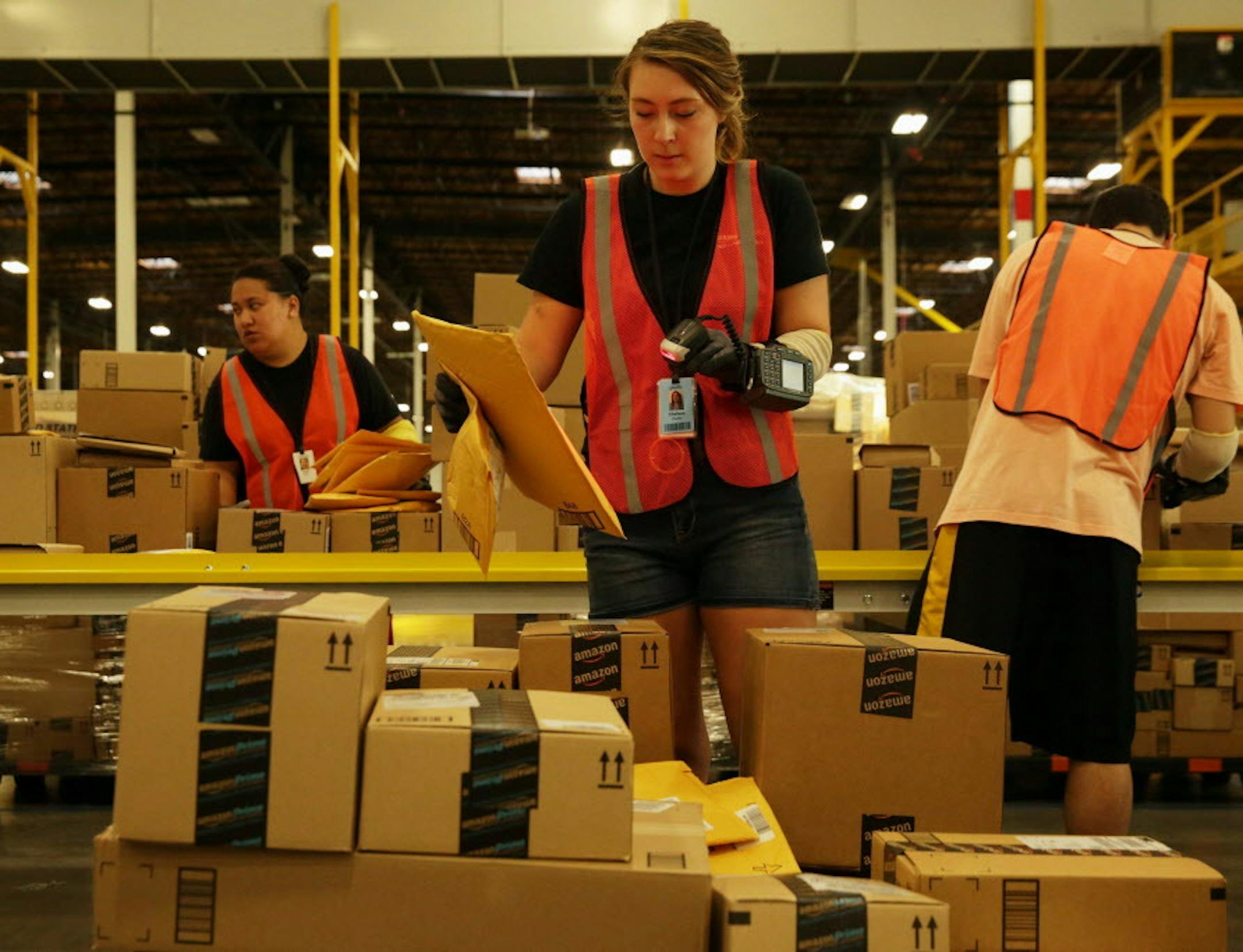
Instead, the newly opened warehouse near Seattle is teeming with sealed parcels, full of items Amazon customers have ordered. Those packages zip along a maze of conveyor belts where computers and workers sort them for delivery to individual post offices in Seattle; Portland, Ore.; Spokane, Wash., and points in between.
By controlling the delivery process right up to the last mile, Amazon can get packages to customers on Sunday, a service it announced with the U.S. Postal Service last November. And with the opening of the Kent facility, Sunday delivery has begun in the Pacific Northwest.
"When you see us announcing Sunday delivery, you can assume a sortation center is close by," Roth said.
The sortation center also lets Seattle members of its $99-a-year Prime subscription service order as late as 11:59 p.m. to get two-day shipping at no extra charge. That's nine hours later than the previous cutoff time for two-day delivery. Non-Prime customers in Seattle also can use the later cutoff order times for two-day delivery if they are willing to pay for the service, which starts at $1.99 an item and climbs depending on size and weight.
In addition to the Kent facility, adjacent to a site where Amazon is building a fulfillment center, the company has opened sortation centers in Atlanta; Dallas; Houston; Phoenix; Avenel, N.J.; Hebron, Ky., and San Bernardino, Calif., in recent weeks.
By the end of the year, Amazon will have more than 15 sortation centers, all in the United States, Roth said. Each will employ several hundred workers.