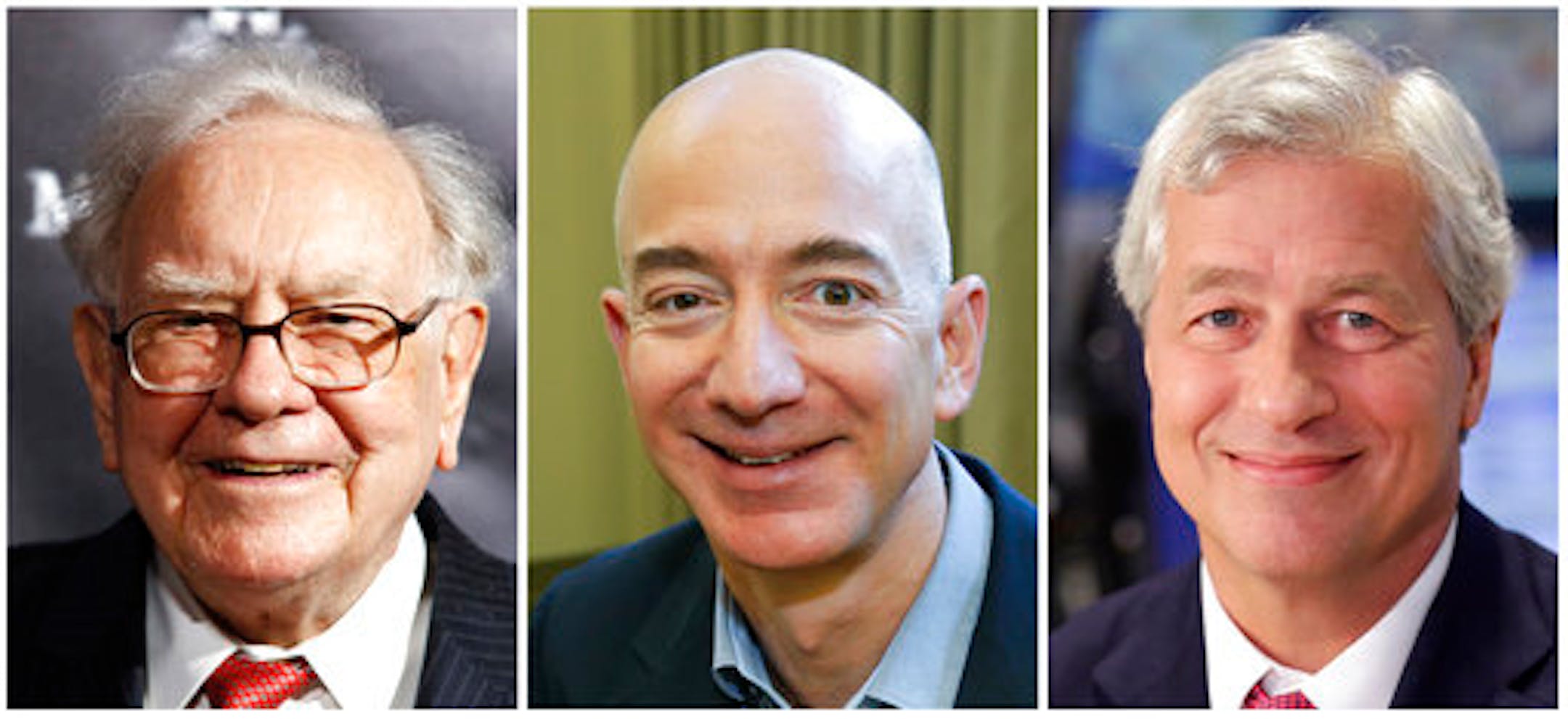
Three of the nation's most influential CEOs pledged their companies' resources Tuesday to attacking the inexorable rise in U.S. health care costs — a force that one executive called "the hungry tapeworm on the American economy" — while also transforming the system so it better serves patients.
Amazon, Berkshire Hathaway and JPMorgan Chase & Co. are launching a company that won't be focused on profits, the executives said, but rather on technology solutions to create a high-quality and transparent system that delivers health care at a reasonable cost.
The proposal was short on specifics, but nonetheless pushed down the share price Tuesday at several large health care firms including Minnetonka-based UnitedHealth Group.
"These are major companies with proven track records, so one has to take it seriously," said Larry Levitt, a senior vice president with the California-based Kaiser Family Foundation. "But the streets are littered with efforts from the outside to disrupt health care, so one has to look at this effort with some skepticism."
Amazon is the Seattle-based online retail giant that has been the focus of Wall Street chatter for months, as analysts have speculated on whether the company would enter the pharmacy business. Amazon's impressive growth trajectory has made a star of CEO Jeff Bezos, who is currently presiding over the company's high-profile effort to find a second North American headquarters.
JPMorgan Chase is one of the nation's largest financial service firms, led by chief executive Jamie Dimon — a corporate star in his own right for guiding the bank successfully through last decade's financial crisis. To some investors, Warren Buffett and his Omaha-based Berkshire Hathaway personify the best values of American capitalism.
Buffett has maintained that rising health care costs in the United States are a serious financial drag on the economy, and issued a statement Tuesday that announced the new effort with a familiar rhetorical flourish.
"The ballooning costs of health care act as a hungry tapeworm on the American economy," Buffett said. "Our group does not come to this problem with answers. But we also do not accept it as inevitable."