

CALGARY, ALBERTA – Keystone XL backers say the proliferation of alternative pipeline projects and rail-loading terminals undercuts opponents who claim blocking the pipeline will keep high-carbon Canadian crude oil in the ground.
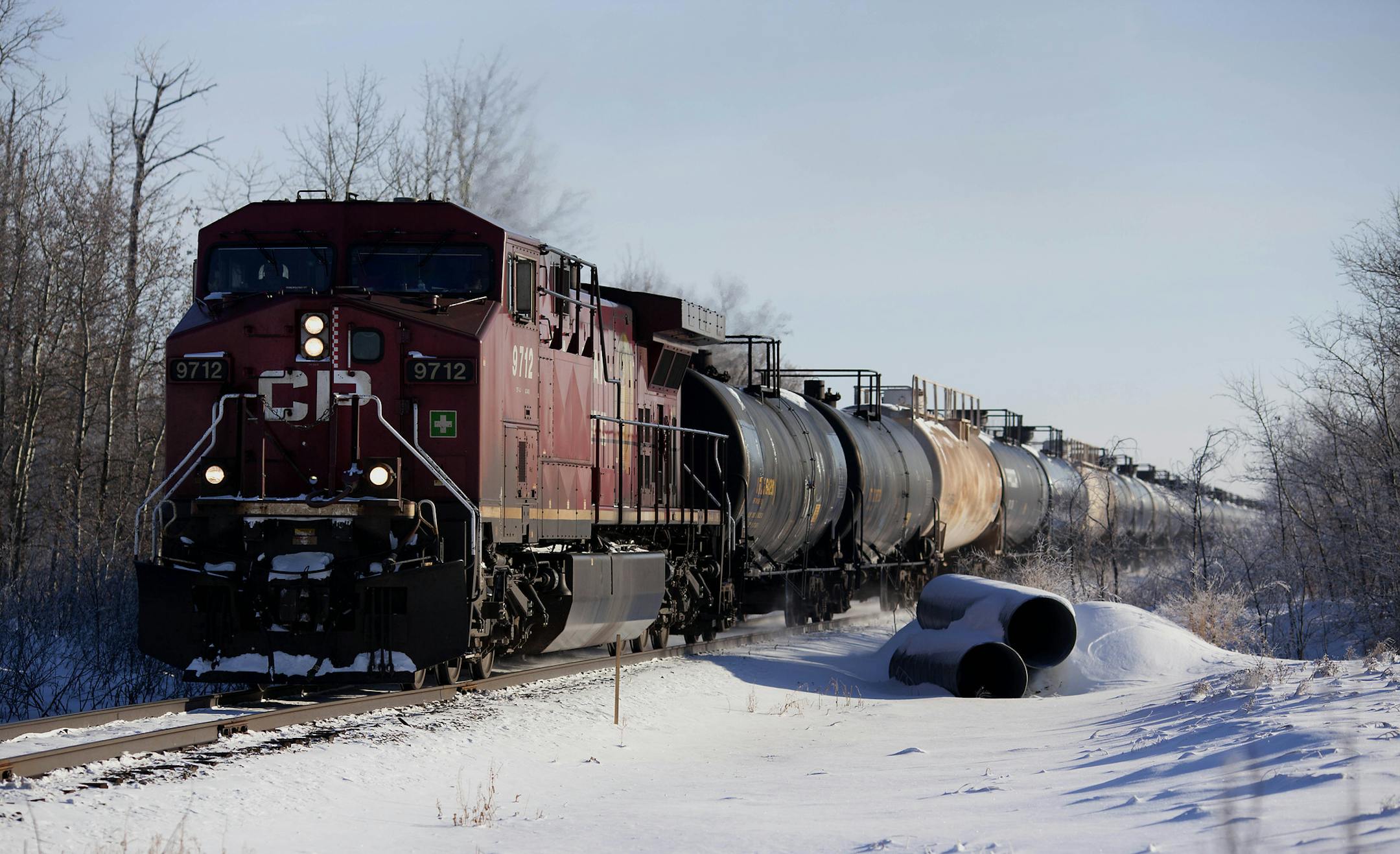
Kinder Morgan Energy Partners LP and Imperial Oil on Friday announced a 50-50 joint venture to build a terminal in Edmonton, Alberta, capable of loading up to three crude oil trains per day by 2017. It would have connections to the Canadian Pacific and Canadian National railroads, whose tracks through Minnesota offer a pathway to the U.S. market.
A day earlier, Canadian energy regulators recommended approval with conditions of Enbridge Inc.'s Northern Gateway pipeline, a project that would bring as much as 525,000 barrels a day of oil sands to a port at Kitimat, British Columbia. The recommendation, by the National Energy Board, leaves the final decision up to federal government.
The projects are the just the latest proposals to transport Canada's oil sands bounty. Kinder Morgan also plans to almost triple the capacity of a line to Vancouver. TransCanada Corp. plans to convert a gas line to oil, and last week its CEO, Russ Girling, told the Financial Post that the company could develop a rail bridge from Canada to Nebraska if its Keystone XL project is further delayed.
"The fact that there are other routes means that the pipeline isn't a significant source of emissions," said Kevin Book, managing director of ClearView Energy Partners, a Washington-based consultant. High-carbon Canadian crude is finding its way to market without Keystone XL, he said in an interview.
President Obama has said he won't approve TransCanada's application to build the Keystone line between Alberta's oil sands and United States if it were found to substantially boost carbon dioxide emissions, which scientists say are raising the Earth's temperature.
"To say yes on the terms that the president has established, there have to be other pathways for the crude to get to market," Book said.
Keystone has emerged as a flashpoint in the debate over global warming. Pipeline critics say the project poses a risk to the climate because it would encourage increased production from Alberta's oil sands, a process that releases more carbon dioxide than the extraction of conventional forms of oil.



