

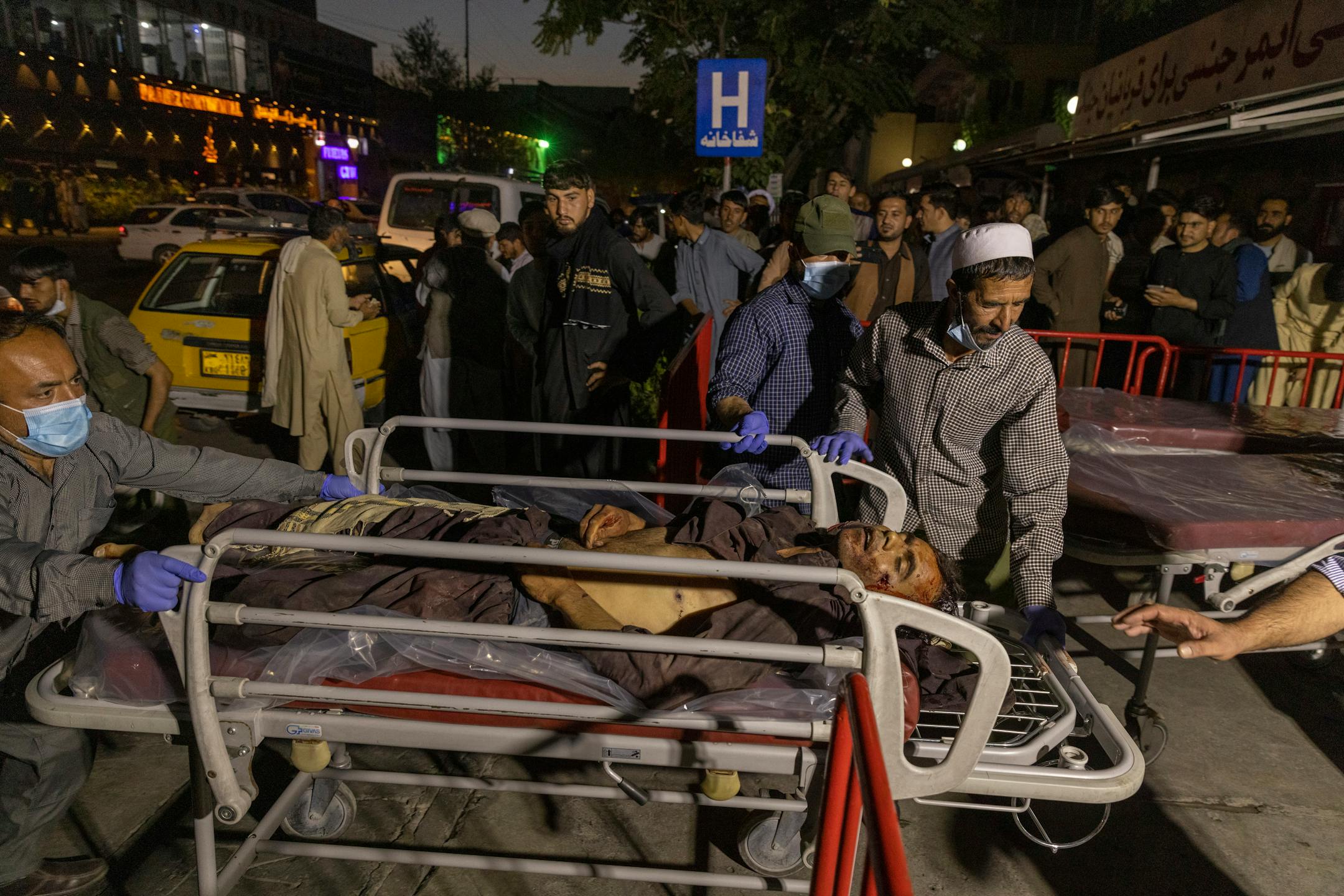
I served in Afghanistan as a U.S. Marine Corps colonel in 2010-11. (I also served in Somalia and Iraq.) I spent three months in Kabul and the remainder of my tour based out of Helmand Province in southwest Afghanistan. In my role I must have visited or traveled through the Kabul airport over 30 times. It was the exactly wrong place to run what might become (and did become) an in-extremis evacuation of civilians.
Geographically, it is a small area; the approaches in and out are very limited, and it is surrounded by tall buildings and hills very close to the edge of the airport. Any young, trained officer right out of a Ground Combat Arms school or a good sergeant or staff sergeant could take one look around the area and would label it an obvious death trap — especially if you tried to move large groups of people in or around it in even a low-intensity, semi-permissive situation.
American citizens, and the world, are rightly outraged at the leaders within the Biden administration who brought us to this point, and if proper individuals aren't forced to resign or fired over this debacle, citizens should remain outraged. However, as a former military professional, I am flabbergasted, as are scores of my contemporaries, at how four- and three-star generals at the Department of Defense and Central Command could have so silently acquiesced to putting American troops in such a deadly situation with no time to prepare adequate defensive perimeters. Especially when there was such an obvious, much more defendable, much higher-capacity airfield not far from Kabul in the form of Bagram Airfield.
Whether to leave Afghanistan was a policy decision that our civilian leaders had to make, and once it was decided, the military had to carry it out. However, our oaths of office do not require us to flatly obey orders that make no sense when there are much better and safer alternatives.
I call on all of Minnesota's U.S. representatives and senators to push for immediate public hearings and testimony from Defense Department leadership, with these important questions at the fore:
• Why was Bagram so easily rejected? If the reason was a cap on the number of troops available by the White House, then that needs to come to light. We have somewhere over 1 million active-duty service members. We could have afforded to use a much more robust set of forces if they flowed in early and properly.
• Why, in a supposed "conditions-based" withdrawal, did the Defense Department not demand drone and airstrikes against the expanding Taliban to slow them down? We have years of practical experience that shows us that when we use force against them, it does deter their behavior.
• If it went from conditions-based to date-based (as it appears it did), why did we at least not blunt the Taliban's expansion as described above?


