

Q: What's a typical workday like for you?
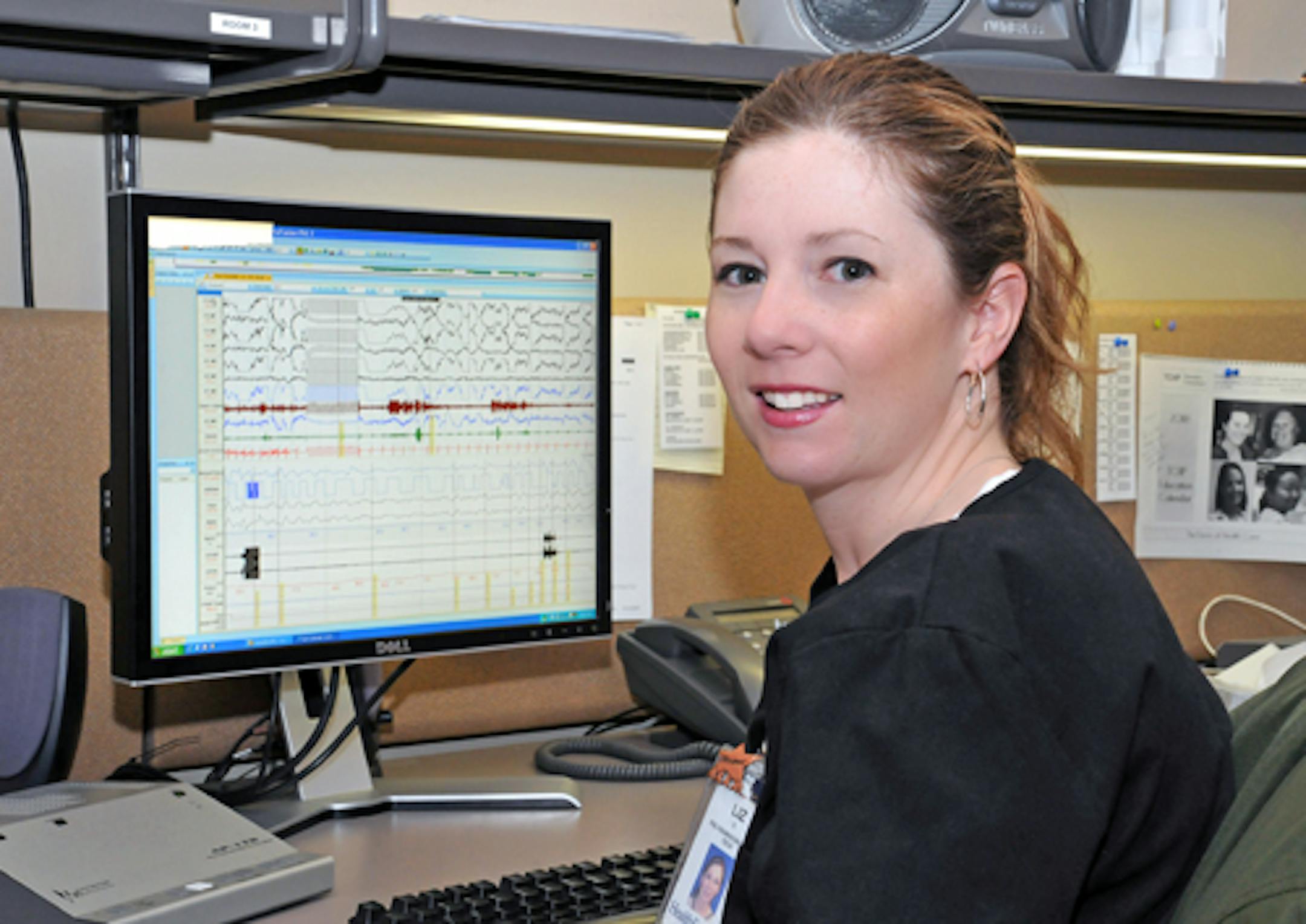
A: I work from 7:30 p.m. to 7:30 a.m. three days a week. I work with two patients each night, preparing the paperwork and electrodes I'll need to apply before they arrive. I check them into the system, room them and apply the electrodes, which takes about half an hour. During that time, I'm also educating the patient about sleep and sleep disorders. After I put them to bed, the real work begins, which is analyzing the data. I do an EEG to monitor the electrical activities of the brain, watch for respiratory effort and the breathing. I measure oxygen levels and monitor the heart rate with an EKG. During the monitoring I can provide treatment with positive airway pressure (PAP) therapy. In the morning, I remove the wires, and send them on their way.
Q: How does your role fit into the bigger health care picture?
A: In seven years, my role has changed. Patients are more educated by physicians. I see more complex patients, including those who have atrial fibrillation or preparing for bariatric surgery.
Q: Who do you interact with during the course of the day?
A: I interact with the patients and one co-worker.
Q: Why did you become a polysomnographic technologist?
A: There are very few places in medicine where can you actually change someone whose sleep is broken and fix it in one night with therapy.


