Advertisement

Editor's Pick

Alex Pretti’s journey into a crisis

February 24, 2026
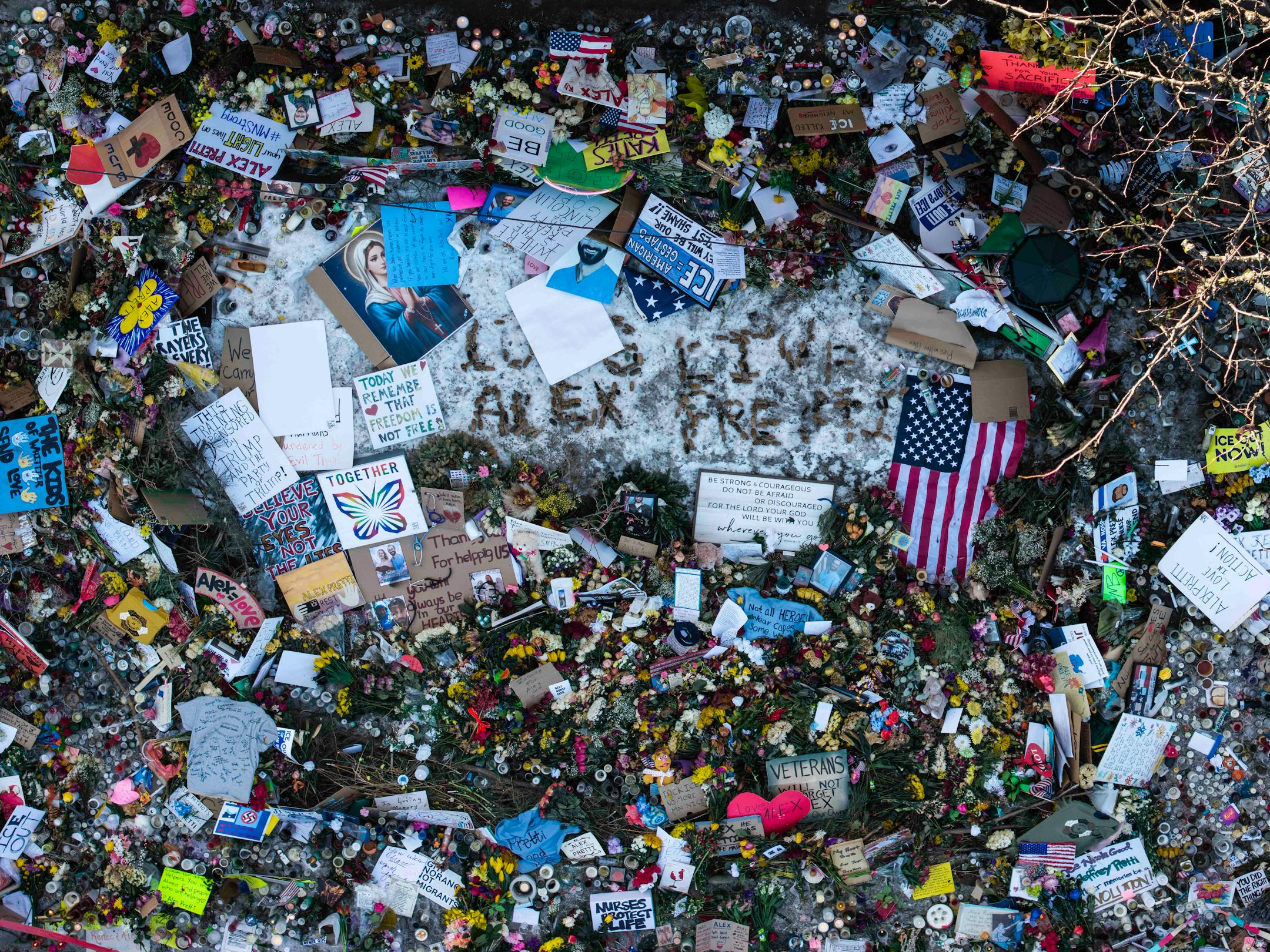
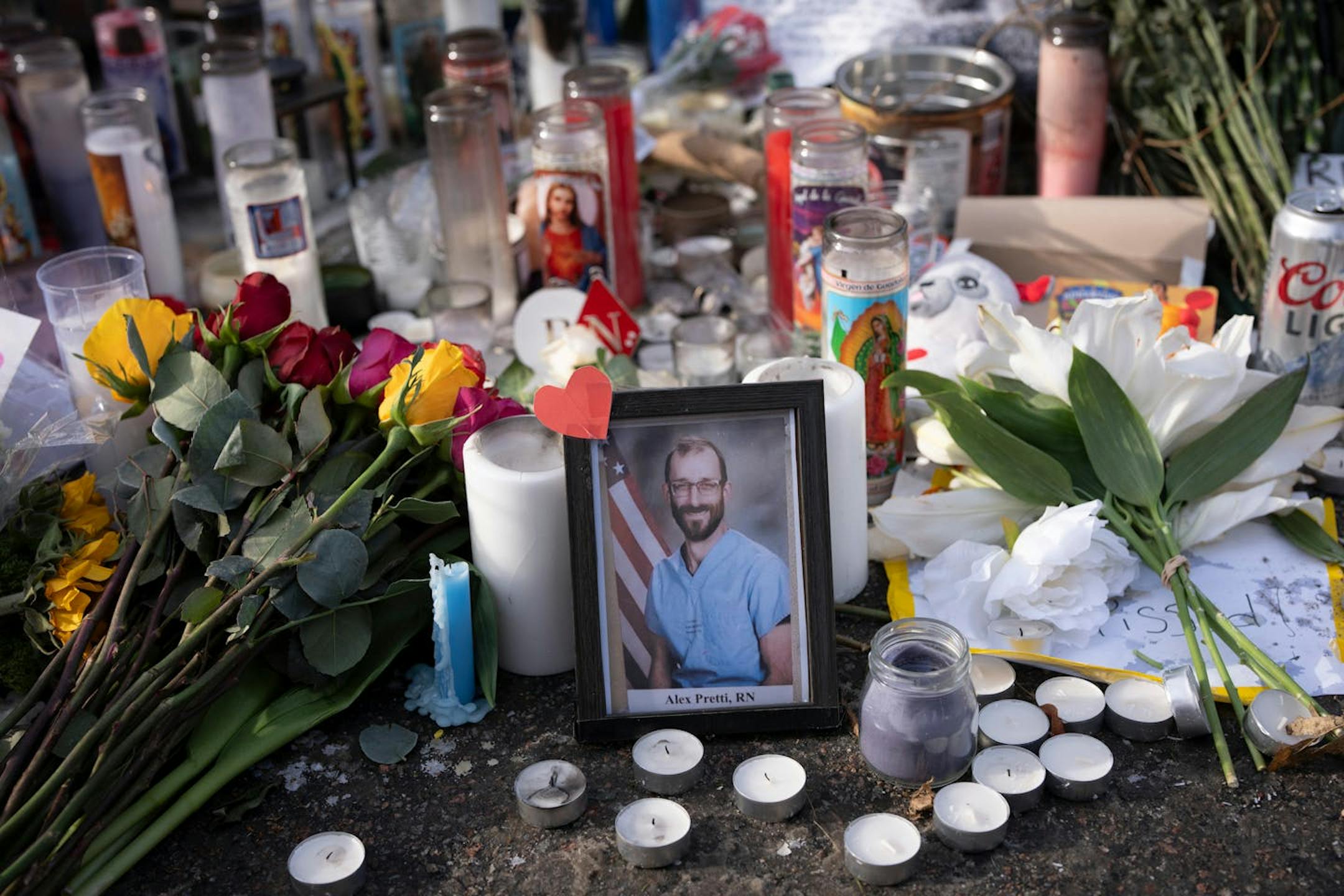
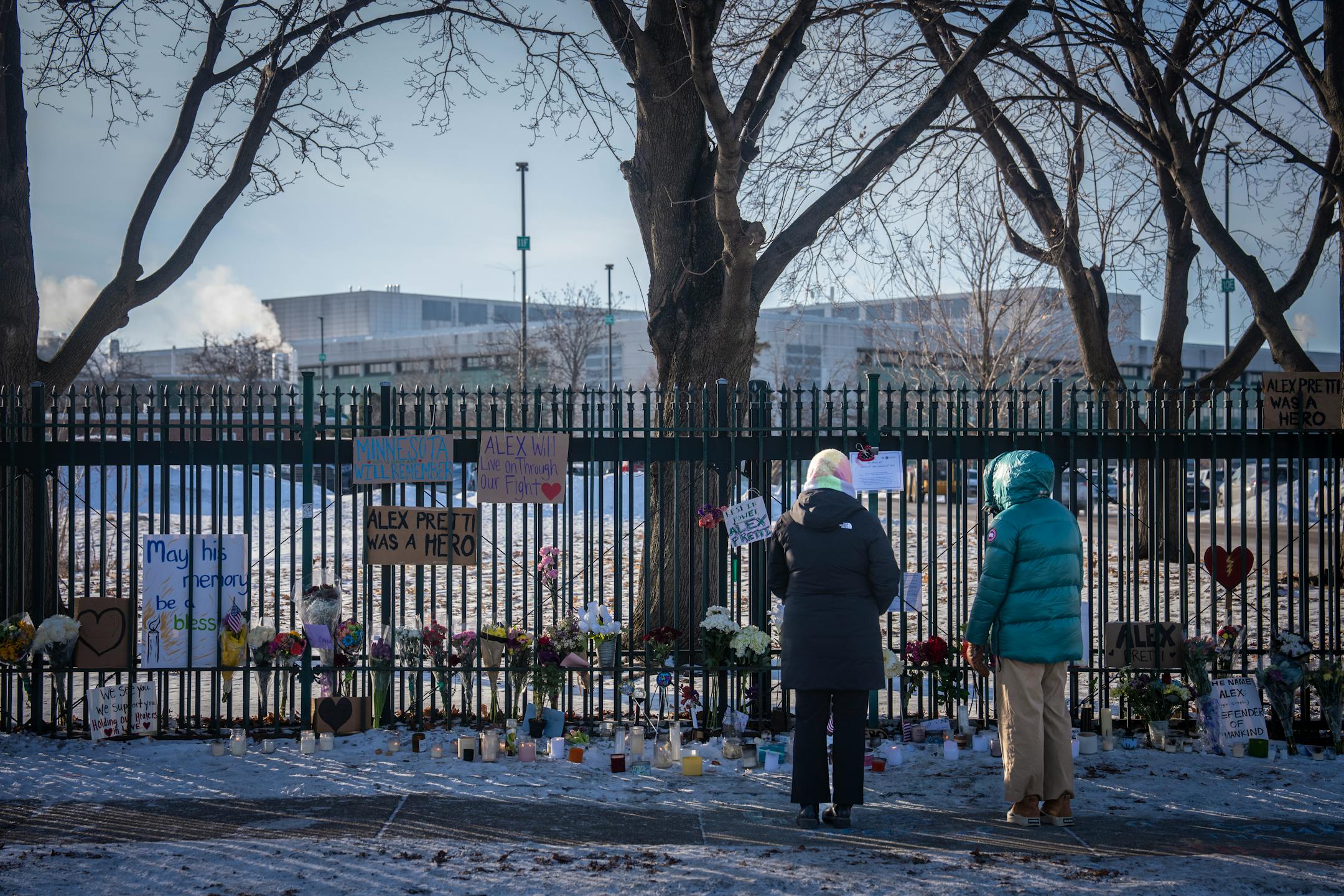
A Nicollet Avenue memorial for Alex Pretti, who was shot and killed by ICE agents on Jan. 24. (Renée Jones Schneider/The Minnesota Star Tribune)

Killed during an encounter with federal agents on the streets of Minneapolis, the ICU nurse was increasingly drawn to helping others during a time of turbulence in the Twin Cities.

The Minnesota Star Tribune
Advertisement

At the veterans hospital where he worked, Alex Pretti was known for his easy laugh, affection for bad coffee and his go-to response to most any request.

“You want to clean a bed pan, Alex?” a fellow nurse said of Pretti, before doing her best to impersonate the excitement in his answer. “Hell, yeah!”

It is the answer he would give, no matter how mundane or messy the task.

Outside of work, Pretti’s penchant for action translated to activism.

Like many of his neighbors, the 37-year-old Minneapolis resident had been protesting the Trump administration’s deportation crackdown. He was enraged by the detention of children, which he called “kidnapping,” his father has said. He wanted to do something.

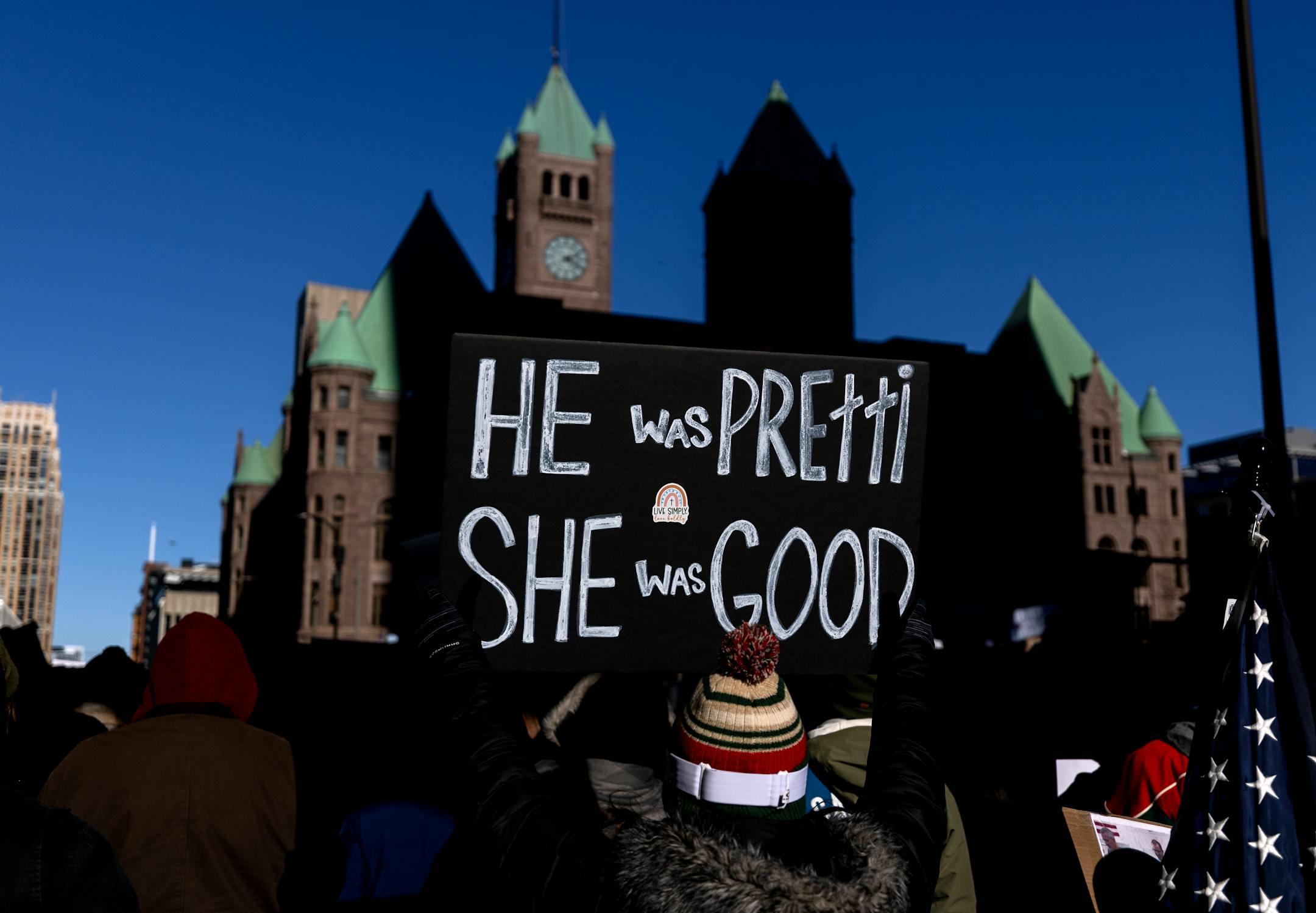
Pretti’s fatal shooting last month by federal agents became a tipping point in an international outcry against the Trump administration’s aggressive immigration enforcement in Minneapolis. And Pretti, along with Renee Good, another U.S. citizen shot and killed by agents, fast became a symbol of a powerful resistance or a lawless obstructionism, depending on your point of view.

Pretti was unknown to the public before he arrived on Nicollet Avenue that Saturday morning, carrying both his camera phone and a holstered, licensed handgun.

The Trump administration rushed to paint him as a “terrorist” planning to “massacre” immigration agents. They would later walk back that description, though renewed criticism came from the political right after a video taken the week before his death showed Pretti spitting at and kicking a taillight of a vehicle driven by ICE agents.
Advertisement

Family, friends, colleagues, neighbors and former patients have rebutted the federal government’s claims in public vigils, social media posts, personal essays and interviews with news outlets around the country. They describe him as a compassionate and good-humored person drawn to help others.

Pretti’s neighbors, who have been flooded with media requests from across the country, have put up signs in their windows asking people to not ring their doorbells.

“Alex was a fantastic person and we only have good things to say about him,” the signs read.

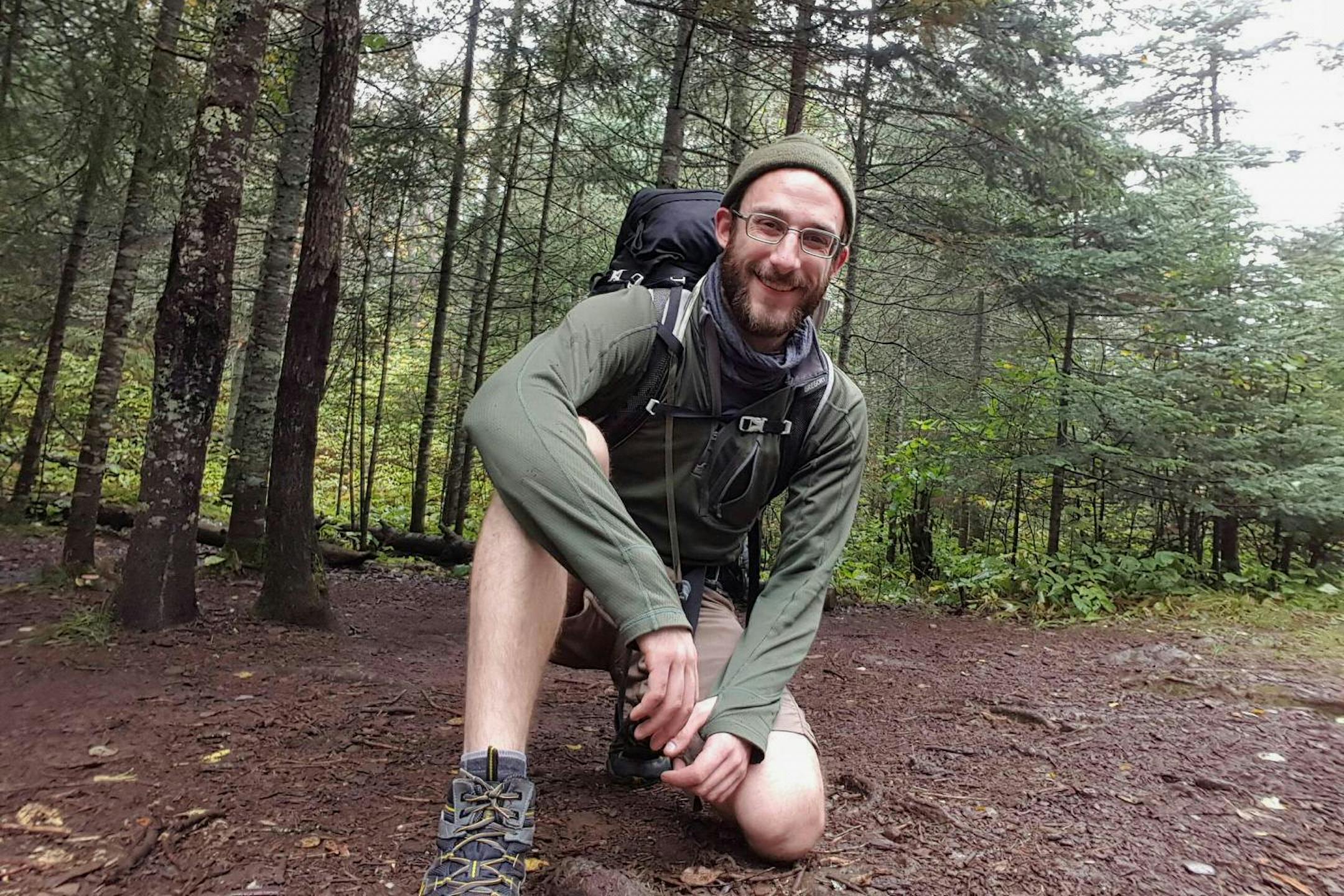
“He just, you could not see him without a smile on his face,” a former colleague said about Alex Pretti. “A laugh, a pat on the back. He was a super personable guy, and you left with your day a bit brighter than it was before.” (Provided by Michael Pretti/The Associated Press)

Called to the ICU

Pretti grew up in a quiet part of Green Bay, Wis. A grade school friend, Kristen Radtke, who grew up across the street, would hear his clear voice carry through an open window as he practiced singing, she wrote.

“Once in the old neighborhood, when he was seven or eight, he’d fallen off his bike, his helmet splitting cleanly in half like a cantaloupe,” she wrote. “He showed the halves to all the neighbor kids as a way to warn them to never ride without one.”

It was his voice that allowed him to excel in the highly competitive choir and show choir at Preble High School, one of the Green Bay area’s largest schools.

Advertisement

He came to Minneapolis to study biology at the University of Minnesota; and after graduating in 2011, he never left. He quickly made the Twin Cities his home and began working as a research scientist for the U’s Medical School.

Pretti was tapped in 2017 to help with a study at the Minneapolis Veterans Medical Center. He worked with a team to determine whether pills that delivered healthy microbiota were effective at keeping a common bacterial infection from recurring in patients.

Pretti won over the small team of researchers almost immediately.

“He just, you could not see him without a smile on his face,” a former colleague said. “A laugh, a pat on the back. He was a super personable guy, and you left with your day a bit brighter than it was before.”

Pretti went on to assist with more studies at the VA over the next few years, which brought him into closer contact with patients. It was clear to those who knew him that he was being drawn from research toward patient care. Friends and family started encouraging him to go back to school to get a nursing license.

Then came COVID-19. The worst of the pandemic happened in the winter of 2020. That’s when the death rate was at its highest, and beds and oxygen in intensive care units were the hardest to come by.

Advertisement

The period that followed, in 2021, was an even tougher time for many in medicine. A variant of the virus was keeping people sick, there still wasn’t widespread vaccination or exposure, and burnout was setting in.

Also, the support that had rallied hospitals at the start of the pandemic had waned.

“In 2020, there was a big push to supporting health care workers, ‘What do you need? What can we do?’” said Dr. Dimitri Drekonja, a former colleague of Pretti’s. “But 2021 was right in the era of ‘Why are we still doing this? Why do we have to wear masks? You can’t make me get a vaccine. I don’t trust what you’re doing.’

“It was a rough time in health care, it was a fracturing time,” he said.

That’s when Pretti became a registered nurse. He quickly moved to the intensive care unit at the VA, where he started on overnight shifts.

Two Minneapolis Veterans Medical Center employees walk to the sidewalk outside the building to view a memorial for Alex Pretti on Jan. 26. (Renée Jones Schneider/The Minnesota Star Tribune)

At the bedside

Pretti’s time in the ICU is perhaps his best understood. While the VA has asked its employees to not speak about the shooting or Pretti’s time there, anecdotes have emerged from social media, memorials and a smattering of news reports.

Advertisement

In between their talks about the wonders of Michigan’s Upper Peninsula, their families, politics and adventures great and small, Pretti would sometimes try to explain to his co-workers what exactly it was that he studied in college, in his past life as a medical researcher before he became a nurse. They never did fully understand it.

Pretti gave people his undivided attention. He always found time to help other nurses.

“Except for one time,” said a colleague who spoke at a vigil but declined to be identified. “One time I asked him for help with a big job — it was a big clean up. He said ‘Sorry, I can’t.’ One time. That was it."

He had a way of making veterans in a crowded hospital feel like they were the only patient he had, said Martha Crownhart, a Navy veteran, in an interview with CNN.

“I had a real bad day and he sat in my room for a little over 20 minutes, holding my hand, talking to me, letting me know things were going to be OK,” she said. “He prayed with me.”

Pretti told Crownhart that he had been joining protests against the immigration surge, and wanted to make a difference.

“He felt so strongly about how Renee Good had died,” she said.

Demonstrators gather at the Hennepin County Government Center during an ICE Out protest in Minneapolis on Jan. 30. (Carlos Gonzalez/The Minnesota Star Tribune)

Into the protests

Pretti had participated in street protests following the killing of George Floyd in 2020, his ex-wife told the Associated Press.

She described him as someone who might shout at law enforcement officers at a protest, but she had never known him to be physically confrontational, she told the AP, which did not identify Pretti’s ex-wife at her request.

The two attended the protests together and were married in the summer of 2021. His ex-wife said that they hadn’t spoken since their separation in 2023.

She said Pretti got a permit to carry a concealed firearm about three years ago.

He would have been one of thousands in the Twin Cities to buy a firearm in the aftermath of the killing of Floyd.

Pretti carried what appeared to be a Sig Sauer 9mm pistol, a handgun that is widely popular.

Pretti’s parents, Susan and Michael Pretti, recently told the New York Times that they did not talk politics often with their son, but they knew he was upset by the immigration raids and arrests in Minneapolis and had joined thousands of other people in protest.

They said he loved Minneapolis and was worried about the community.

“The truth is, he was an exceptionally kind, caring man,” Michael Pretti said.

Pretti’s parents live in Colorado now. His sister, Micayla Pretti, is still in Wisconsin. His family has spoken sparingly in public since the shooting.

Micayla Pretti wrote in a statement shortly after the shooting that her older brother touched more lives than he probably ever realized.

“All Alex ever wanted was to help someone — anyone,” she wrote. “Even in his very last moments on this earth, he was simply trying to do just that.”

His parents showed the Times reporter a box of hundreds of cards and letters they’ve received over the last month.

Pretti’s colleagues wanted to set up a vigil for him shortly after his death, but were told by the VA that they couldn’t hold it on federal property. They held it on the sidewalk just outside the VA, instead.

A makeshift memorial has grown there, with flowers, candles and photos.

More than 100 nurses poured onto the sidewalk for the late vigil, some still wearing scrubs, others driving in from home or from other hospitals around the state. Chaplains led them in prayer.

His fellow nurses at the ICU took the microphone, unsure of what exactly to say in their grief over losing him so suddenly and violently.

Then, together, they began to talk about the man they knew. The VA employees did not identify themselves, saying they were told not to talk about Pretti.

“He knew what he wanted,” a nurse who worked night shifts with Pretti said. “He knew how to do it. He knew how to fight for what he believed in. He was a hero.”

The growing memorial for Alex Pretti on Jan. 31 on Nicollet Avenue near W. 26th Street in Minneapolis. (Aaron Lavinsky/The Minnesota Star Tribune)
about the writer

about the writer

Greg Stanley

Reporter

Greg Stanley is an environmental reporter for the Minnesota Star Tribune. He has previously covered water issues, development and politics in Florida's Everglades and in northern Illinois.

See Moreicon

More from News & Politics

See More
card image
card image
Advertisement