

Opinion editor's note: Star Tribune Opinion publishes a mix of national and local commentaries online and in print each day. To contribute, click here.
•••
In February 2020, just before the world shut down, I was waiting for Joe Biden to speak on a Friday night in Henderson, Nev. The next morning I watched Bernie Sanders rally a fairly young, largely Latino crowd in a packed Las Vegas high school cafeteria. The Biden event, held when it looked as if he would not win the nomination, was smaller and more subdued. On the other side of a rope separating media from attendees, a group of Biden supporters were talking about how stressful it would be to be president at their and Biden's age. As I remember it, one of them said, "But he feels he has to do it."
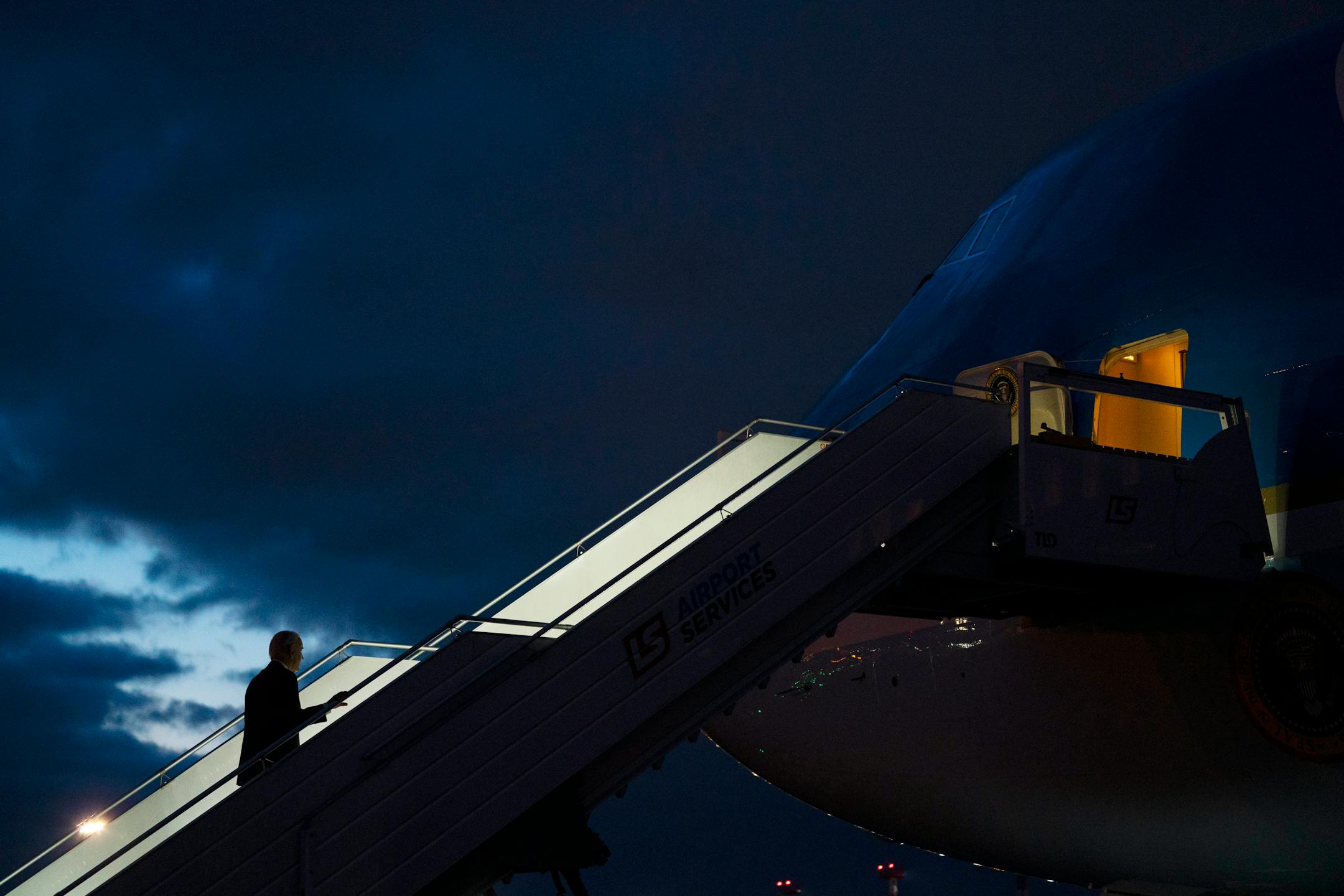
Not much has changed about the substance of their conversation since then, other than three long years: Biden, at 80, is the oldest U.S. president ever. If and when he announces a re-election campaign, he will put into play the idea of an even older president, eventually 86 years old. "Is age a positive thing for him? No," Nancy Pelosi recently told Maureen Dowd, before adding that age is "a relative thing." For reasons ultimately only Biden can know, it seems he feels he has to do it.
There's a straightforward dimension to the problem: The effects of age can get beyond your control, and it'd be a safer bet to leave office before the risk probability elevates to a danger zone. Barney Frank decided well in advance that he would retire from Congress at 75, then did so in his early 70s. You could feel that would be the right choice for Biden or any other leader over a certain age threshold, and be done with this topic. But age and health knot together different contradictions in America. Everything's so weird now. Tech types, athletes and people of means are spending millions to keep their bodies youthful, and to defeat decline, if not death. We live in this society where people frequently talk about their resentment of older leadership — and elect and re-elect older leaders.
Donald Trump would also, were he to win and serve out a second term, turn 82, and you could view the final days of the first Trump White House through this prism. Nearly a quarter of the Congress was over 70 last year, Insider found, up from 8% in 2002. Senator Charles Grassley, a Republican and Iowa's senior senator, won re-election at age 89 last fall. Two of the most powerful and defining congressional leaders of most of our lives — Mitch McConnell and Pelosi — are in their 80s, and until the recent hockey line change in House leadership, much of the Democratic congressional leadership was over 70. The Treasury secretary is 76. Two Supreme Court justices are in their 70s; in the last decade, death changed the ideological balance of the court.
If he runs for this second term, squarely in this space of all these contradictions, Biden is making the same ask as he did during the 2020 election — to trust him, to trust that he will be proven right about himself. Qualitatively, Biden represents familiarity and stability, which both derive from his age and sit in uneasy tension with it.
Biden premised his 2020 campaign on his singular ability to win the presidency, when a good number of people in politics and media didn't think he could win even the nomination. He predicted a level of congressional function that many people found nostalgic to the point of exotic. This skepticism was, on a deep level, about his age and whether his time had passed and whether he was too distant from the political realities of the 2020s. The thing is: Biden was right before. He did win the nomination. He did win against Donald Trump. The first two years of the Biden presidency did involve a productive and occasionally bipartisan U.S. Congress. On some level, people like me were wrong. This whole presidency originated with Biden being right about himself, and therefore his age.


