

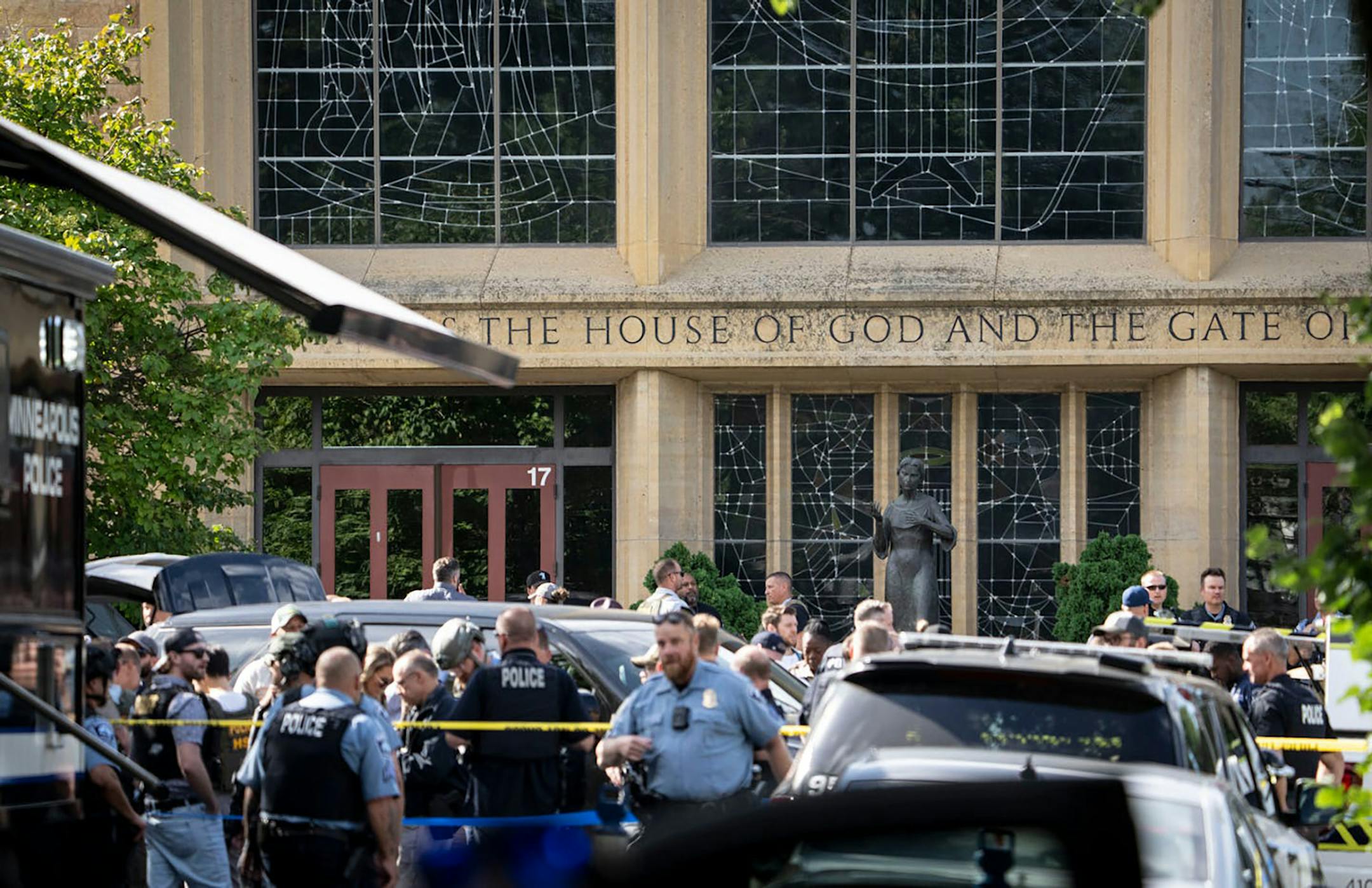
As numerous law enforcement agencies flocked to Minneapolis following the Annunciation Church mass shooting, the city temporarily made its police radio traffic publicly accessible for the first time in months in order to facilitate communication between departments.
In May, the city “encrypted” its police radios, meaning that the public could no longer listen into calls between officers and dispatchers regarding active incidents. In doing so, Minneapolis joined departments nationwide opting to lock down radio communication, saying they are trying to abide by federal requirements that prohibit publicly airing some information, and to ensure officers’ safety in situations where a suspect might be listening to the scanners. Critics countered that encryption is a blow to transparency and police accountability.
But just after 10 a.m. on Aug. 27, about an hour and a half after the mass shooting in south Minneapolis where Robin Westman murdered two children and injured 21 others, the radios became unencrypted, just as they were prior to May.
The switch was made so the departments assisting with response to 911 calls and school security details in Minneapolis following the shooting could communicate simultaneously on unencrypted channels, Office of Community Safety spokesman Brian Feintech said in an email. On Aug. 28, Gov. Tim Walz deployed 14 State Patrol troopers and six Department of Natural Resources enforcement officers to patrol near schools and churches after the shooting.
“As the incident expanded to a statewide response with assistance coming from far-flung partners we don’t often partner with — including those who have not yet adopted encryption — we switched to using unencrypted channels that afternoon," Feintech said.
The police radios stayed encrypted during the police’s initial response to the Annunciation Church shooting, he added.
Unencryption took place each day for a 10-day period from Aug. 27 through Sept. 5. The unencrypted radio was only available from the early mornings through the early evening, when the city switched back to full encryption for nighttime hours, scanner archive websites show.
The first police audio available Aug. 27 just after 10 a.m. was an officer asking, “Is there a dispatcher assigned to non-encrypted channel one?”


