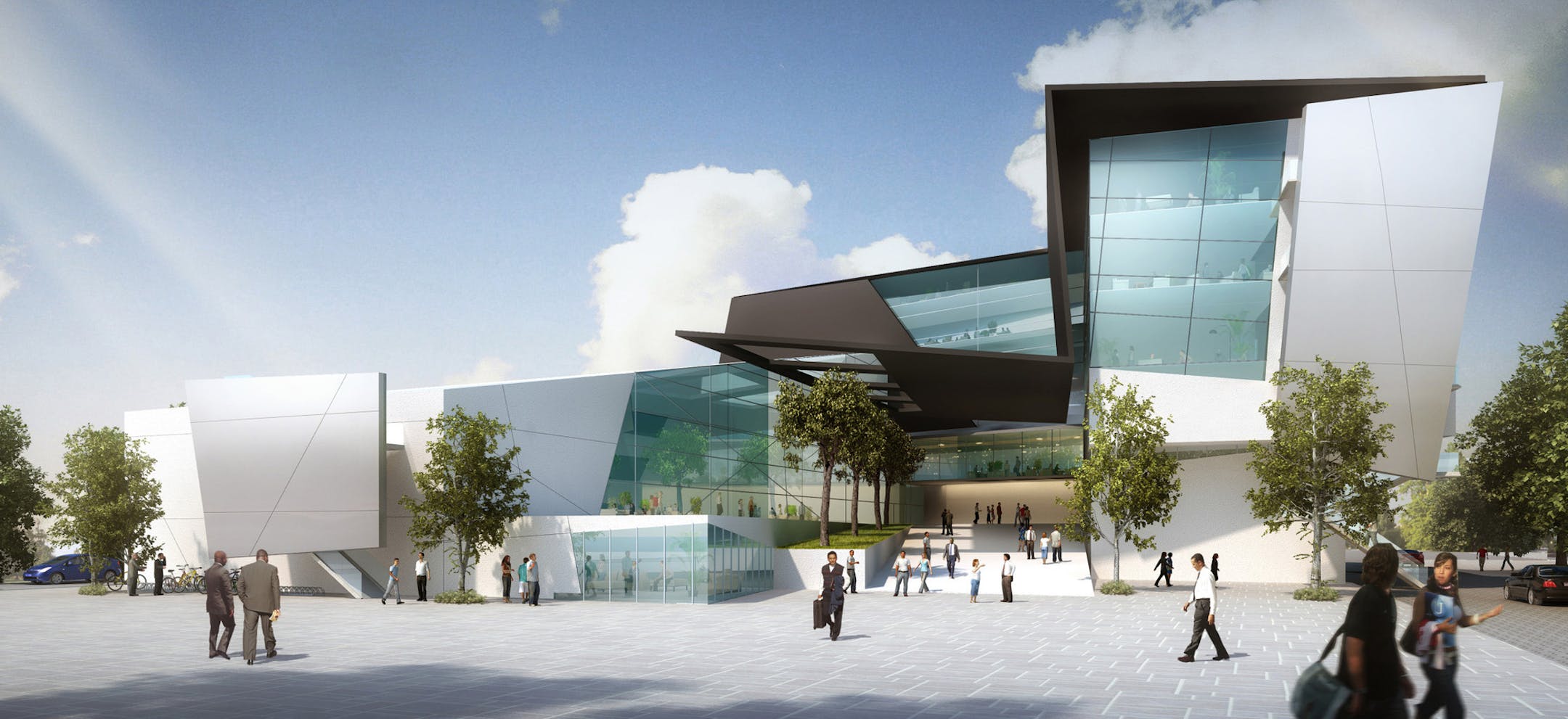
About 15 miles northeast of downtown Nairobi, along the Thika Superhighway, is the main campus of Kenyatta University.
Enrollment at the institution has grown from 8,000 to 45,000 in less than 20 years, as more Kenyans elect to go to college in their home country. Needing a master plan for the campus, formerly an army barracks in the British Empire, the university sought out architectural expertise.
They hired DLR Group of Minneapolis, a firm that specializes in higher education and now has big hopes for growth in Kenya.
"In the '80s and '90s, the trend in Kenya was to send high school students to another country to get a degree. Now they're coming back to Kenya," said Jeff Fenimore, DLR Group's Minneapolis-based head of higher education projects. "There's this resurrection of the country and the culture, and people just want to see Kenya be great."
As a giant middle class gradually rises across Africa, more Minnesota firms are starting to do business there. The continent is home to several of the fastest-expanding economies in the world, and Minnesota exports of goods to the continent grew 29 percent in 2013.
"I see a lot more interest in the last 18 months in Minnesota companies looking into Africa," said Ryan Kanne, director of the Minnesota office of the U.S. Commercial Service, which helps U.S. businesses find international partners and start exporting.
U.S. companies have lagged behind the Chinese in building business in Africa in the past decade, but Western aircraft manufacturers have opened factories in North Africa, retailers are sourcing clothing from Ethiopia, and GE's business on the continent, based in South Africa, has doubled in the past four years.
Perceptions among decisionmakers are improving too. Africa now ranks as the second-most attractive region for foreign investment behind only North America, according to Ernst & Young.