
Affordable housing project joins boom along St. Paul's Green Line

The Minneapolis-St. Paul residential construction boom since 2010 has been driven by high-end apartment buildings.

June 16, 2016 at 6:01PM
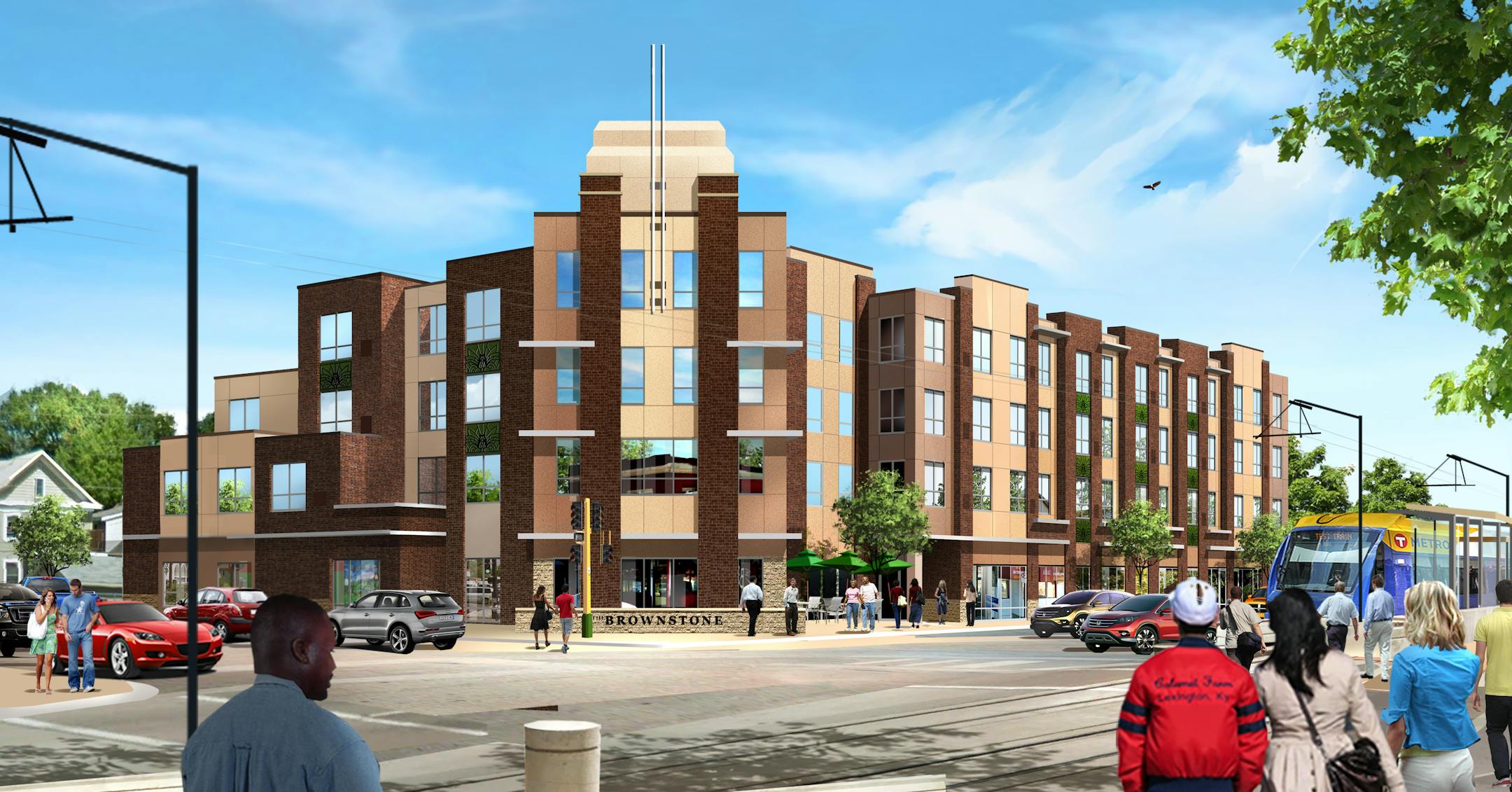
Model Cities, the St. Paul nonprofit, broke ground this month on the Brownstone, 32 affordable housing units at 849 University Av., near Frogtown on the Light Rail Green Line in St. Paul. This is one of several of the more economical housing projects tied to LRT development and required several private and public financiers.
(Rendering by Trossen Wright Plutowski Architects/The Minnesota Star Tribune)

Brownstone apartments on University Avenue in St. Paul

The years-planned Brownstone apartment redevelopment project along the Green Line LRT corridor at University Avenue and Victoria Street in St. Paul has broken ground for 35 apartments targeted at working class folks.

And, in a construction boom of the last six years that has featured taxpayer-financed stadiums and many high-buck residential rental projects in Minneapolis and St. Paul, this a bit more evidence of a modest increase in affordable housing.

Brownstone, which is being built on a vacant lot and replacing an adjacent antiquated building, also will "make a positive contribution to the community, not only because it will eliminate blight and improve aesthetics but also because the area will become more pedestrian friendly, which in turn will deter crime," said longtime CEO Beverley Hawkins of Model Cities. "Over time, University Avenue will begin to resemble … a dynamic, cutting-edge section, helping keep existing businesses while attracting a wide variety of new businesses to the area."
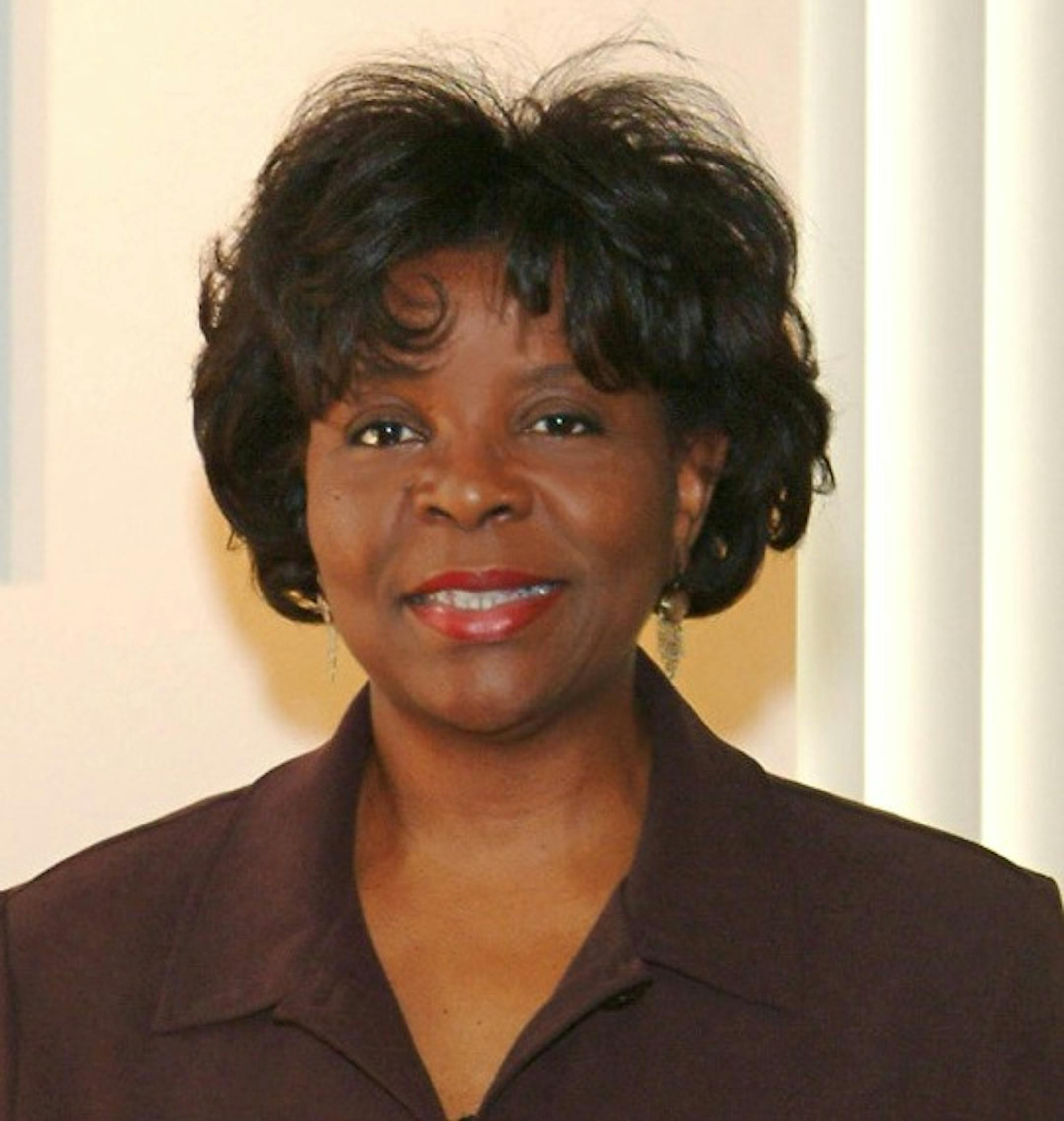
Model Cities CEO Beverly Hawkins
(The Minnesota Star Tribune)

Beverley Hawkins

The Brownstone project will consist of 32 one-bedroom and three two-bedroom units, as well as 20,000 square feet of office and retail space, including the Model Cities headquarters. Rents will range from $691 to $839 for one bedrooms to up to $1,005 for two-bedroom units. The $14.8 million project is under the hammer of St. Paul's Flannery Construction.

These affordable projects take longer, noted Hawkins and Flannery CEO Jamey Flannery. They typically involve several private, public and foundation partners, and often tax-credit investors in historic districts, to drive down the overall cost.

A recent report by Twin Cities Local Investment Support Corp (LISC) indicates the effort to diversify housing along the booming "central corridor" is working thanks to nonprofit developers, local businesses, banks, government and neighborhood organizations.

Of the 6,388 new housing units built between downtown Minneapolis and St. Paul along the Green Line since 2011, about 20 percent have been designated as affordable to households that earn up to 60 percent of Twin Cities-are area median household income. That's about $52,000 for a family of four. A group of private and public officials, dubbed "The Big Picture Project" are trying to ensure that LRT benefits St. Paul's traditional, and integrated neighborhoods, such as Rondo, Frogtown, Little Mekong, Lowertown and Midway with jobs and housing that also benefits local residents.

Mayor Chris Coleman's office said, after five years, the Green Line already has driven about half of the $7 billion in development projects, not counting the Vikings or St. Paul Saints stadium, that was forecast over 30 years following LRT construction.

The nearly $1 billion Green Line, funded by federal and local government sources, increasingly looks like a good investment so far for St. Paul and the University Avenue corridor.

about the writer

about the writer

Neal St. Anthony

Columnist, reporter

Neal St. Anthony has been a Star Tribune business columnist/reporter since 1984. 

See Moreicon

More from Business

See More
card image
Alex Kormann/The Minnesota Star Tribune

Revenue is down between 50% and 100% at immigrant-run businesses along Lake Street and on St. Paul’s East Side. Businesses say the impact is worse than COVID’s.

card image
card image