

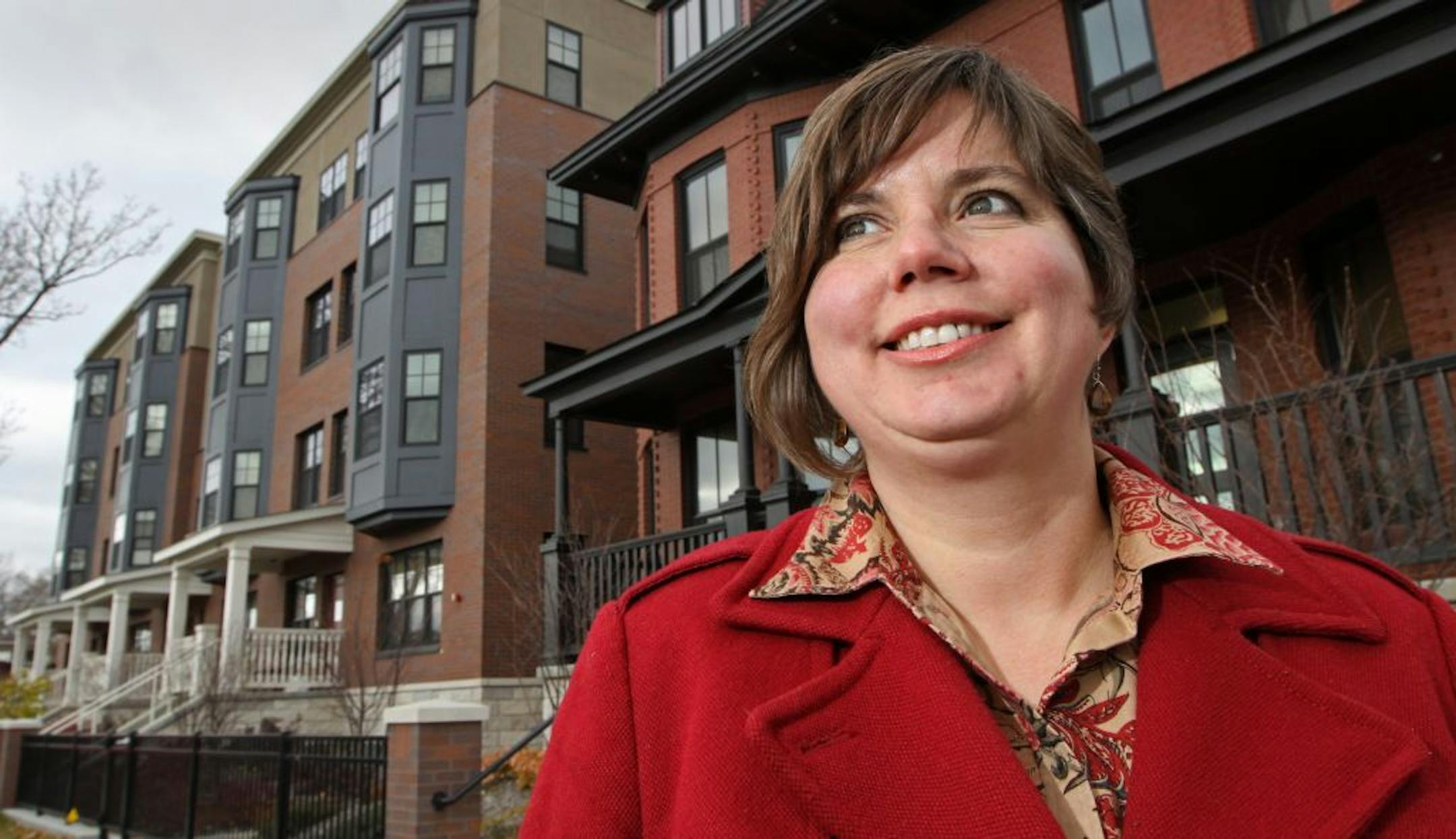
Minnesota has long been known as a national leader in the development of affordable housing. But the political and financial tradeoffs that must be made to make new low-income housing happen sometimes can stifle innovative architectural designs that could make such housing more attractive to the communities they're in and useful to the tenants who live there.
That was among the messages a panel of local architects delivered to attendees at the American Institute of Architects convention held in Minneapolis this week.
The panel discussed the findings of a study funded by the McKnight Foundation that tried to identify how affordable housing projects in Minnesota could improve their designs.
Rosemary Dolata, a Minneapolis architect who moderated the forum, described an affordable housing scene in the Twin Cities in which a handful of firms perform most of the design work -- and while the quality is good, it could be better if more professionals were lured into the field to question business-as-usual assumptions.
But getting more architects involved isn't easy.
Dealing with the complex processes used to gain funding and approval for low-income housing can be a headache and a barrier to entry for many professionals, said Dolata, a former project manager for the nonprofit housing developer Aeon and a member of the AIA's Housing Advocacy Committee.
Also, government rules keep architectural fees for affordable housing artificially low. "With all the challenges involved, promoting innovation and great design is no small task," she said.
Better-designed affordable housing is more important than ever as the need for it steadily grows. The median income in Minnesota is falling at a time when rents are going up and apartment vacancy rates are at record lows, Dolata noted.



