

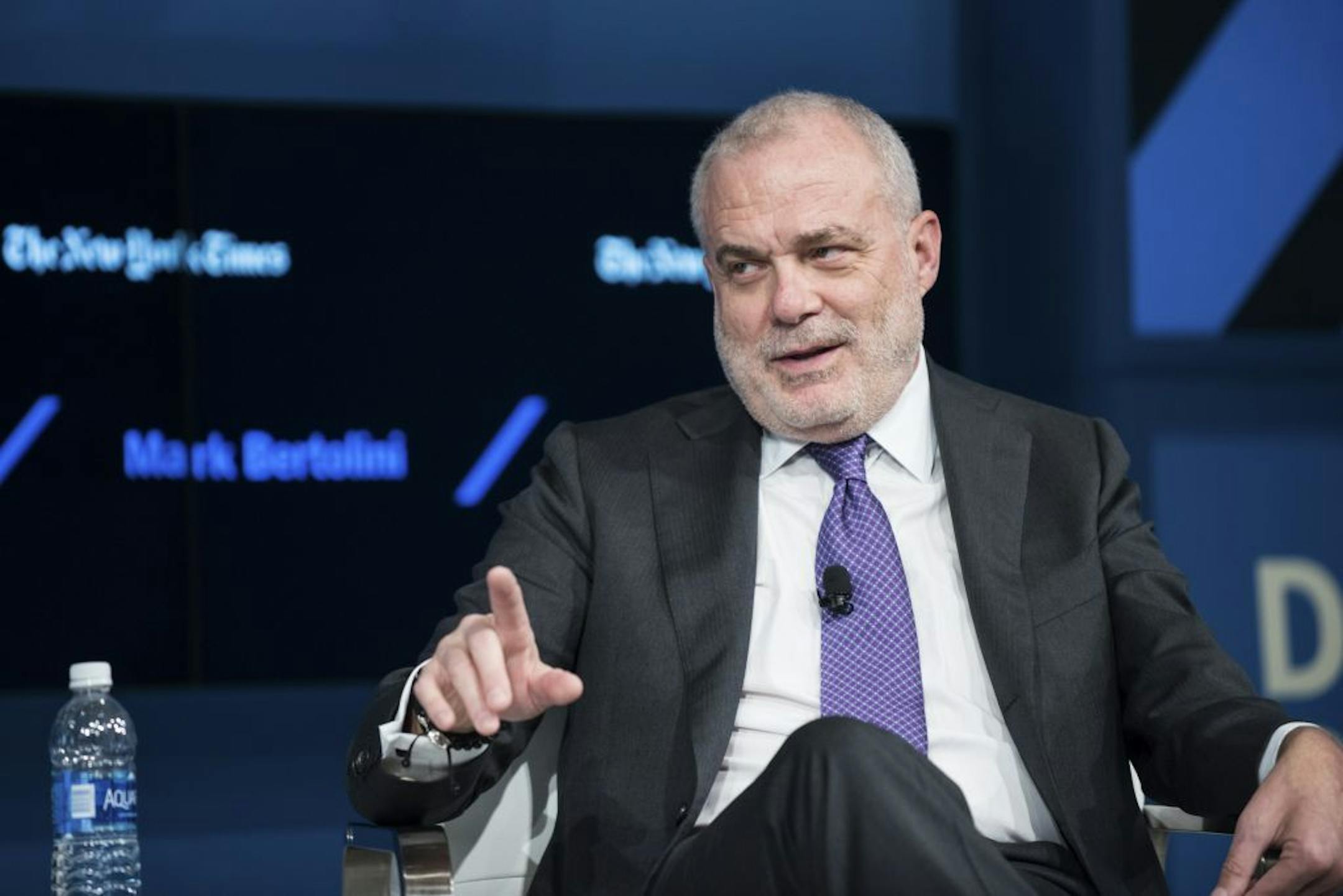
Aetna Inc. CEO Mark Bertolini will collect about half-a-billion dollars when and if Aetna's sale to CVS Health closes, according to the Wall Street Journal.
After combing through Aetna's public filings, my math totaled up to a different number, but it's at least in the hundreds of millions of dollars for Bertolini before taxes.
This big payday presents an interesting case in the fairness of CEO compensation. If pay is supposed to be tied to performance, maybe Aetna should have no apology to make, what with Aetna shares last week worth about six times what they were on Bertolini's first day as CEO seven years ago.
That outcome is what a lot of extra pay from so-called change-in-control provisions for executives is supposed to buy. Boards of directors want their CEO's full attention on the task of making a lot of money for shareholders. So here the Aetna directors got what they paid for.
But shareholders still must be grumbling, as the stocks of all the big health insurers have done well since Bertolini took over Aetna. Even with the deal announcement, Aetna's has appreciated only about as much as the stock of Minnetonka-based UnitedHealth Group.
And isn't a CEO already paid well to work every day for the owners? They are not supposed to stiff-arm an acquisition overture just because there's not enough in it for them. Certainly rank-and-file employees can be forgiven for concluding that change-in-control deals for top executives are just another way corporate executives manage to get their hands on a wildly disproportionate share of the payroll.
One of the justifications for granting them is certainly true, however, and that's that nearly everybody does it.
Additional change-in-control pay for the top company executives usually comes after a deal closes and there's no real job left for the target company's management team. A CEO may get two or three times the annual salary plus even more cash to make up for losing out on expected cash bonuses.



