

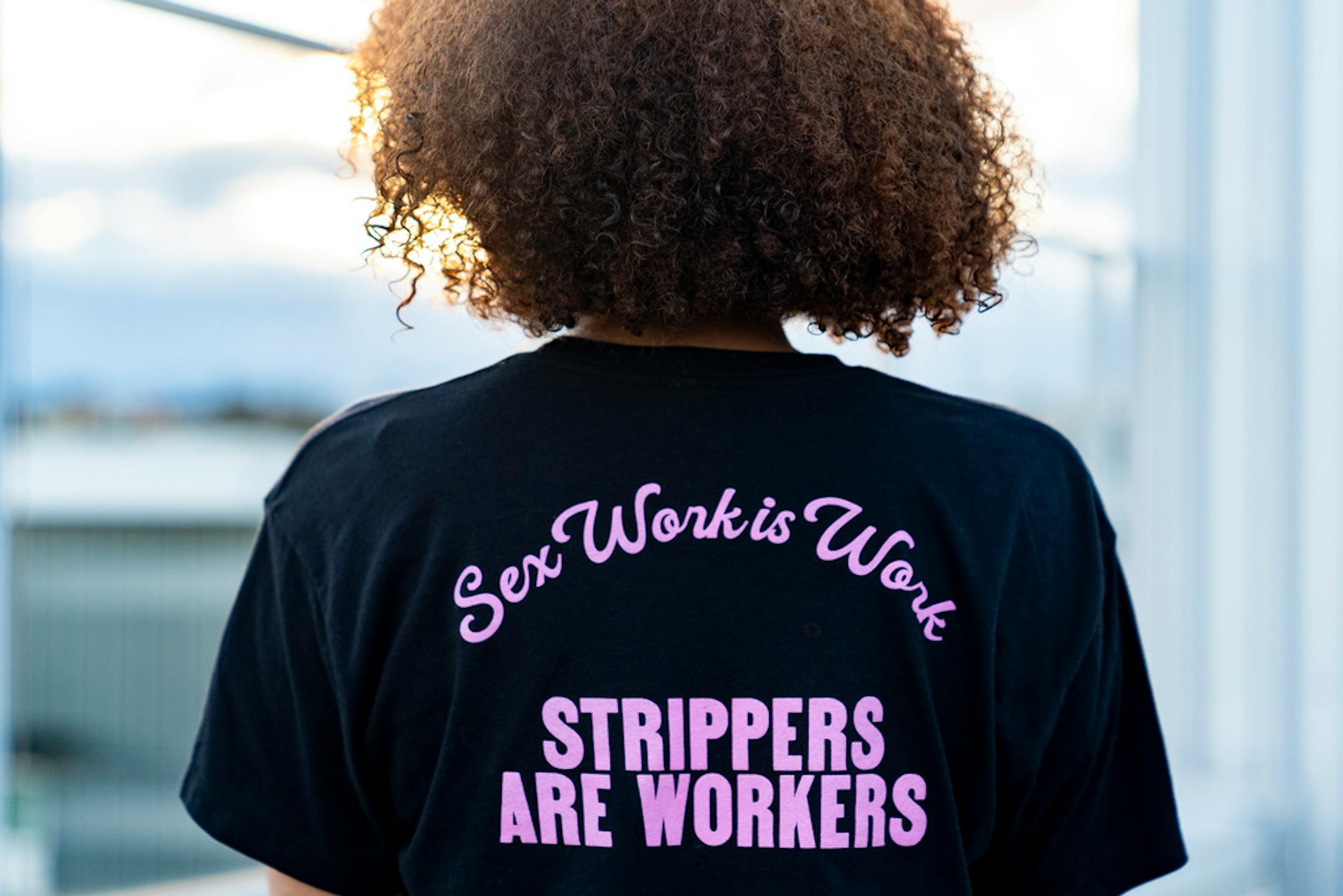
SEATTLE — For months, Andrea studied for her master’s degree in library sciences between dancing naked at clubs in Seattle. But then she was sexually assaulted at work and slapped by a customer — and nobody stepped in to help.
Now, she and hundreds of other strippers in Washington state are fighting for statewide protections that would be the most comprehensive in the U.S., according to advocates.
''We shouldn't be verbally abused for just doing our job and existing,'' said Andrea, who has seen a DJ at one club harass dancers if they don't tip him enough. She avoids the club if he's there, said the 24-year-old, who would only use her first name. The Associated Press does not identify people who say they have been sexually assaulted.
Known as the ''strippers' bill of rights,'' proposals being considered in the Legislature would require a security guard at each club, keypad codes to enter dressing rooms, training for employees on preventing sexual harassment, and procedures if a customer is violent. They would also require training on how to de-escalate conflict between dancers, employees and customers, and signs stating that dancers are not required to hand over tips.
The Senate bill was approved by the full body Wednesday on a 29-20 vote.
''Without this legislation, the conditions are not safe. There are harassment and abuse that is happening,'' said Democratic Sen. Rebecca Saldaña, who sponsored the Senate bill. "But with this the workers are now empowered to have protections.''
The bills are the culmination of six years of advocacy work by Strippers Are Workers, a dancer-led organization in Washington, in response to wide regulation gaps for strippers at the 11 clubs across the state, said Madison Zack-Wu, its campaign manager.
But those regulation gaps extend beyond Washington. And during those six years of work by Strippers Are Workers, only one other state added worker protections for adult entertainers, according to the National Conference of State Legislatures. In 2019, Illinois started requiring that adult entertainment establishments, along with other businesses, have a written sexual harassment policy. That same year, Washington added a few initial regulations, including panic buttons and blacklists for customers.


