
Opinion | Anti-ICE church protesters give Trump a win

Invading churches and obstructing law enforcement is more likely to harden public opinion and expand support for immigration enforcement.

January 20, 2026 at 10:59AM
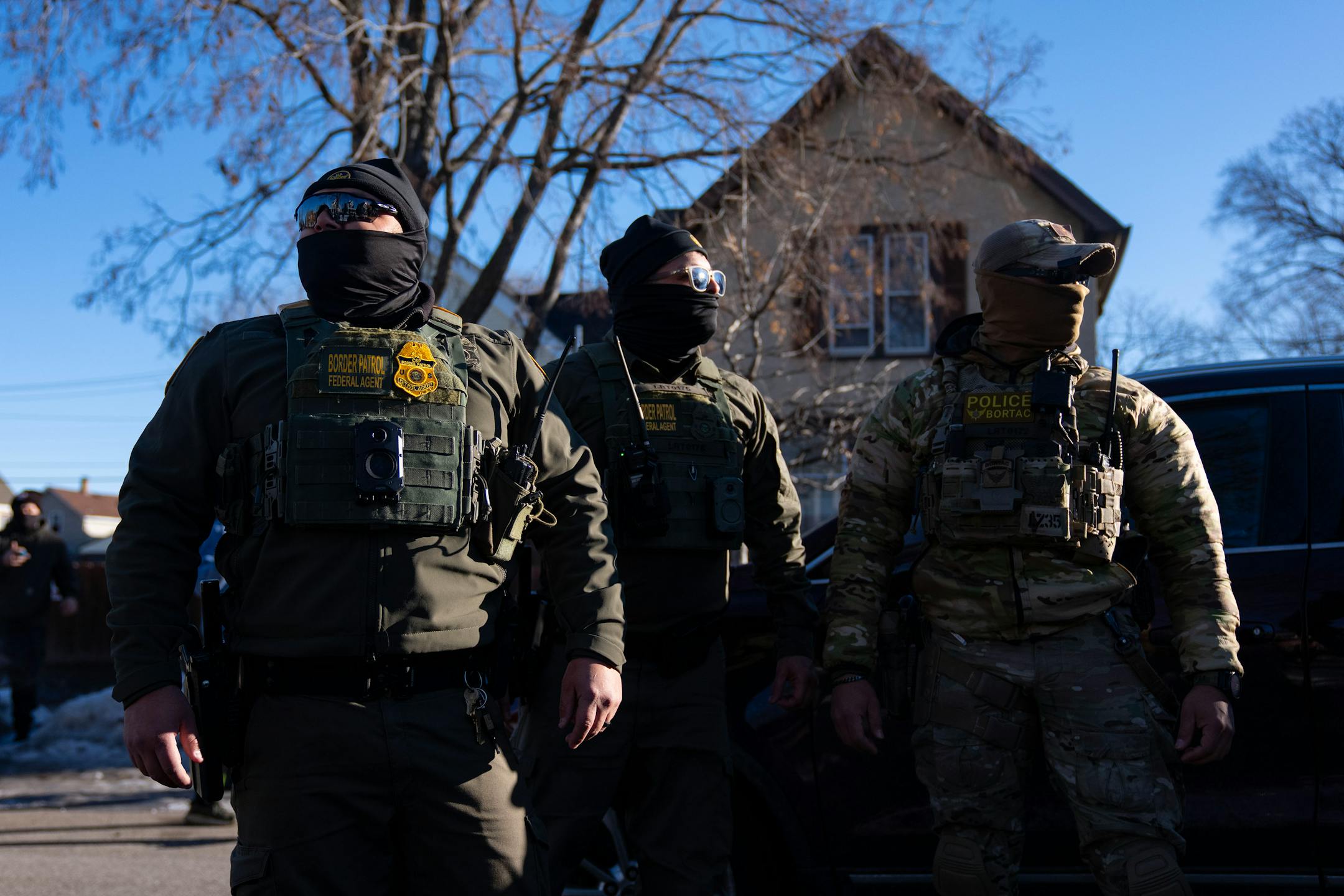
ICE agents walk down a block near 31st St. and Portland Ave. in Minneapolis on Jan. 14. (Alex Kormann/The Minnesota Star Tribune)

Opinion editor’s note: Strib Voices publishes a mix of guest commentaries online and in print each day. To contribute, click here.

•••

The snowy calm of a Sunday morning on Summit Avenue in St. Paul didn’t last long. Anti-ICE protesters forced their way into Cities Church, a thriving Baptist church, chanting and attempting to confront one of the church’s pastors, who also serves as the acting director of ICE’s St. Paul field office.

The service stopped, worshipers fled. Those watching livestreams of the protest were treated to the spectacle of ex-CNN host Don Lemon joining the protesters and attempting to grill the church’s lead pastor on the First Amendment while disrupting the church’s service.

The consequences were swift and predictable. Commenters pointed out online that you can’t mob a church service to make a political point. A Department of Justice official announced an investigation and potential charges for the agitators. “Attacks against law enforcement and the intimidation of Christians are being met with the full force of federal law,” Attorney General Pam Bondi said in a statement.

Watching this unfold, I felt a mixture of anger and disbelief. Some of the people cheering online for the trespassers were also forceful in their condemnation of Jan. 6 and of the idea of ICE entering churches. Apparently, for them, the rules don’t apply to left-wing agitators storming a church. People with legitimate questions about ICE and its tactics should remember that their opponents, including President Donald Trump and Secretary Kristi Noem, will take incidents like this and turn them into public support for law and order and their immigration policies. It’s 2020 all over again — and ordinary Minnesotans like the good people of Cities Church are caught in the middle.

This incident is shocking, but it is also only one more complication in a story of American immigration enforcement decades in the making. To make any sense of the moment we’re in, we need to return to first principles. Stay with me for just a minute. We can’t move forward as a state or a nation unless we accept these facts.

This is a nation of laws. Borders are the physical limits of those laws. A country with no borders is not really a country at all; it becomes a place where the rule of law can no longer be meaningfully enforced. Over decades, both parties in Washington have either welcomed illegal immigration implicitly or attempted to stop it only halfheartedly, or both. As a result, millions of people have entered the country unlawfully and proceeded to build their lives, families and businesses here.

But times have changed. Trump won two elections on the promise to crack down on illegal immigration. There is massive popular support, in principle, for Trump’s approach here. If the anti-ICE protesters called me for advice, I would tell them that every time they interfere with enforcement actions, or disrupt a church service, they are prolonging ICE’s Minnesota “surge” and the number of migrants who will be deported. Immigrants deserve better friends.

To have a coherent view of immigration in the United States, it is necessary to hold several true statements in your mind at once. A nation must have borders, and those borders must be enforced to be meaningful. People who enter the country illegally accept the risk that they may be required to leave. At the same time, the U.S. has a long history of welcoming refugees and immigrants of every stripe, and that history is part of who we are. These realities sit in tension and pretending otherwise will not help us.

If we dislike the laws around immigration in this country, we can try to repeal them. But many Americans want a straightforward way to remove violent offenders who never should have been here in the first place. There are people who would be alive today if it were not for crimes committed by individuals who were here illegally. Every immigrant has rights that should be respected, but citizenship confers additional constitutional rights that must be acknowledged, including the right to elect the leaders who make and enforce the laws.

Local leaders who declared Minneapolis and St. Paul sanctuary cities share part of the blame for today’s tensions by limiting local cooperation with immigration enforcement, even when it comes to serious crimes. When the federal government finally moved to enforce its own laws, conflict was predictable. Many Minnesotans no longer trust federal authorities to act with restraint, a distrust shaped by years of policing failures, political missteps and widespread unrest that has left Minnesota’s institutions reeling. Few defend every action by ICE. But invading churches and obstructing law enforcement is far more likely to harden public opinion and expand support for immigration enforcement in Minnesota and nationwide.

Immigration enforcement is complicated, thankless and often unpleasant. That does not mean it is wrong. Enforcing the law is good. Deporting violent offenders is good. What is far less clear is whether enforcement should include people who have committed no other crimes, built families and lived productively in their communities. In a more rational system, such people might be offered some form of legal resolution rather than permanent uncertainty. But from my vantage point, neither anti-ICE protesters nor the Trump administration really want to see that happen.

Neither the right nor the left is willing to fully reckon with the moral complexity of this situation. Mistakenly arresting U.S. citizens or tribal members is unacceptable. Excessive force is unacceptable. Invading a church to make a political statement is also unacceptable. All we get is sound bites and hot takes. I would like to think Minnesotans deserve better. On the other hand, perhaps we are getting the leadership and the political climate we deserve.

The incident at Cities Church in St. Paul is both a microcosm and a warning. Protesters acted out of frustration, but what they accomplished was exactly the opposite of what they intended. Storming a house of worship does not protect a single target of ICE action, gives Trump and his allies a propaganda victory and breaks the Golden Rule — do protesters want their churches, synagogues and mosques stormed by pro-law enforcement activists?

Many Minnesotans want the largest immigration enforcement surge in history to end. Many wish it were happening elsewhere. But what is happening on our streets is not a simple clash of good and evil. It is a collision of two truths — enforcing immigration law is necessary, and enforcing it is morally and practically messy. No one knows what will happen next. What we can say is this: Immigrants deserve better friends than those who storm a church to scream ineffectively. All that noise signifies nothing.

The debate over immigration will never be simple and it will never be neat. It will always require holding two realities in our minds at once — the necessity of upholding the law along with the human consequences of enforcing it. As so often happens, the truth in this debate is exactly what you won’t hear from the voices shouting the loudest.

Moses Bratrud is a Twin Cities-based writer and an elder at University Lutheran Chapel (LCMS) in Minneapolis. Follow him at mosesbratrud.substack.com.

about the writer

about the writer

Moses Bratrud

More from Commentaries

See More
card image
Alex Kormann/The Minnesota Star Tribune

Invading churches and obstructing law enforcement is more likely to harden public opinion and expand support for immigration enforcement.

card image
card image