

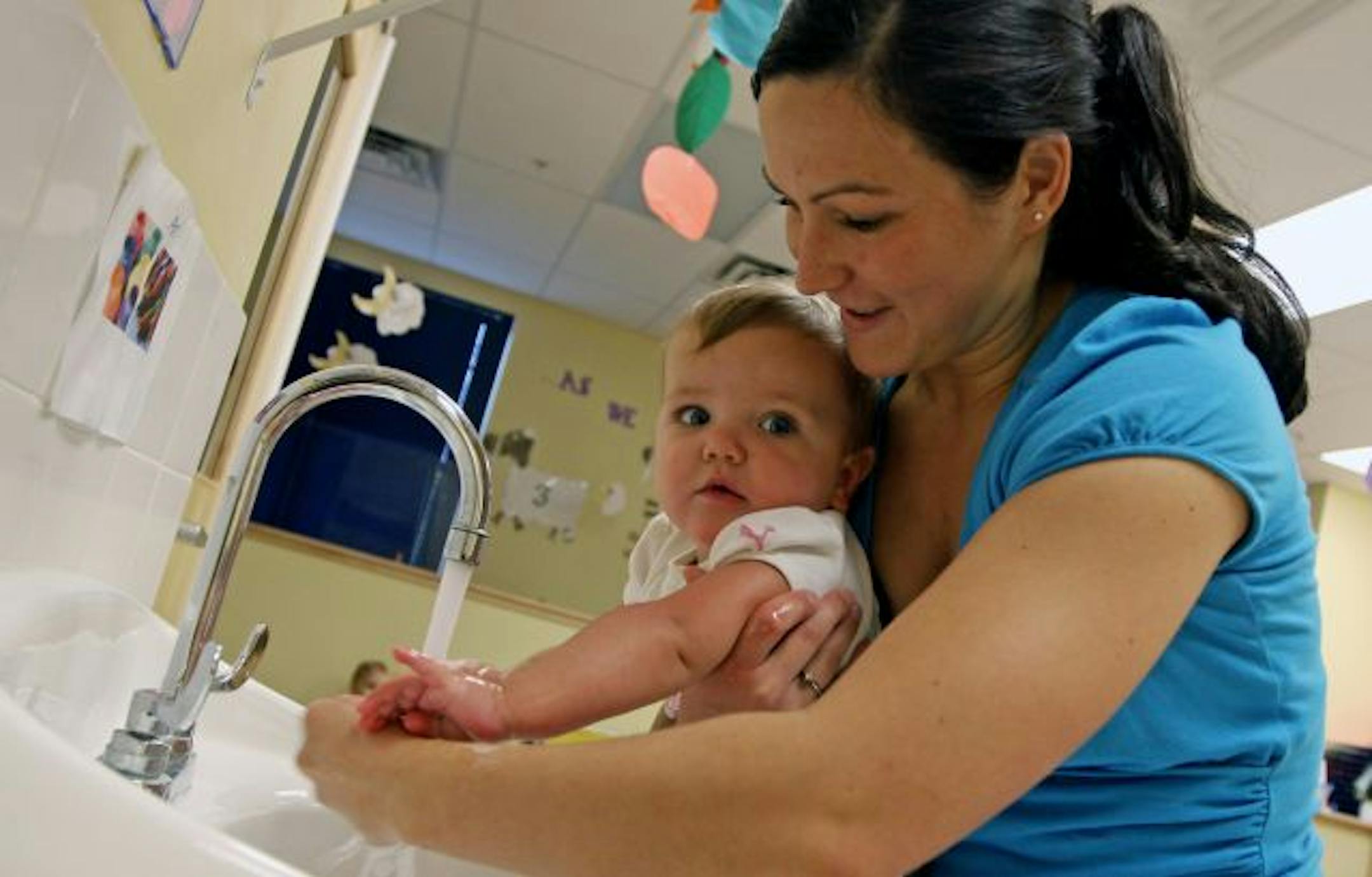
When asked how many times the word "bubble" is repeated in the "Bubble Bubble Pop" hand-washing song toddlers sing at the Goddard School in Plymouth, education director Sally Hansen pauses. "I think 12, but it might be 16," she said, quickly running through the song. "All of our kids wash their hands at least 10 times per day. It's a habit."
Hansen and other staff members at this early childhood education center are just as busy washing their hands as the children, who range in age from 6 weeks to 6 years. In fact, the hand-sanitizer station is the mandatory first stop for everyone who enters the building. The threat of H1N1 and other illnesses has made good hygiene -- including frequent repetition of the hand-washing song -- even more important.
"We certainly aren't panicking about anything, but we want to do everything we can to keep our kids and our teachers healthy," Hansen said.
Kathy Justus, a public health nurse consultant for the Minnesota Visiting Nurses Association, visits more than 50 child-care centers throughout the metro area each month and has noticed an increase in the number of phone calls she is getting from teachers and staff members.
"We've already seen some seasonal flu and some H1N1," Justus said. "But fall is also the time when we see the beginning of other illnesses like strep, pink eye and stomach flu."
Because most of the reported flu cases have been mild, the greater concern for many working parents is what to do if a child gets H1N1 flu. The Minnesota Department of Health last month said young children with H1N1 are advised to remain home for seven days after their symptoms begin or for 24 hours after their acute symptoms have ended, whichever period of time is longer.
Justus has been encouraging child-care center directors to talk with families about devising a plan in the event their child needs to be home for a week.
Jennifer and Steve Welk of Plymouth both work full time and are planning to take turns using sick time, or split work days, if 3-year-old Matthew should come down with the flu. "We don't have family in the area, so we'll have to rely on ourselves," she said. "We are very fortunate in that both of our employers are always 'family first.'"


