Editor's Pick

Editor's Pick

Wisconsin town rallies around pelican that mysteriously didn’t migrate

When the big white bird didn’t head south with its fellow pelicans, the town of Ashland wondered why. Now the bird is getting the help it needed.

The Minnesota Star Tribune
December 27, 2025 at 11:30AM
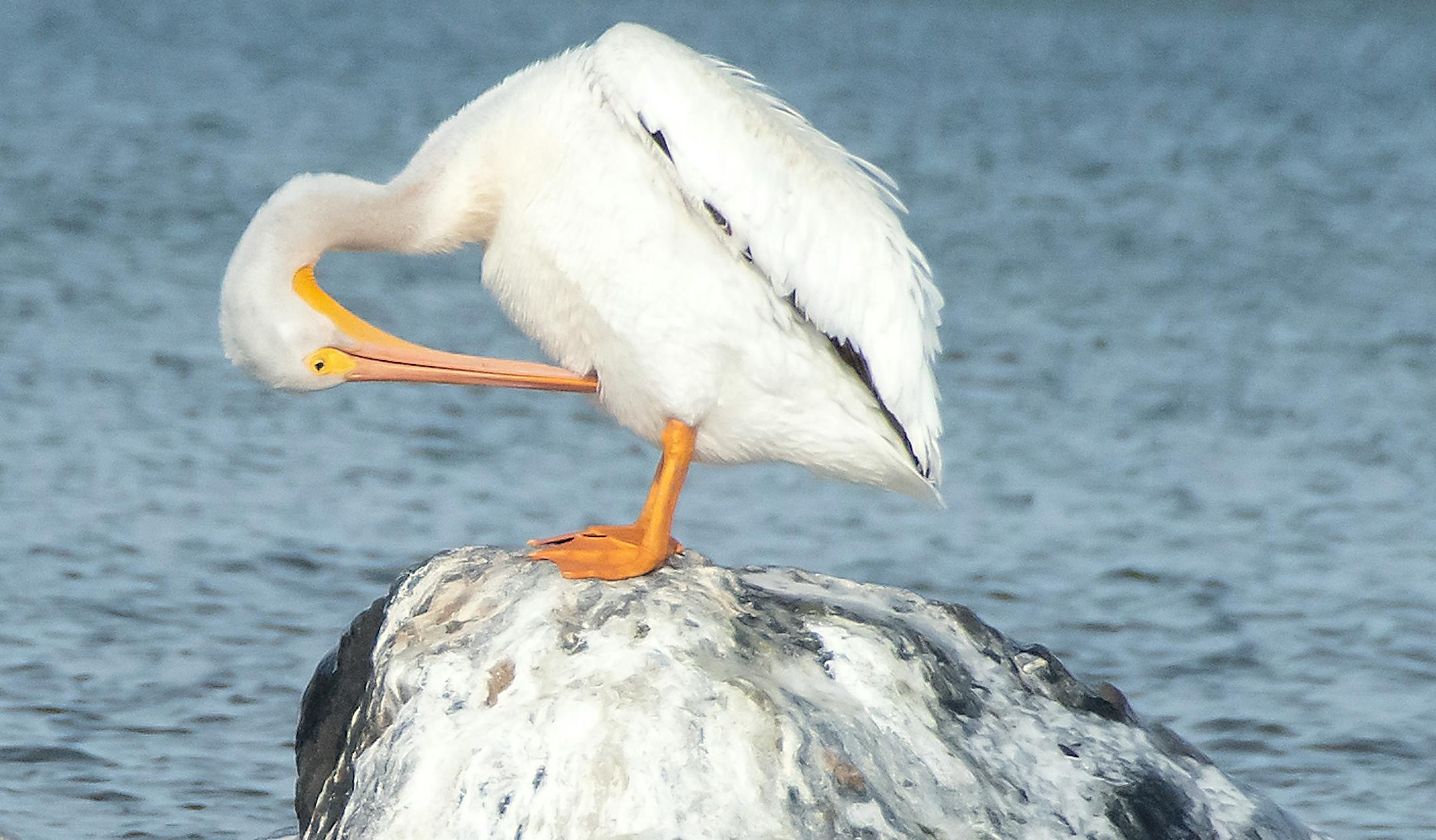
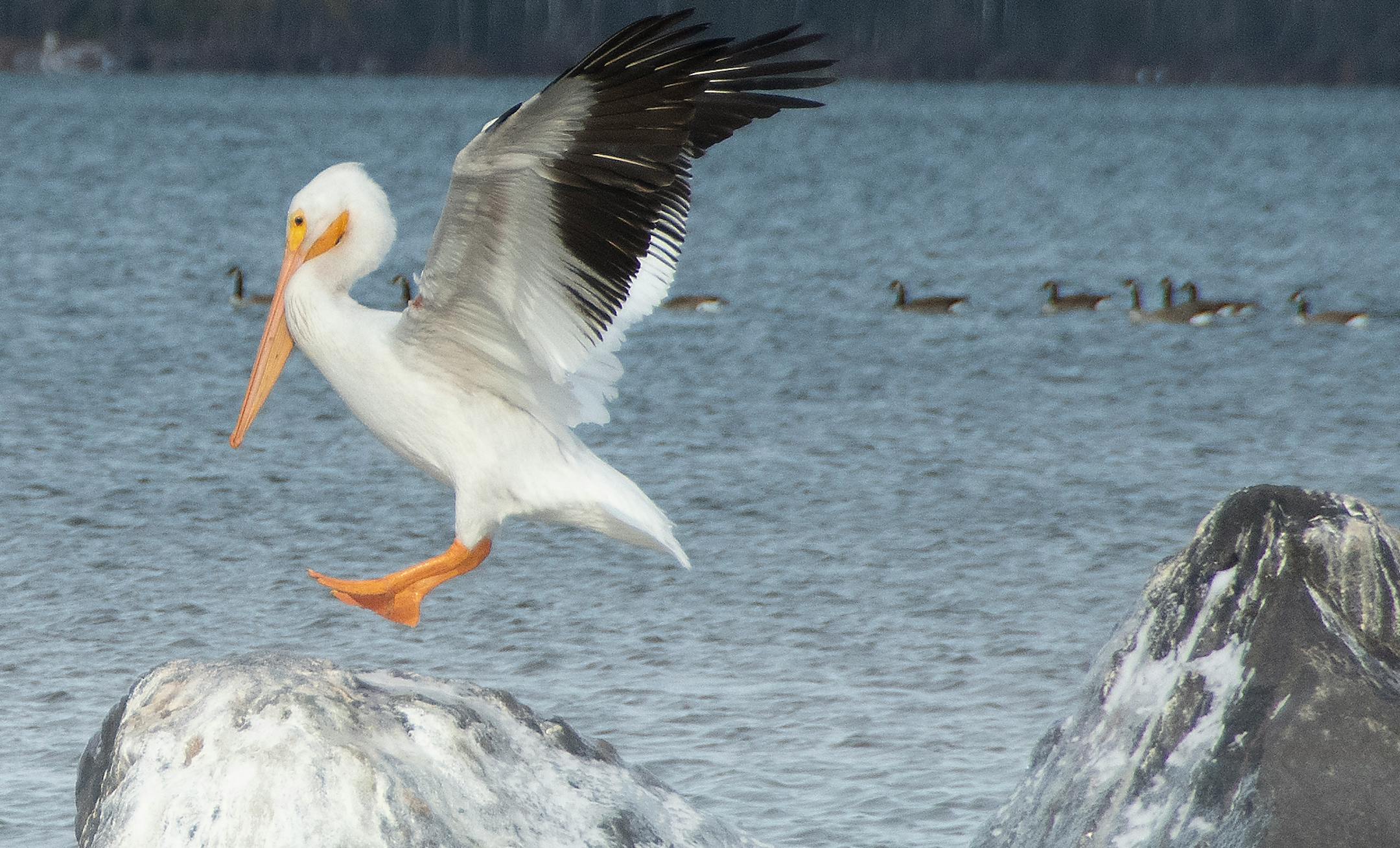
Gitche the Pelican, seen Nov. 11, 2025, before the townsfolk voted on its name, on the Lake Superior shore near Ashland, Wis. (Courtesy: Jeff Rennicke)

Like the gales of Lake Superior, migratory birds sweep in every fall, then blow out of town along the northern shores of Ashland, Wis.

This season, a rangy American white pelican changed up the migratory routine for reasons that weren’t immediately clear — and got this lake town invested in its fate.

The water bird that should have been somewhere on the Gulf Coast stuck around into December. It won hearts, it left wildlife specialists curious, and it held a disturbing secret that made the wayward visitor the symbol of a conservation message.

“A local celebrity, almost a mascot,” is how Seth Carpenter, the local newspaper editor, described the white pelican with a wingspan that rivals NBA stars.

By Christmas, the pelican had long left the shore, not under its own power. But it continues to hold Ashland’s attention, said Carpenter, who edits the Daily Press, as the bird convalesces 160 miles away at a wildlife rehabilitation center in Antigo, Wis.

Ryan Brady, a Wisconsin Department of Natural Resources biologist, handles the injured white pelican after capturing it Dec. 3, 2025. (Photo: Wisconsin Department of Natural Resources)

A fixture around town

Nothing stood out when the pelican arrived with a flock in early September.

In Ashland, the striking birds with the 9-foot wingspans and basket-like jawlines historically stop along the Lake Superior inlet of Chequamegon Bay.

Early this October, however, one appeared in a prominent spot again and again, finding a captive audience at the rocks along Maslowski Beach. The beach gets steady traffic from people who stop to fill water containers at an artesian well.

The bird became recognizable — and was recognizably alone for waterfowl that are social and normally seen in groups.

“It really became a kind of fixture,” said Ryan Brady, a Wisconsin Department of Natural Resources conservation biologist, who works in Ashland.

The community buzzed on social media and on the street as October deepened and other pelicans moved on. Brady, who has been in Ashland since 1995, crossed paths with people who had questions or comments.

Have you seen the pelican? Why do you think it’s still here?

By appearances, Brady said, the bird was normal: preening, swimming, flying to different parts of the bay. Witnessing its energy, he assumed it was eating, too.

Thanksgiving week brought a snowstorm and plummeting temperatures that began to seal the bay with ice. Brady thought freeze-up would be the final straw.

“My fingers were crossed that maybe it was gone,” said the biologist. But he was concerned enough to keep looking for the bird.

On Dec. 3, Brady spotted a flash of white in the open water at the upper end of the bay. The bird tried unsuccessfully to perch on pilings encased in ice. Finally, it swam toward the edge of the shore as signs of distress emerged, Brady said.

Parts of its wings had iced up. The bird waddled unexpectedly off the shore to higher ground.

Brady used a long-handled net to capture the bird, which he said barely struggled. Secured in a pet crate, it was transported across northern Wisconsin to the Raptor Education Group, Inc. (REGI), a wildlife rehabilitation facility.

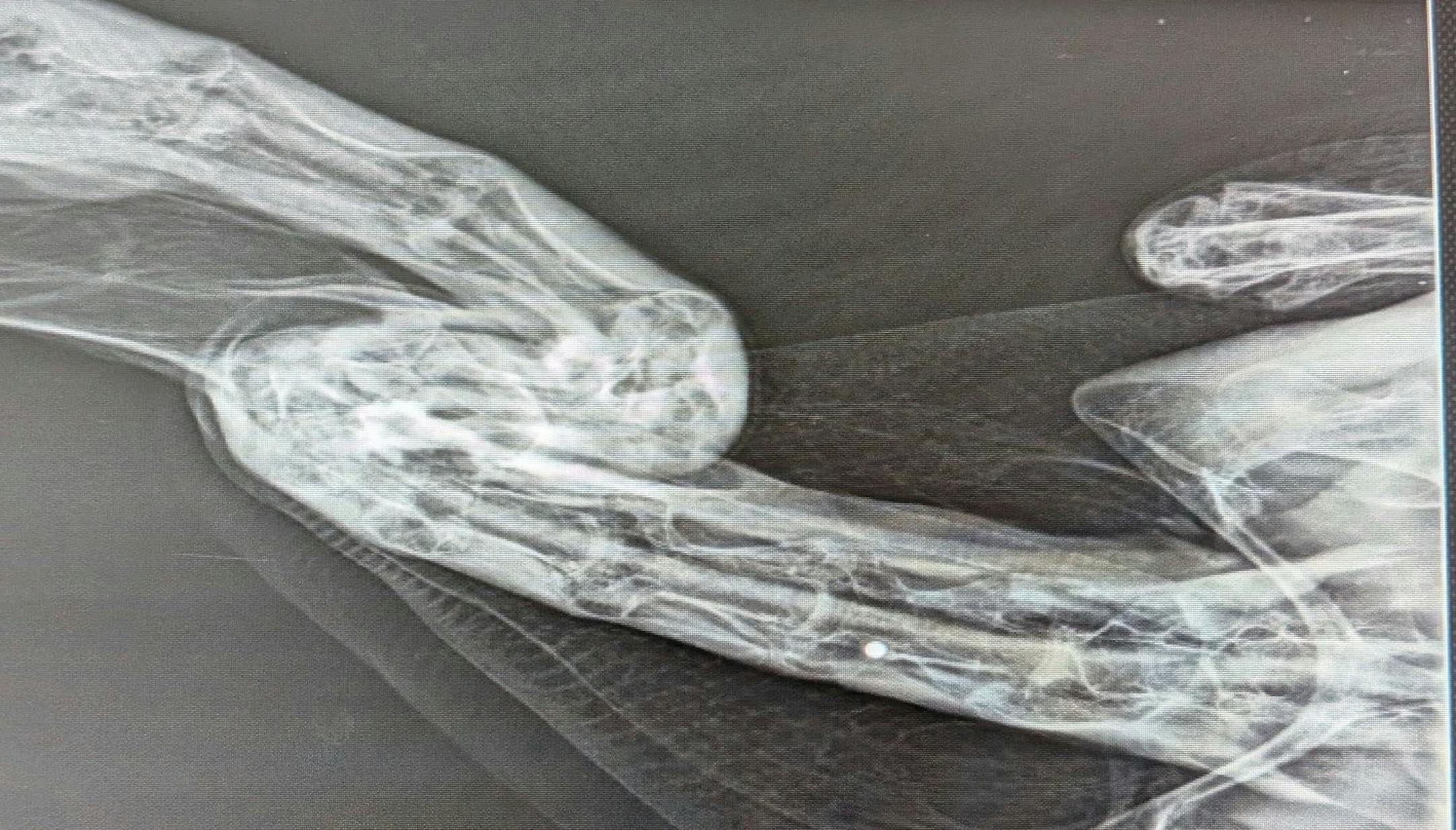
Gunshot went through the bone and tissue of the pelican. (Courtesy: Raptor Education, Inc.)
The American white pelican has a slug lodged in its neck. (Courtesy: Raptor Education Group, Inc.)

A suffering waterbird

The center’s director, Marge Gibson, quickly figured out why the bird lingered: Someone shot it.

Lead birdshot had torn through the bone and tissue of the pelican’s long bill. An X-ray showed a pellet embedded in its neck, too, and other wounds.

Its shooting, coupled with the effects of lead poisoning, could explain why the bird stayed so long in Ashland and also why it was underweight when it was captured, she said. The bird was starving.

White pelicans range in weight from 11 to 20 pounds, with males generally heavier then females. The pelican weighed about 8 pounds when captured. REGI later determined the bird is female.

“It is so hard when birds are shot,” she added. “The skin seals, and feathers cover. You often can’t see it.”

The bird’s webbed feet were frostbitten even though, like other waterfowl, they have circulatory systems that allow them to spend long periods in icy water. The bird could lose some tissue, she said.

Like Brady, Gibson was mindful of the bird long before it needed help. She and the DNR biologist had communicated. She said the bird did a good job of masking its deteriorating health.

“He was still able to fly some,” Gibson said. “People were very excited to see him because he was unusual. He played into that.”

The bird joins a list of 23 other birds with gunshot wounds that have arrived at REGI this year, Gibson said. REGI had to euthanize several white pelicans brought in from the Oshkosh, Wis., area.

This newest arrival has the chance to be an exception. The bird’s appetite is a good sign. It’s put on 4 pounds since arrival, devouring dead fish, and is less anemic, she said.

The bird’s blood lead level is normal now, too. Tests will continue; lead can get stored in the bones.

A white pelican that didn't migrate with its flock is seen Nov. 11, 2025, near Ashland, Wis., on Lake Superior. (Courtesy: Jeff Rennicke)

Trying to bring awareness

Some in Ashland are still closely watching.

The pelican’s story blew up after the public learned of its capture and diagnosis, Carpenter said.

“When we found it had been intentionally harmed, that was the twist of the knife,” he said.

The newspaper tapped into the interest with a reader naming contest and vote. Gitche the Pelican prevailed, a nod to the Ojibwe and the tribe’s original term for one of Ashland’s defining features: Lake Superior, aka Gitche Gumee.

“The idea is: Let’s give the bird a name while it recovers, hoping it recovers,” Carpenter said, “and maybe we can help bring awareness.”

Animal Wellness Action, a Washington, D.C., nonprofit, has offered a $2,500 reward for information that helps find and prosecute whoever shot the pelican.

Gibson is careful not to call the shooter a hunter. Conservation-minded hunters don’t illegally shoot at birds and especially protected ones like white pelicans, she said. In most cases, she said she thinks shooters are trying to maim birds.

“When it is illegal, purposeful shooting, and a lot of it is, it is really above the pale,” Gibson said. “Someone needs to be held responsible, and they are not.”

Ashland DNR conservation officer Jack Luessman is investigating the shooting, including whether it occurred in Wisconsin. Gibson thinks it did. Protected species like white pelicans, trumpeter swans and bald eagles have been shot before in the region.

Luessman encouraged people to call the DNR tipline (800-847-9367) with any information.

REGI will continue to care for the pelican. It could be released next spring, Gibson said.

Earlier this week, the news was promising. The bird was calmer and putting on pounds, Gibson said.

“She is eating like a champ.”

about the writer

about the writer

Bob Timmons

Outdoors reporter

Bob Timmons covers news across Minnesota's outdoors, from natural resources to recreation to wildlife.

See Moreicon

More from Outdoors

See More
card image
card image