

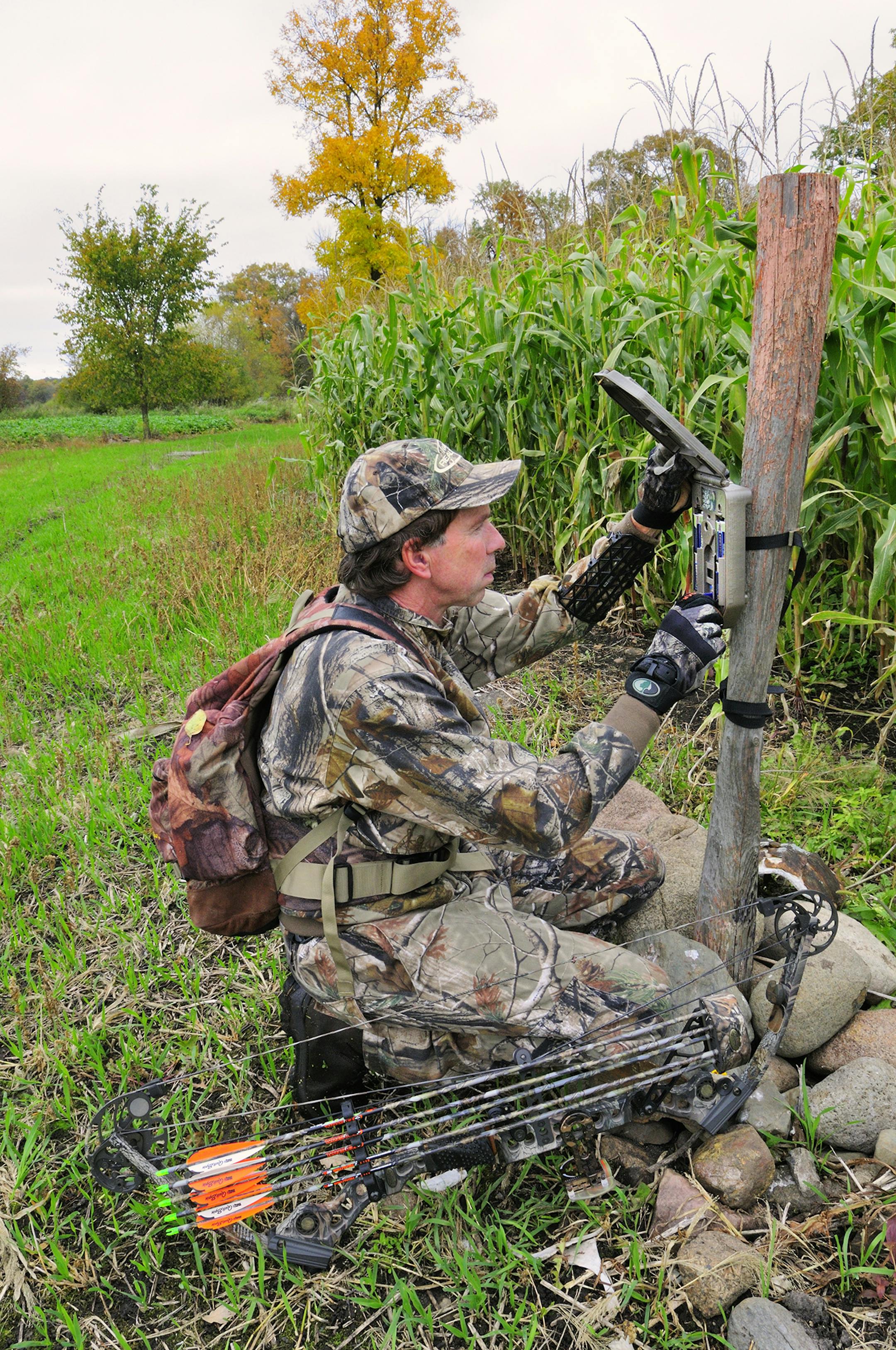
A trail camera — a small, battery-operated camera marketed to hunters to track wildlife movements — likely helped authorities find suspected shooter Vance Boelter on Sunday.
Modern trail cameras can transmit images instantaneously to an owner’s cellphone even when the camera is out of Wi-Fi range.
Brian Smith, an outdoor industry marketing agency owner, said such cellular-linked cameras are popular in rural areas not only for hunting, but also increasingly for property security and surveillance.
“In the past five years it has really, really become a big thing,” said Smith, who works with manufacturers and retailers in southeastern Minnesota and across the country as owner of STUBZmedia.
Smith said common setups coordinate a user’s camera to his or her phone via various apps. For a monthly fee, camera owners can buy an app that connects their camera to the best available cellular service. A $5-a-month app will collect and store as many as 250 high-resolution, motion-activated images on a phone, Smith said. For $13 a month, an app would provide unlimited images, including videos. Users can choose to receive phone alerts of new images in any interval they desire.
“You can set your app to notify you that such and such camera just got an image,” he said. “You click on the app and you can see the photo instantly.”
Ramsey County Sheriff Bob Fletcher, who had SWAT officers and deputies deployed to the area of Boelter’s arrest, said that around 7 p.m. Sunday a Sibley County resident reported that their trail camera captured an image that “was consistent with Boelter.”
SWAT teams were sent to the area, and eventually arrested Boelter without incident.


![Attendees of Frostbike made their way through the convention Saturday at the Quality Bike Products campus in Minneapolis. ] (AARON LAVINSKY/STAR TRIBUNE) aaron.lavinsky@startribune.com Frostbike 2016 was held at the Quality Bike Products Campus on Saturday, Feb. 27, 2016 in Bloomington, Minn.](https://arc.stimg.co/startribunemedia/NH2BSHB74ND2V6GF2G2HI5X4MM.jpg?&w=252&ar=3:2&fit=crop)