

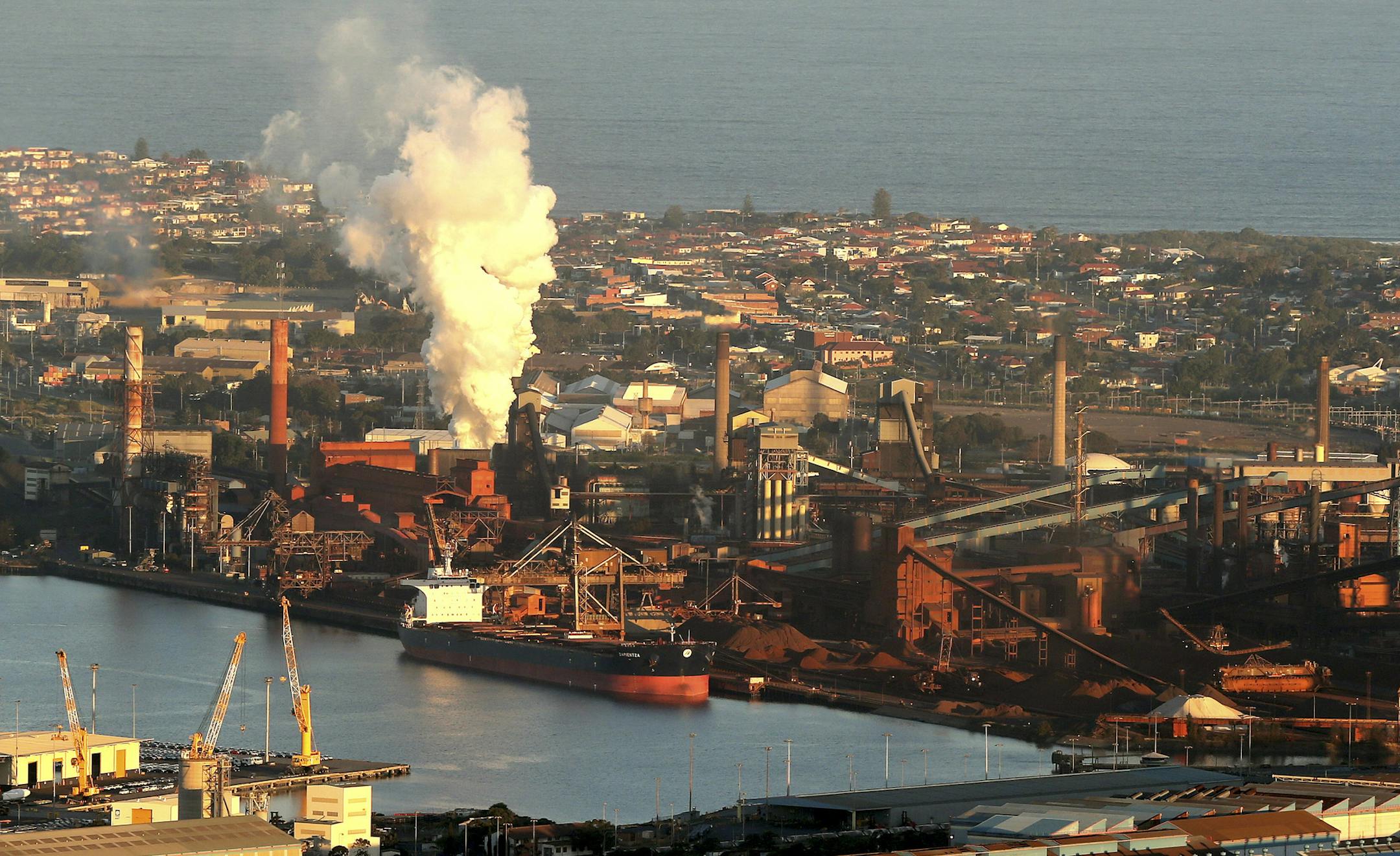
Australia has repealed its carbon tax, leaving climate advocates in the United States and abroad feeling disheartened. While the repeal has long been anticipated — Prime Minister Tony Abbott campaigned to scrap the tax and has been gearing up to repeal it ever since he took office — it nonetheless strikes at the heart of supporters of a price on carbon.
In a bit of irony, the conservative prime minister's opposition to the carbon tax has been so strident that he actually praised the Obama administration's Environmental Protection Agency regulations — hotly opposed by conservatives in the United States — as "sensible direct action steps" Australia should follow.
However, this high-profile carbon tax defeat may not be what it appears. While Australia's carbon tax has become widely unpopular and controversial, British Columbia's carbon tax on the other hand is considered a popular success. What accounts for this difference?
The carbon tax rates for each region are similar, with British Columbia even edging out Australia at approximately $27.9 vs. $22.6 (U.S. dollars per ton of carbon dioxide). British Columbia's tax is more broadly applied than Australia's, covering the purchase or use of all fuels within the province. Australia's carbon tax, in contrast, was applied only to the 348 highest carbon-emitting businesses, covering the electricity and mining sectors, but not gasoline use. By these measures, British Columbia has a seemingly more burdensome carbon tax.
Both regions have in recent years strongly supported climate policy, with 68 percent of the Australian public considering global warming a "serious and pressing problem" in 2006. That sentiment has all but disappeared in Australia. While there is plenty to say about the role of media and business interests in influencing Australian public opinion of the carbon tax, I think there are two crucial additional insights that explain the difference:
(1) Australia did not have a similar shale gas boom as in North America. Regardless of whether you consider fracking a good or bad thing, electricity prices in North America have been depressed in part due to abundant shale gas, and in part to economic recession. Dramatically rising electricity prices in Australia — due in large part to electricity infrastructure upgrades and other factors independent of the tax, along with the tax — turned the Australian public forcefully against the carbon tax, in a dynamic that does not exist in British Columbia.
(2) More importantly, British Columbia's carbon tax is revenue-neutral, and Australia's carbon tax was not. While wonky, the concept of revenue neutrality is perhaps the single most important factor for explaining British Columbia's success.
By law, British Columbia is required to return every dollar of carbon tax raised back to British Columbians by lowering other taxes. In essence, taxes are shifted away from what you might call "prosperity taxes" — like taxes on income and payroll — to taxes on carbon pollution. In practice, British Columbia's carbon tax has actually been revenue negative — cutting more prosperity taxes than raising pollution taxes — with the result that it now has the lowest personal income tax rate in Canada and one of the lowest corporate rates in North America. (As an aside, carbon tax shift opponents argue that it could never remain revenue-neutral in practice; highly progressive British Columbia is a notable example to the contrary.)


