

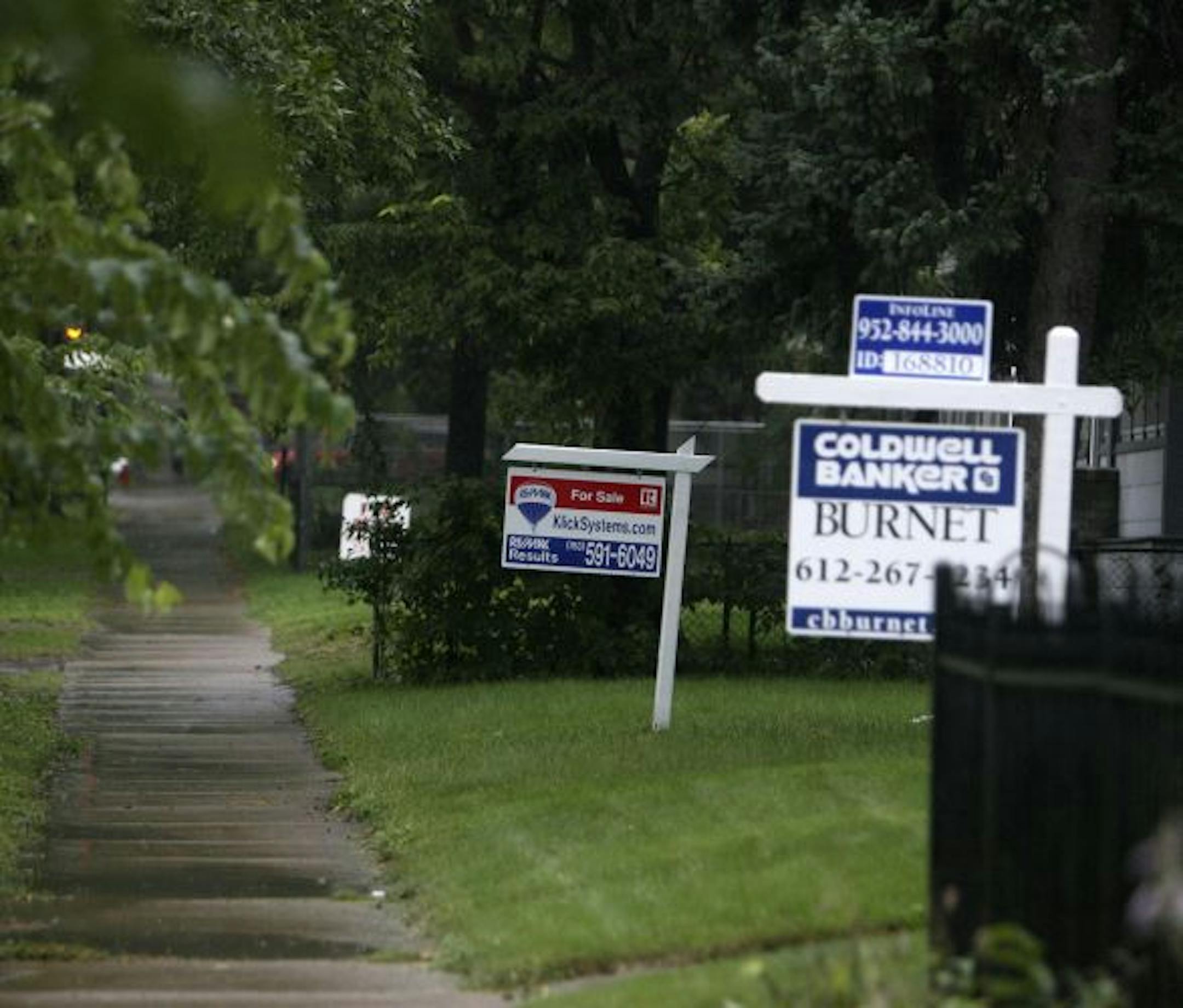
Local home prices edged up for the third month in a row in June but still fell nearly 11 percent from a year ago as the Twin Cities led another round of annual price declines in major metro areas.
The Standard & Poor's/Case-Shiller composite index of 20 major metro markets dropped 4.5 percent in June from last year. Meanwhile, the U.S. national index, a measure that covers the bulk of the nation's housing market and that Case-Shiller releases every three months, rose 3.6 percent in June from May but was down nearly 6 percent year-over-year.
The latest index readings offer more evidence that housing is in a postbust swoon that has been a major drag on the stalled economy. For the fourth month in a row, the Twin Cities posted double-digit or near double-digit price declines -- falling 10.8 percent in June -- and was the worst performing of the 20 metro areas on a year-over-year basis, according to the index. Detroit, by comparison, fell 6.6 percent. Portland, Ore., sank 9.6 percent; Phoenix fell 9.3 percent.
However, home prices have been ticking up on a month-to month basis recently. Spring buying helped push home prices up for a third straight month in most major U.S. cities in June. The Twin Cities and Chicago led the month-to-month gains among the top 20 metro areas, both markets up 3.2 percent from May.
The Case-Shiller tracks repeat sales of single-family homes and doesn't include townhouses or condominium sales. The numbers are not adjusted for seasonal factors, which S&P now prefers because it says foreclosures are disrupting normal seasonal patterns. The prices each month are a rolling three-month average.
While no one knows exactly why the Twin Cities market is posting such heavy yearly declines, experts suspect foreclosures are the culprit. David Blitzer, chairman of the S&P index committee, said he suspects that states such as Minnesota, which don't require home foreclosures to go through the court system, may be getting homes back on the market and resold more quickly than other areas.
He also noted that the Twin Cities home price numbers are "bouncing around a whole lot" compared to larger cities with more home sales.
Heavy load of bank sales


