The fine art of giving a book club a kick in the pants

Experts, including a Minnesota book club facilitator, have tips on redirecting when a discussion goes astray.

The Minnesota Star Tribune
December 8, 2025 at 12:00PM
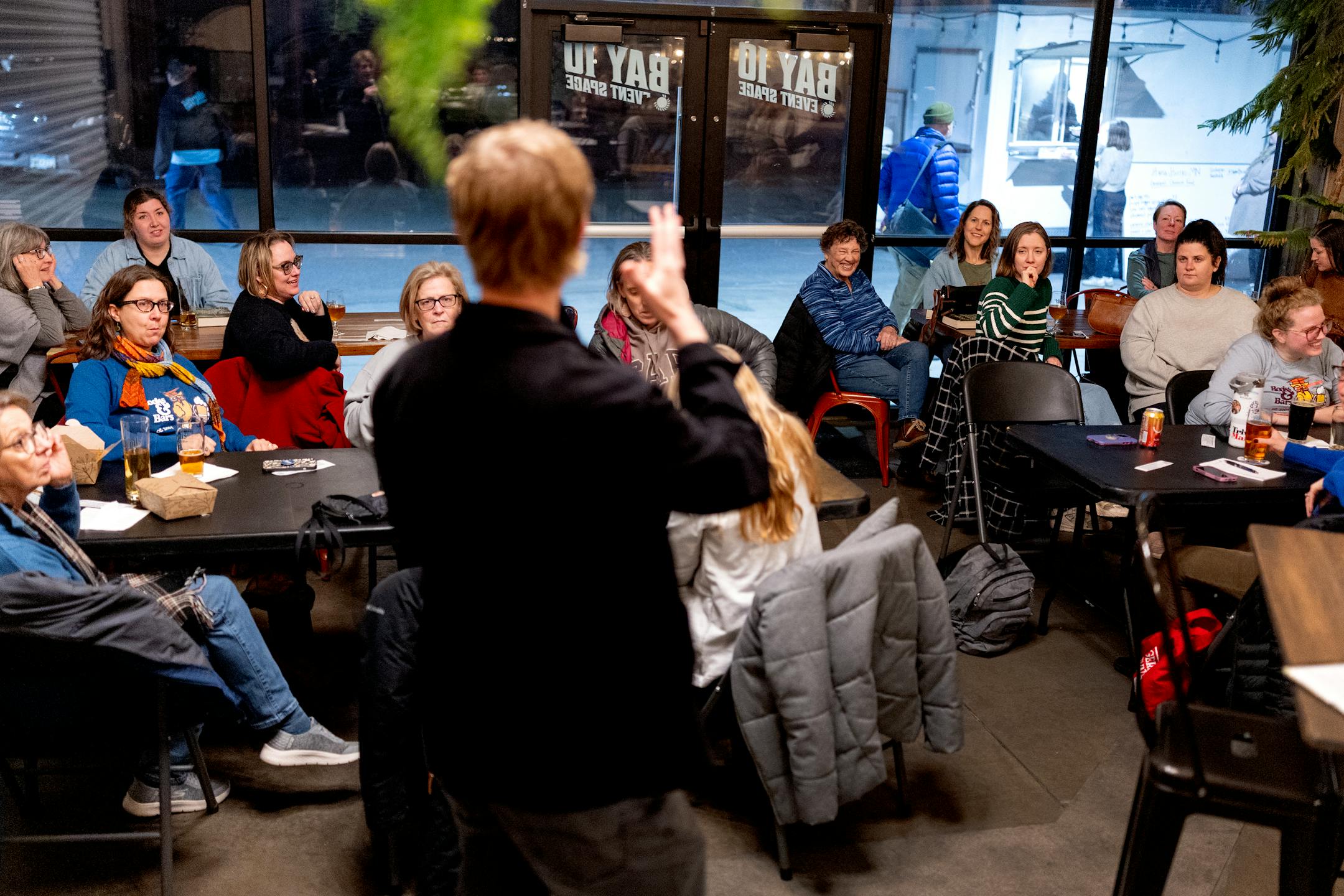
Jeff Kamin leads a discussion last month about "The God of the Woods" at Books and Bars held at Utepils Brewing in Minneapolis. (Carlos Gonzalez/The Minnesota Star Tribune)

On occasion, what a book club needs most is for one person to tell another person to shut up.

That’s when a book club facilitator could help.

“When a club wants a facilitator, it’s usually because of behavioral issues,” said Cindy Kalland, who lives in Eden Prairie and is a retired teacher. “It may just be that they’re missing something — that no one is doing the work — but I think the biggest thing that annoys people in book clubs is when there is a member who dominates too much."

Kalland didn’t know book club facilitators were a thing until 2008, when she heard that a friend’s club — one that Oak Ridge Country Club in Hopkins had begun for its members — needed a new one. Facilitators generally participate in the selection of titles, do research to enrich the discussion, compile reviews, keep things moving along and, sometimes, urge a member to share less.

“I would pull someone aside and say, ‘Maybe just step back a bit and let someone else talk’ or ‘I noticed you bristling a bit when someone said something. Maybe just watch that,’” said Kalland. “I tried to be nice. Teachers call them ‘hamburger compliments’: ‘You’re really smart. But would you mind watching out for this behavior? But I really appreciate what you add to the group.’ You put the hamburger between two compliments.”
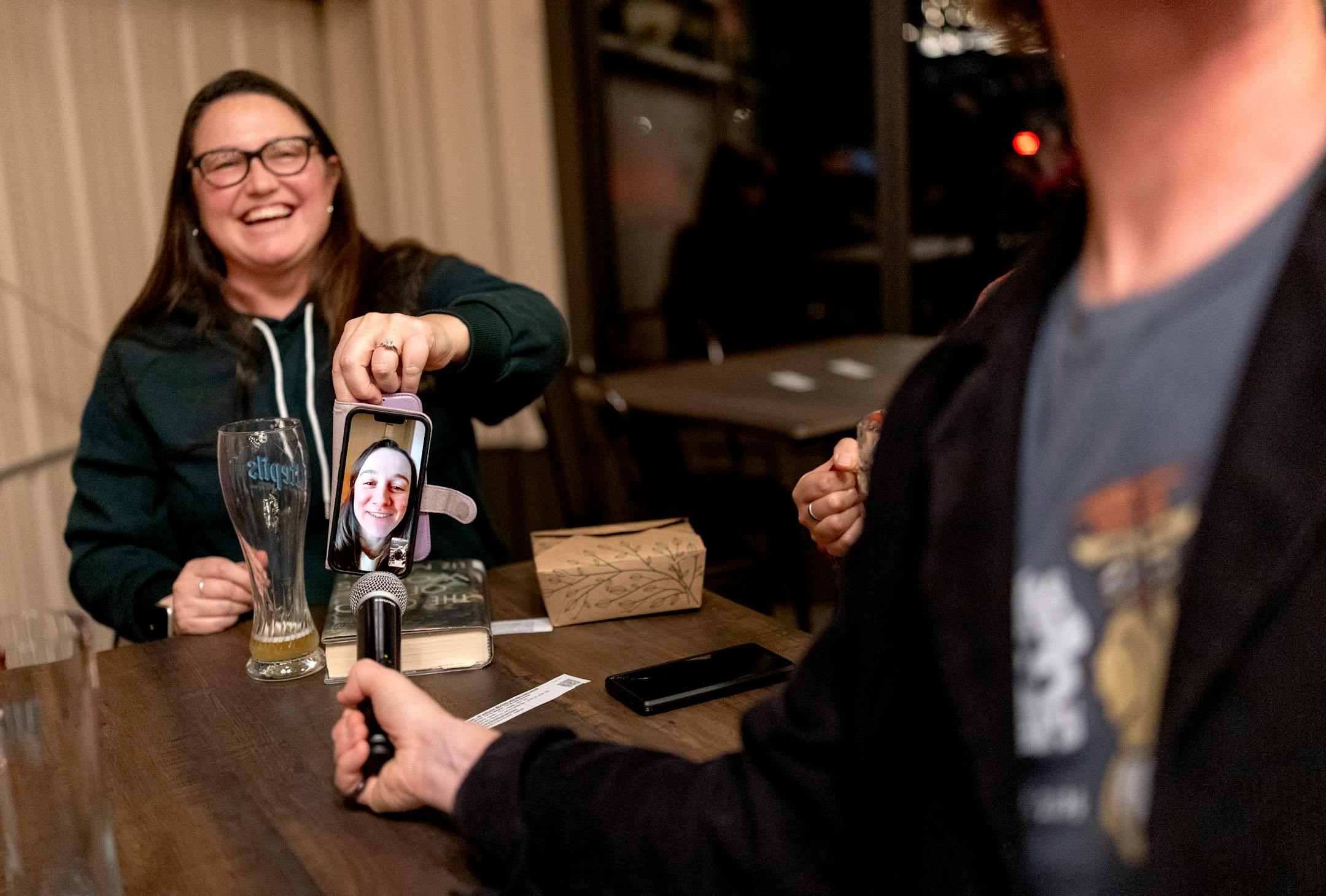
Allison Loomis holds up a phone as Majel Baker discusses "The God of the Woods" via FaceTime at Books and Bars. (Carlos Gonzalez/The Minnesota Star Tribune)

Possibly, the monopolizer doesn’t realize they’re monopolizing.

“If someone is taking over the conversation, I do sometimes have to take over the microphone and say, ‘Now, let’s give someone else a chance,’” said Jeff Kamin, who founded Books & Bars. Its 50 or more attendees meet at breweries in Minneapolis and St. Paul to chat about books while they wait for the foam on their beers to subside.

Alice Moody, who founded the Chicago-based Between the Covers, which leads book discussions among other bibliophilic activities, said she doesn’t run into that many people who won’t cede the floor. But, like comedians and hecklers, figuring out how to politely deal with those folks is part of the job.
“There are those times someone will say, ‘What are you talking about? That didn’t happen,” said Moody, whose group also offers other services, including book suggestions and advice on starting a club. “That’s part of a facilitator’s role, to say, ‘Let’s give that person a break.’ I’m literally making sure everyone feels comfortable sharing their reactions.”

All three facilitators are essentially self-taught. Like Kalland, Moody is a former educator, whereas Kamin has experience in improv comedy and broadcasting. All three see research as the backbone of their work, since anyone can go online and get a bunch of discussion questions (although be warned; Kalland says those questions are often “dumb”).

photo of a man leading a book club discussion group
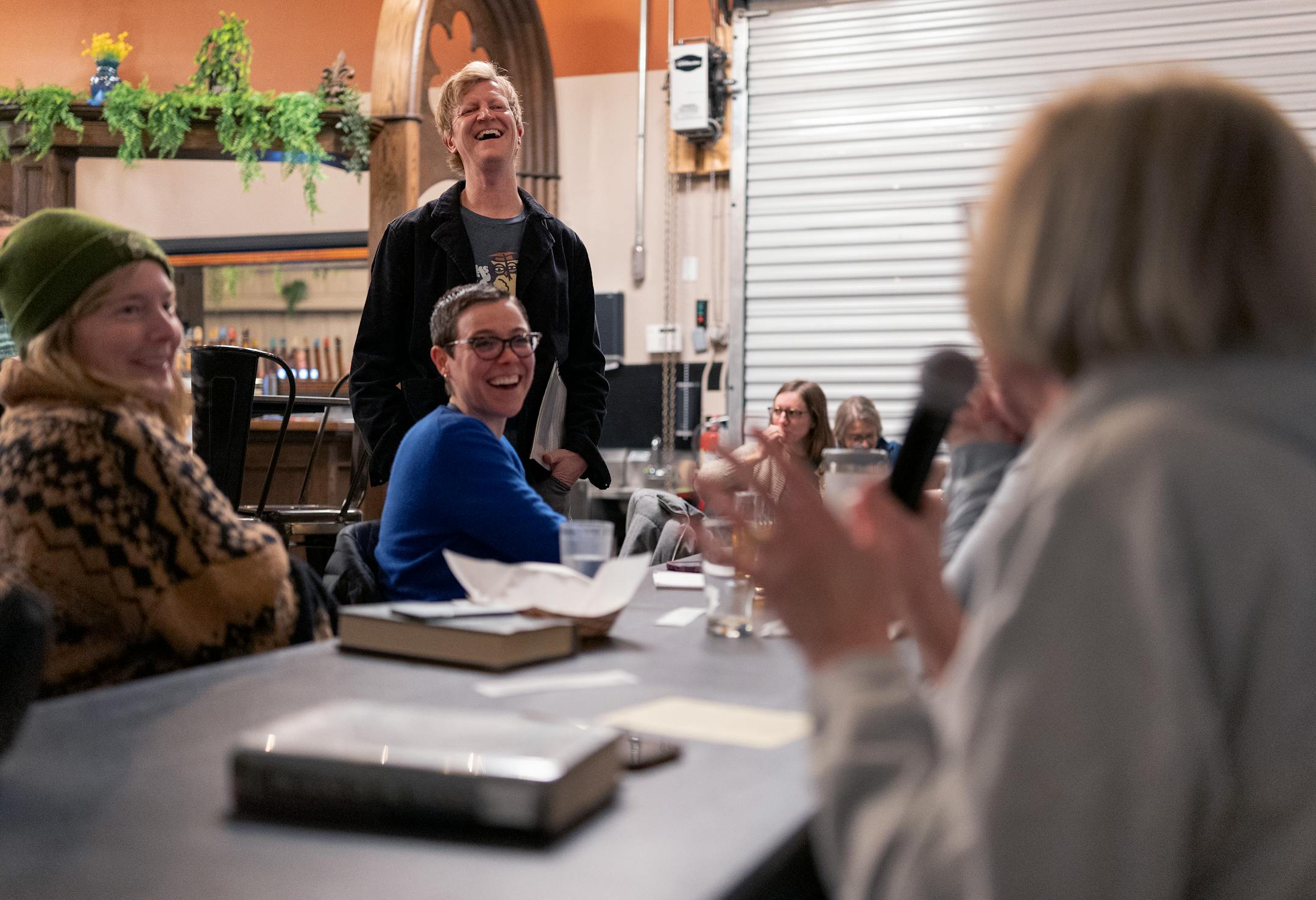
Jeff Kamin (standing) said the best discussions are when everyone else is talking so much that he barely hears his own voice. (Carlos Gonzalez/The Minnesota Star Tribune)

Kalland isn’t facilitating right now — she used to moderate several clubs a month — but still has huge stacks of background materials on popular titles such as Brit Bennett’s “The Vanishing Half” and Amor Towles’ “The Lincoln Highway.” She charged $150 per meeting, a fee generally divided among the attendees. Kamin accepts tips, but Books & Bars is free. Moody charges $400 for a 90-minute session.

Just as every reader has a unique take on a book, each facilitator has a different emphasis. Kalland urges groups to explore the differences between good and excellent writing. Moody says one of her strengths is making connections between different types of literature.

Kamin likes getting reluctant chatters to participate by using ice breakers related to the month’s book, such as “What’s the scariest book you ever read?” when Books & Bars tackled Grady Hendrix’s horror novel “The Final Girl Support Group.”

He said the benefit of Books & Bars is similar to a more traditional club that meets in members’ homes. “One of my favorite things to hear, which I hear from a lot of people, is, ‘You know what? I never would have picked this on my own and I wasn’t sure of it but I’m glad this group challenges me to read outside my comfort zone,’” Kamin said.

All three agree that plenty of book clubs (like Kalland’s own) work just fine on their own, without need for a facilitator. But Moody says a few signs indicate when one could help.

“When people aren’t getting out of it what they hoped to get out of it, saying, ‘I wanted to talk about that but we didn’t get to it,’ ‘It seemed like we talked about everything but the book this month’ or ‘We always read the same books,’” Moody said. In those cases, she said an expert — someone who doesn’t know anyone in the group — will have ideas.

Those experts can profit from their own advice about not dominating, of course. Kamin said the best Books & Bars events are the ones where everyone else is talking so much that he barely hears his own voice.

“Just like when I was a teacher and wanted the kids to be engaged, I don’t want this to be ‘The Cindy Show,’”Kalland agreed.

With or without a facilitator, sometimes what readers in a club need is to remind themselves why they’re there, which is to share something they love: books.

Liz Moore's "The God of the Woods" was the book discussed at Books and Bars on Nov. 19. (Carlos Gonzalez/The Minnesota Star Tribune)
about the writer

about the writer

Chris Hewitt

Critic / Editor

Interim books editor Chris Hewitt previously worked at the Pioneer Press in St. Paul, where he wrote about movies and theater.

See Moreicon

More from Books

See More
card image
Carlos Gonzalez/The Minnesota Star Tribune

Experts, including a Minnesota book club facilitator, have tips on redirecting when a discussion goes astray.

photo of author Tilar Mazzeo