‘A Minnesota thing’: Paddling quests to the wilds of Canada follow long history

Over days and thousands of miles, separate groups left Minnesota and reached historic Hudson Bay

The Minnesota Star Tribune
September 8, 2025 at 10:31AM
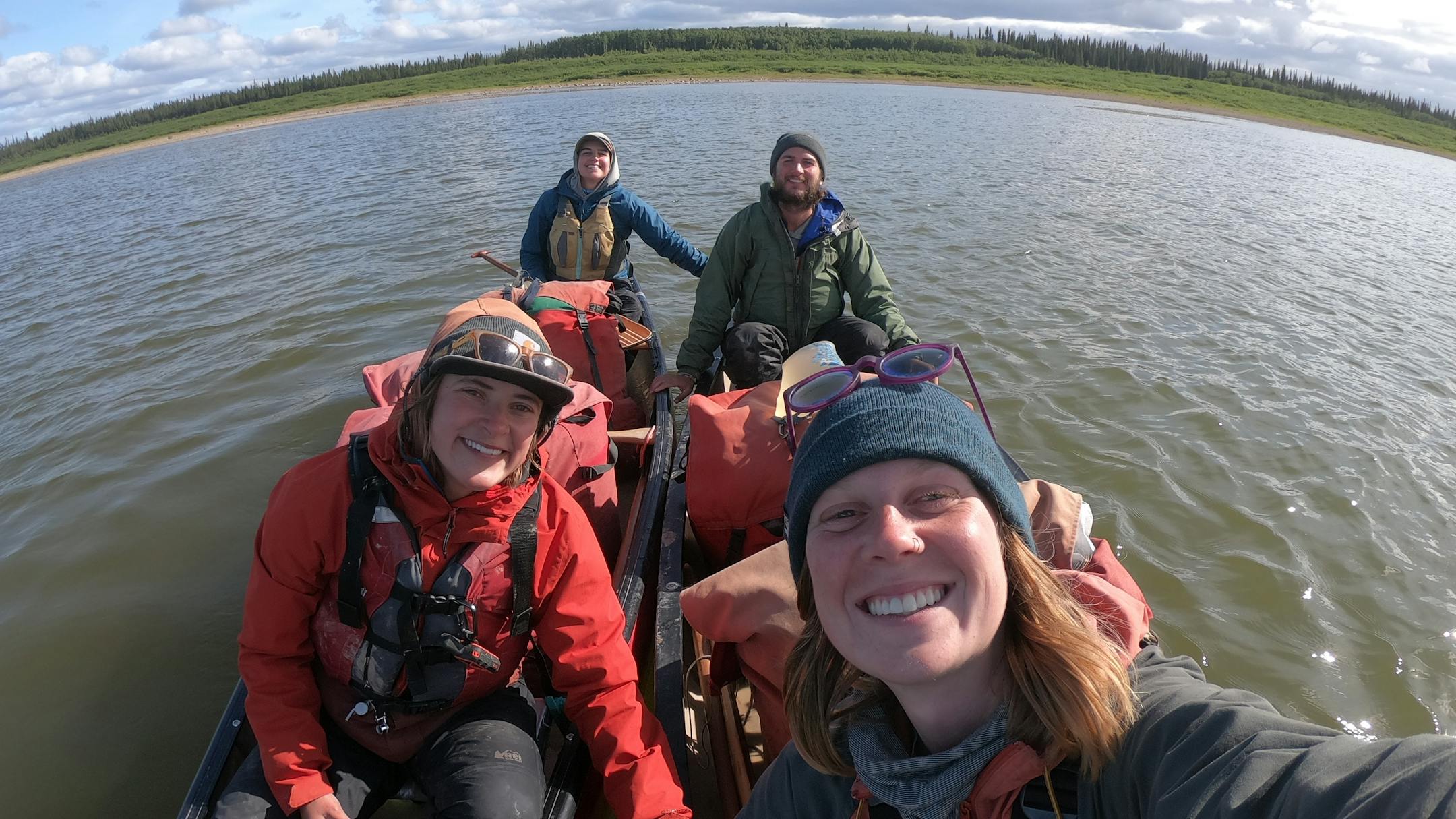
Solitude of 4 members, clockwise from lower left: Timea Vrabcová, Maren Johnson, Ryan Mohr and Kathleen Grube. The four met as guides at Wilderness Canoe Base, a Christian camp at the end of the Gunflint Trail. (Photo: Courtesy of Kathleen Grube)

Two separate groups of intrepid canoe paddlers set out in the northern Minnesota wilderness this spring toward the remote doorstep of the Arctic Circle: Canada’s Hudson Bay.

The foursomes, made up of Minnesotans and others with close ties to the state, dubbed themselves “The Solitude of 4″ and the “Hudson Bay Girls.” More than two months and 1,000-plus miles later, they completed their trips in mid-August.

The accomplishments entered them into an exclusive club, tracing waterways traveled eons before by Indigenous people and, later, fur traders and explorers.

It’s a pattern popularized in the 1930s after Eric Sevareid took the journey fresh out of high school and wrote about it in his book “Canoeing with the Cree.” It has become an epic goal for new adventurers based in the North Star state.

“It’s a Minnesota thing,” said Bob O’Hara, 84, a St. Louis Park man who paddled to Hudson Bay in the 1960s and later took trips on other major rivers of the Canadian Arctic.

The journeys are built on careful route-planning, preparation and wilderness savvy, as well as the stories of those who went before, many from a close-knit canoeing community in the state.

Olivia Bledsoe, a Hudson Bay Girl, said Natalie Warren’s book about her 2011 trip was the catalyst for thinking bigger after she spent several summers guiding in the Boundary Waters Canoe Area Wilderness. Warren, like Bledsoe, was college-aged when she headed north with companion Ann Raiho.

“I thought, this is something I could do,” Bledsoe said. “This is something I want to do.”
Warren said the state has created an adventure culture.

“I think it really is the people who have paved the way before us all,” Warren added, rattling off names such as Will Steger, Ann Bancroft and Lonnie Dupre. “These expeditioners who have normalized this for Minnesotans.”

‘Pass-it-on culture’

Solitude of 4 members Kathleen Grube, Ryan Mohr, Maren Johnson and Timea Vrabcová immersed themselves in that milieu as guides at Wilderness Canoe Base. The Christian youth camp, at the end of the Gunflint Trail, is where they began their paddle north for 2½ months and 1,265 miles.

Grube said the idea began to gel last year, and the team found immediate support.

O’Hara, a longtime member of the Minnesota Canoe Association, lent them a 17-foot Bell canoe, packs and spray skirts. They stayed with the same people who supported Warren and Raiho in Norway House, a center of the Cree Nation and one of the largest Indigenous communities in Manitoba. And Zach Fritz, a St. Cloud-area native who paddled with friend Taylor Rau even farther north in 2024 to the Arctic Circle, gave advice. He also made paddles for the group.

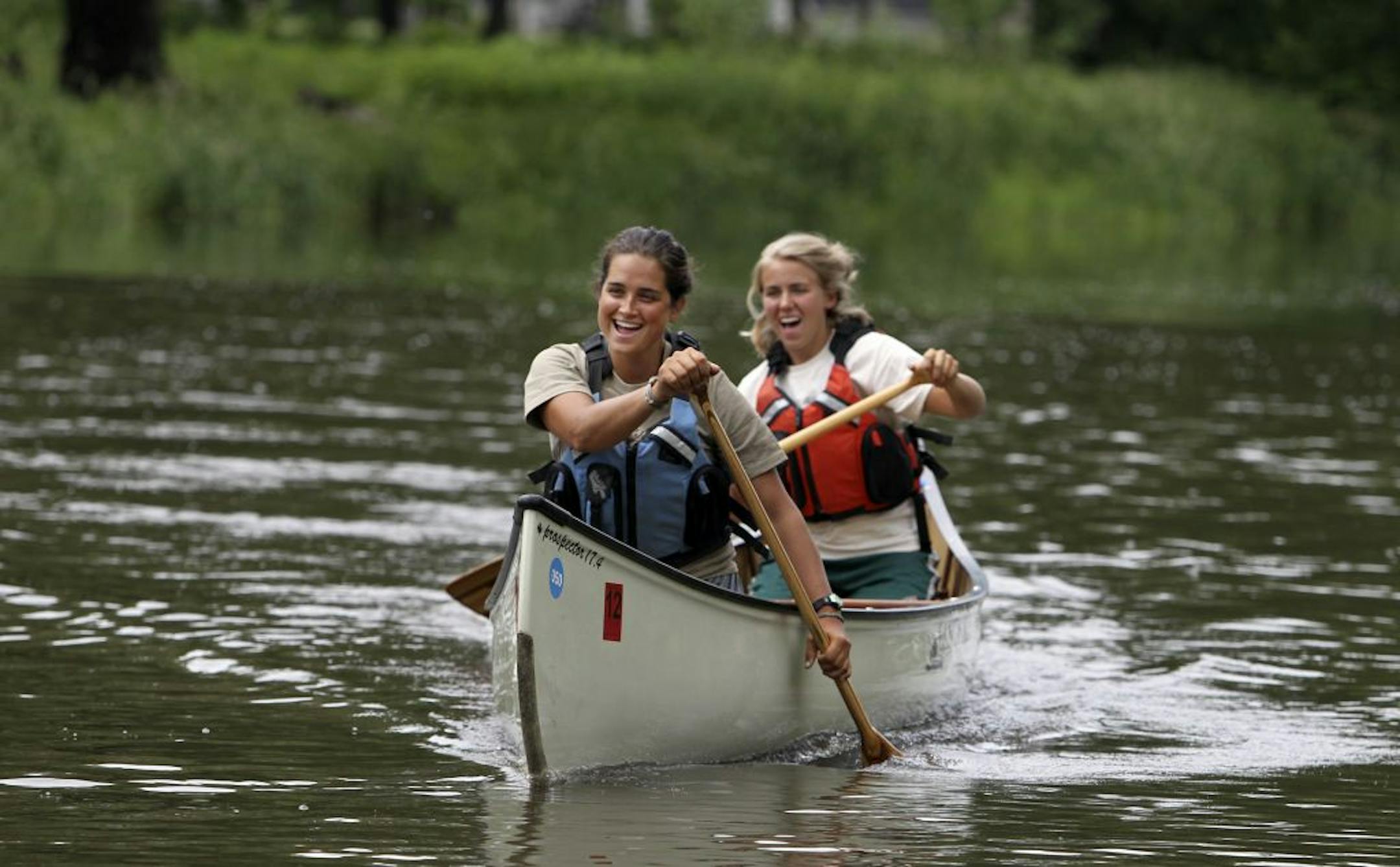
Two St. Olaf college grads have begun their 2,250 mile journey to be the first women to paddle from Minneapolis to Hudson Bay. Ann Raiho of Inver Grove Heights and Natalie Warren of Miami, FL, hope raise money for YMCA Camp Menogyn and inspire other young women to pursue their own adventures. Here, the women took the weekend to participate in a canoe race at Riverfest Rendezvous on the Chippewa River. Here, Warren, front, and Raiho canoed on the Chippewa. The women took the weekend to participat
Natalie Warren, left, and Ann Raiho have inspired other paddlers with their 2011 trip. They are shown on the Chippewa River during an unrelated paddling event. (David Joles/The Minnesota Star Tribune)

“It is such a generous community,” Grube said, “and thrives on this pass-it-on culture.”

Vrabcová said the “radical kindness” allowed them to move beyond just dreaming of the adventure.

The group also learned every odyssey is different. The threat of Canadian wildfires rose at the beginning and end, Grube said.

Before the Solitude of 4 ever set out, Manitoba officials suggested the public cancel canoe trips this summer in the province. Later, a massive fire ripped through Whiteshell Provincial Park in eastern Manitoba — in the group’s path. In a stroke of good fortune, the park closure was lifted the day the Solitude of 4 approached to pass through.

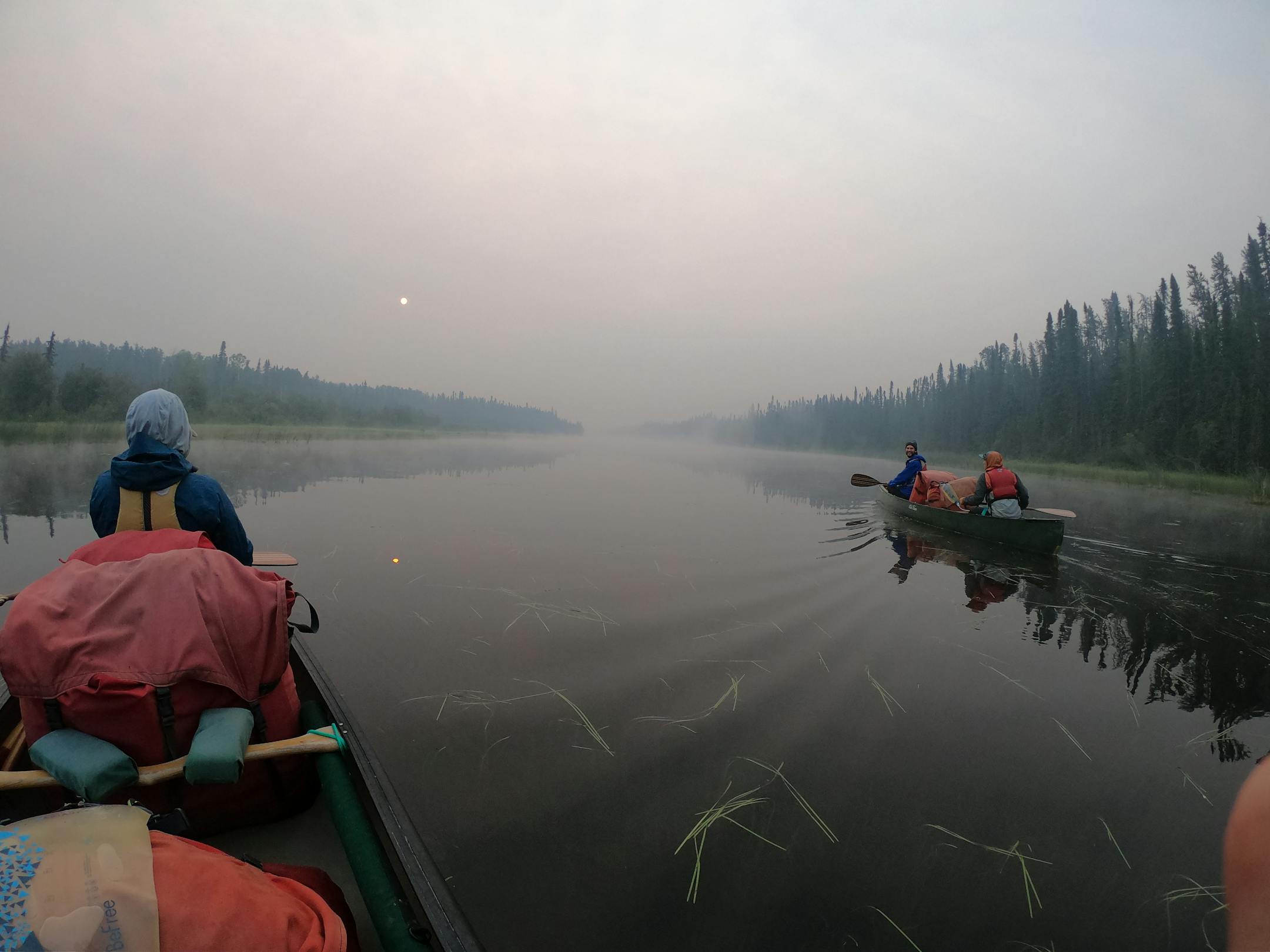
The Solitude of 4 group navigated the Echimamish River northeast of Lake Winnipeg in late July. (Kathleen Grube)

Toward the trip’s end, Grube recalled isolated but worrisome plumes of smoke. They continued with caution and, at times, used a Garmin communication device to learn more about fire conditions. In one case, they paddled 18 miles across an hourglass-shaped lake where isolated trees were aflame on shore.

Vrabcová said they handled the unknowns with good planning and group decision-making. An ethos of routine delivered them to their final destination.

“It showed just how we were dialed into our surroundings,” she said. “It wasn’t about trying to stretch ourselves but asking, is it safe for us to continue?”

‘It changes you’

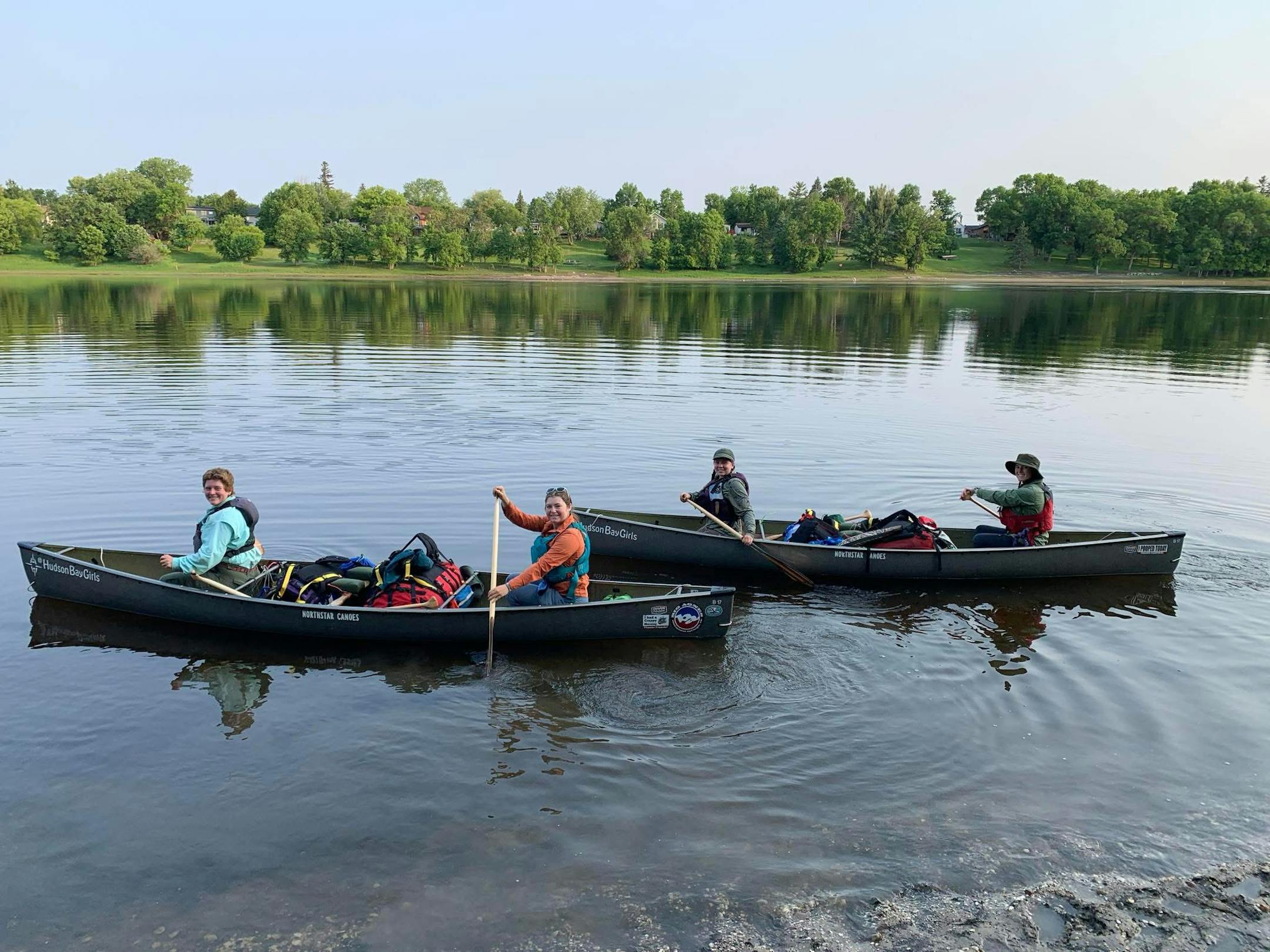
The Hudson Bay Girls: From left, Emma Brackett, Abby Cichocki, Helena Karlstrom and Olivia Bledsoe. (Olivia Bledsoe)

The Hudson Bay Girls left Grand Portage and traveled 1,380 miles over 80 days. In addition to lugging gear over the historic portage, they navigated the border waters to Lake of the Woods, across Lake Winnipeg and points northeast and, finally, to York Factory, where the Hayes River flows into Hudson Bay.

Bledsoe, along with Emma Brackett, Abby Cichocki and Helena Karlstrom, even crossed paths with the Solitude of 4 in the final days.

Fritz applauded both efforts and the groups’ spirit of adventure.

“When you are on the water, especially in Minnesota, I think our natural instincts of wanting to discover what lies beyond the horizon begins to take over,” Fritz said. “When you look at maps and begin to realize how interconnected these waterways are, it is easy to become enthralled with the idea of a larger adventure.”

The impact is large, Warren said, and the adventure is addictive.

“It changes you, a trip like this,” she added. “My whole 20s were, ‘What else can I do?’”

Warren went on to paddle the length of the Mississippi River and found her way back to remote Canada.

Freshly back to modern life, the young adventurers still are assessing the lessons learned on the way to Hudson Bay.

Bledsoe thinks about the psychological challenges. She embraced the mundane along with the exhilarating. “You have to have a peace that you are going to be paddling 12 hours some days and appreciate where you are at.”

Grube said giving up her independence in the service of the group was challenging but rewarding. She and her friends now have a shared history and shared stories:

As they journeyed, people would ask where they were from.

“Minnesota!” they replied.

“People would say, ‘Of course you are,’” Grube recalled. “That was a cool identity to carry with us.”

about the writer

about the writer

Bob Timmons

Outdoors reporter

Bob Timmons covers news across Minnesota's outdoors, from natural resources to recreation to wildlife.

See Moreicon

More from Outdoors

See More
card image
Photo: Katrina Gaisford

How local organizers are responding to the rise of Gen Z runners and more trends from the fitness-tracking apps’ 180 million users.

A family carrying their seven and a half foot Balsam Fir.
card image